Explore how China’s record-breaking drone shows blend technology, choreography, and sky-borne artistry. Discover how thousands of synchronized drones transform the night sky into a living canvas, reshaping modern art and cultural storytelling.
Explore how China’s record-breaking drone shows blend technology, choreography, and sky-borne artistry. Discover how thousands of synchronized drones transform the night sky into a living canvas, reshaping modern art and cultural storytelling.
China’s Guinness World Record Drone Show as Living Art
Drone light shows in China have become a major spectacle — combining advanced technology, bold choreography, and large-scale public events. Below are key points about how they’re organised, recent milestones, industry trends, and what someone visiting might expect. Dancing Lights Above the Yangtze — How China’s Record-Breaking Drone Show Redefined Art in the Sky
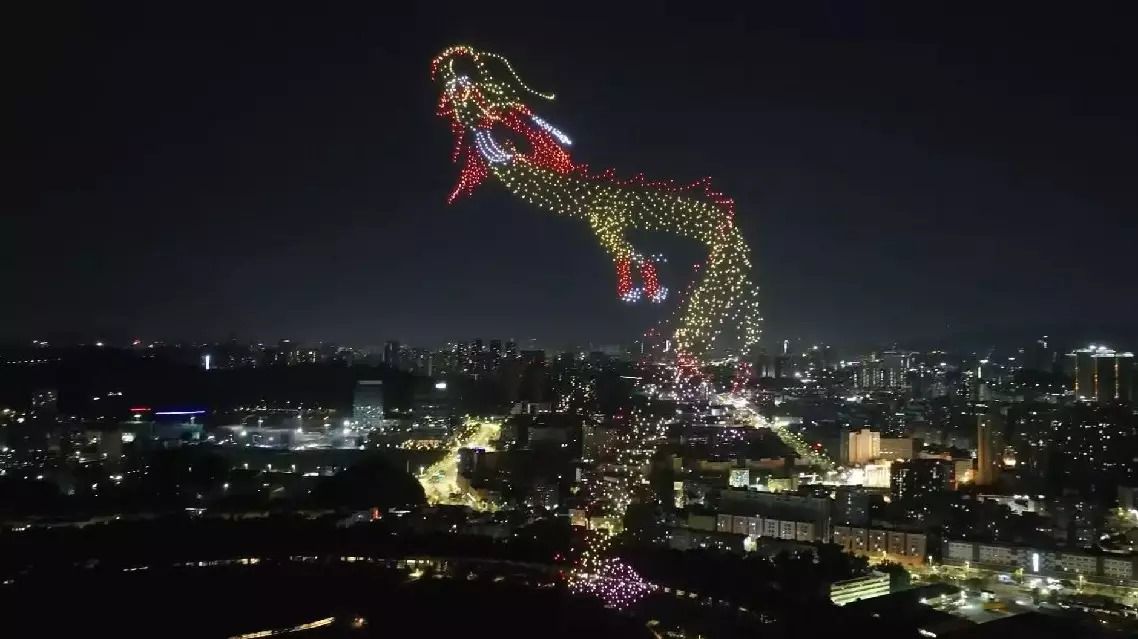
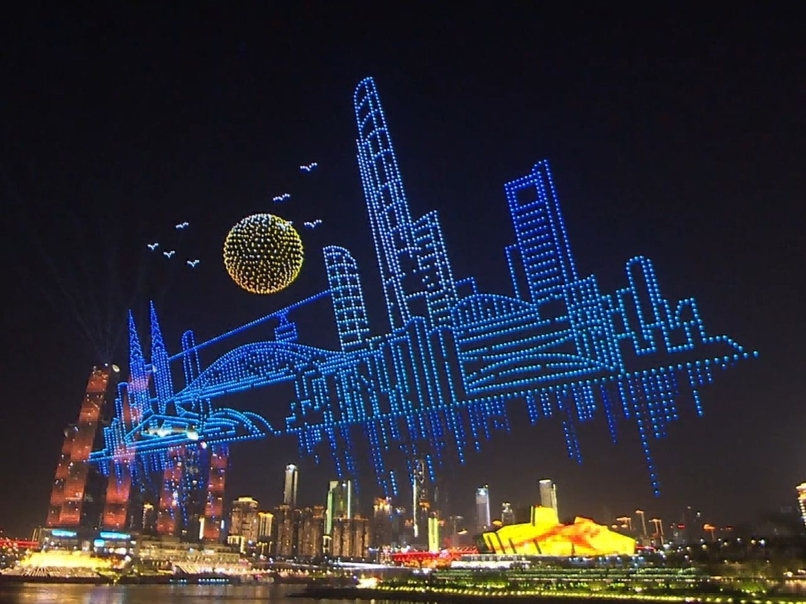
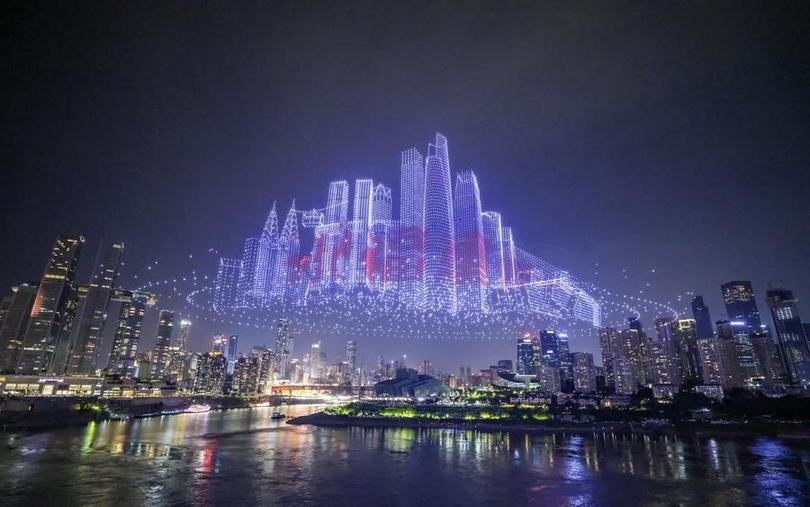
When thousands of lights rise into the night over Chongqing, they don’t just illuminate the skyline — they tell a story. On June 16, 2025, China set a new Guinness World Record for the largest aerial image formed by drones, as 11,787 synchronized drones painted a luminous canvas across the heavens. It wasn’t merely a display of technology — it was a bold artistic expression, merging culture, innovation, and human imagination.
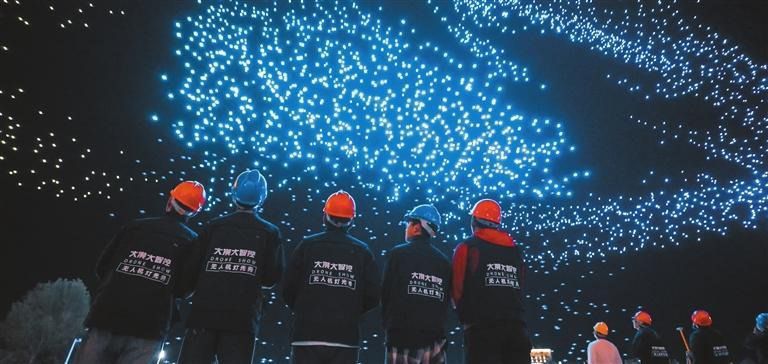
The current record for the Guinness World Records title “Largest aerial image formed by multirotors/drones” was set on 16 June 2025 in Chongqing, China. A total of 11,787 drones were used for the show, operated by Shenzhen DAMODA Intelligent Control Technology Co., Ltd. in collaboration with Chongqing Broadcasting Media Group Co., Ltd.. The event was held in Nan’an District of Chongqing and featured complex dual-formation flight patterns and imagery reflecting the city’s landscapes, culture and urban life.
This record surpasses previous ones, such as the 10,197-drone record set in Shenzhen in September 2024. While there are media mentions of an even higher number (~15,974 drones in Liuyang, Hunan Province in October 2025) claimed via secondary sources, as of the verifiable Guinness listing the official record remains the 11,787 count. The record emphasises image formation rather than simply “most drones airborne” — the official title is about “largest aerial image formed by multirotors/drones.”
The sheer number of drones (nearly 12,000) in a coordinated show demonstrates highly developed swarm-control technology, communications, navigation (especially in challenging terrain as in Chongqing) and visual design. It also shows the rapid pace of escalation in drone-show numbers in China over recent years (3,051 in 2020 → 7,598 in 2024 → 11,787 in 2025). On 17 June 2025, a drone light show in Chongqing’s Nan’an District used 11,787 drones to form aerial images, setting a new Guinness World Record for the “largest aerial image formed by drones”. The show featured dual-formation flight patterns (two formations working together) and overcame terrain and communication challenges.
Drone shows have scaled up rapidly in China: In early 2024, reports mention around 500-drone performances at resort towns (e.g., Guizhou Province) but the industry is doubling year-on-year. They’re used in a spectrum of events: major city celebrations (e.g., national holidays), tourism-driven spectacles, as well as private or commercial events (birthday promotions, marriage proposals) in multiple cities. Technology is emphasised: For example, a display during the Spring Festival Gala in Chongqing used RTK (real-time kinematic) positioning so drones hovered “just 50 centimetres” above a stage and performed precise movements.
In Zhongshan, Guangdong Province: during the National Day / Mid-Autumn holiday period (Oct 1–7) a large-scale show will employ about 2,000 drones nightly. A regular weekly drone show over the rivers in Chongqing is cited (800-1,000 drones, 15 minutes long), with holiday special versions using more.
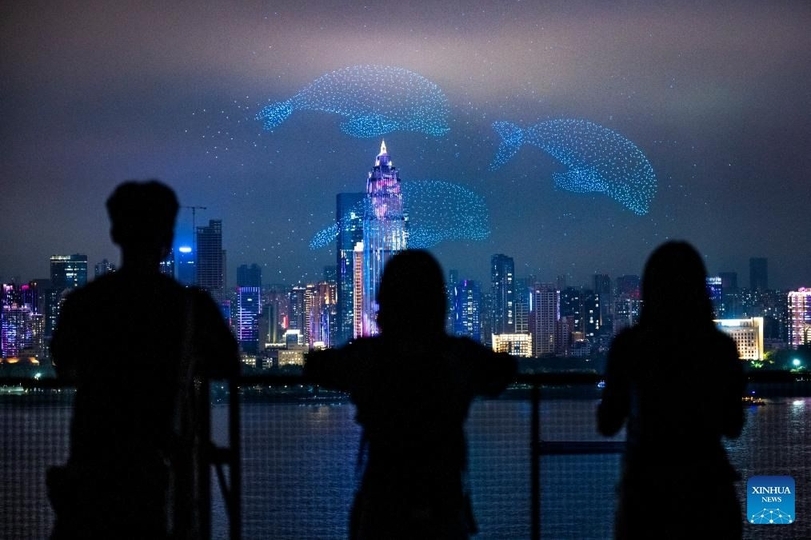
China is pushing drone shows
Tourism & urban branding: Cities use them to attract tourists, enhance night economy, and showcase modernity (especially in rapidly urbanising or redevelopment zones). E.g., the Guizhou case: drone show increased visitors, boosted local revenue.
“Low-altitude economy” strategy: Chinese policy references expansion of low-altitude aviation (drones, small aircraft) and shows fit into that narrative of new industry growth.
Technology showcase and soft power: Large drone fleets demonstrate capability—not just entertainment value. The record shows draw global attention.
Commercial opportunities: From major cityscape events down to private celebrations (brands, influencers) the business model is growing.
The show, held in Chongqing’s Nan’an District, was a collaborative masterpiece between Shenzhen DAMODA Intelligent Control Technology Co., Ltd. and Chongqing Broadcasting Media Group. Together, they choreographed thousands of multirotor drones to perform with millisecond precision — forming breathtaking images of mountains, rivers, traditional Chinese motifs, and symbols of modern life.
For 15 minutes, the skyline became a stage. The drones swirled into the shape of a giant dragon, then shifted into a rising sun over the Yangtze River, and finally transformed into the Chinese characters for “Chongqing welcomes you.” Each transition was seamless — a perfect dance of light and geometry.
The feat required immense planning. Engineers used real-time kinematic (RTK) satellite positioning to keep drones steady within 50 centimeters of their intended flight path — a crucial factor given Chongqing’s mountainous terrain and dense urban environment.
Technology Meets Tradition
What makes China’s drone shows so mesmerizing isn’t just their scale, but how they blend modern innovation with centuries-old storytelling. Drone art, at its best, becomes a form of digital calligraphy — using pixels of light instead of brush and ink.
In this record-breaking show, each formation carried cultural symbolism. The dancing phoenix represented rebirth and resilience; the blooming lotus, purity; the glimmering cityscape, the pulse of a modern China rising from its roots.
“Technology is our new paintbrush,” said one of the show’s lead designers in a post-event interview. “But our inspiration still comes from Chinese philosophy — balance, harmony, and beauty in motion.”
Chongqing’s Skyline as a Canvas
Chongqing, a city built on cliffs and surrounded by rivers, has long been known for its cinematic night views. Now, it’s also home to one of the world’s largest drone art stages. The city government has invested heavily in nighttime tourism and cultural innovation, making drone performances a weekly feature near the riverside districts. Tourists gather by the Jialing and Yangtze rivers every weekend to watch hundreds — sometimes thousands — of drones light up the sky. But on that record-breaking night, the usual show became something extraordinary. Locals described it as “the night the sky came alive.”
The Rise of the Drone Art Movement
Across China, drone shows have become a cultural trend — replacing traditional fireworks with eco-friendly, programmable performances. From Beijing’s National Day celebrations to weddings in coastal resorts, drones are now part of a new artistic language.
Since 2020, China’s drone fleets have expanded from a few hundred to tens of thousands of units nationwide. Shenzhen, often called the “hardware Silicon Valley,” has been the innovation hub behind this rise. Companies like DAMODA and EHang are pushing the limits of aerial choreography, using artificial intelligence to coordinate complex patterns once thought impossible. And unlike fireworks, drone shows are silent, smoke-free, and reusable, aligning with China’s growing focus on sustainability and “green celebrations.”
Art in the Age of Algorithms
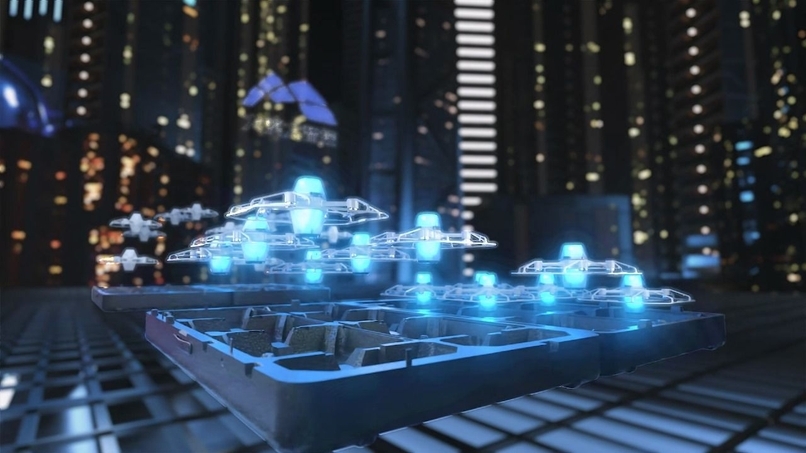
The artistry of drone shows lies in their precision — but behind every pixel of light is human creativity. Teams of designers use 3D modeling software to sketch shapes and animations before programming thousands of synchronized flight paths. Each drone acts as one pixel in a massive airborne screen.
The Chongqing record showed how far this medium has evolved. Unlike earlier displays that focused on static formations, this event incorporated dual-formation flight, allowing two massive swarms to move independently yet harmoniously — a visual symphony of light and logic.
For art critics, the show represents a new form of public performance art — blending engineering, choreography, and national identity. It’s the kind of spectacle that redefines what art can be in the digital era.
Global Inspiration and Cultural Soft Power
China’s mastery of large-scale drone shows has also become a form of cultural diplomacy. Global audiences have marveled at similar performances during international expos, music festivals, and global broadcasts. Each event subtly showcases China’s creative and technological confidence.
While other nations experiment with smaller-scale drone displays, none have yet matched the complexity, scale, or narrative depth of China’s sky art. From 3,051 drones in 2020 to over 11,000 in 2025, the country’s progression tells its own story — one of vision, collaboration, and a relentless pursuit of beauty.
As the final drones descended that June night, applause echoed through Chongqing’s riverside parks. For a few minutes, the city’s skyline had become a living artwork — ephemeral, yet unforgettable. The Guinness World Record was not just a technical triumph; it was a poetic statement about the future of creativity. In the years ahead, drone art will continue to evolve — incorporating AI, interactive storytelling, and even audience participation. But the heart of it will remain the same: light, harmony, and human imagination. China’s record-breaking drone show wasn’t just about numbers. It was a glimpse of how art and technology can unite to lift our eyes — and our spirits — toward the stars.
Coordination & navigation: With thousands of drones in formation you need high-precision GPS/RTK, collision avoidance, reliable communications. (See example of hovering very low above stage).
Terrain and environment: For places like Chongqing (mountainous, river-junction city) there were special challenges for signal coverage, altitude transitions, dual formations.
Safety & regulation: With large swarms flying at night in urban zones, safety is critical (airspace coordination, crowd safety).
Visual design & storytelling: Beyond the number of drones, the visual sequences matter: the shapes, transitions, the “story” told in the sky.
Cost and scale: Larger shows (thousands of drones) cost more; smaller shows (hundreds) are more accessible, but the scale difference is big.
The larger the drone count, the greater the complexity and risk of failure (weather, signal interference, terrain). Safety incidents could undermine public confidence or lead to regulation tightening. Overshadowing effect: a city may spend heavily on spectacle but question remains whether long-term tourism/economic benefit justifies cost. For foreign visitors: language/communication may be a barrier; best vantage points may be crowded.