Japan’s Manufacturing Renaissance and the Rise of Automation, Robotics, and Precision Engineering
Japan’s manufacturing sector is entering a new era driven by automation, robotics, and precision engineering. From smart factories to advanced industrial robots, Japan is strengthening global competitiveness and setting new standards for high-tech product
Night Views at Yokkaichi Industrial Complex - Image courtesy of THE GATE
For decades, Japan has been recognized as a global manufacturing leader — celebrated for its craftsmanship, consistency, and advanced engineering. While competition from China, South Korea, Germany, and the U.S. continues to intensify, Japan is entering a new phase: a manufacturing renaissance powered by automation, robotics, and world-leading precision engineering.
This resurgence is reshaping industries from automotive to semiconductors and positioning Japan to maintain — and even expand — its global leadership in high-value manufacturing.
Japan’s manufacturing sector has long been defined by the kaizen philosophy of continuous improvement. Today, this philosophy is merging with next-generation technology. The country’s top manufacturers — including Toyota, Fanuc, Mitsubishi Electric, Sony, and Renesas — are systematically transforming production lines into hyper-efficient, interconnected, automated ecosystems.
Labor Shortages Accelerate Automation - Japan faces one of the world’s fastest-aging populations. With fewer workers available, companies are investing heavily in: Autonomous production lines. AI-powered quality inspection. Robotic assembly systems. Human-robot collaboration (cobots). This strategy ensures stable output while maintaining Japan’s reputation for quality.
Robotics as a Strategic Advantage - Japan is the world’s largest producer of industrial robots, supplying nearly half of global demand. Companies like Fanuc, Yaskawa, Denso Robotics, and Kawasaki Heavy Industries are continuously innovating with robots that can weld, paint, inspect, pack, and handle delicate components with extreme precision. As global manufacturers seek to upgrade factories, Japanese robotics remain the preferred choice for reliability and long operating life.
Precision Engineering Reinforces Japan’s Edge - Japan’s mastery in precision tooling, micro-fabrication, optics, and high-performance materials provides a strong foundation for advanced industries such as: EV and hybrid vehicle systems. Aerospace components. Semiconductor manufacturing equipment. Medical devices. High-end industrial machinery. This high level of precision is difficult for competitors to replicate, giving Japan a defensible advantage.
Automotive — Beyond the Era of the Combustion Engine
Japan’s automotive giants are going through rapid reinvention. Toyota, Honda, Nissan, and Subaru are integrating: Automated battery assembly lines. Robotics-assisted EV drivetrain production. AI-based predictive maintenance in factories. Instead of competing solely on EV volume, Japan focuses on reliability, hybrid efficiency, solid-state batteries, and quality-led innovation.
Semiconductors — A Strategic Comeback
After years of decline, Japan is reviving its semiconductor industry through: New fabs from TSMC, Sony, and Rapidus. Government-backed investment packages. Advanced materials and lithography component leadership. Japan already holds strong influence in chipmaking equipment, photoresists, and silicon wafer technology — fields requiring exact precision.
Electronics and Optics — The Quiet Strength
Firms like Sony, Canon, Nikon, and Panasonic continue to push innovation in sensors, imaging systems, and micro-mechanical components. These capabilities support booming sectors such as: Autonomous vehicles. AI vision systems. Robotics. Medical imaging. Their global competitiveness is restored through higher automation and smarter production lines.
Industry: Industrial robots, CNC systems, factory automation. Fanuc is the world’s leading producer of industrial robots. Their automation systems power factories for automotive, electronics, medical devices, and semiconductor industries. Known for reliability and precision, Fanuc symbolizes Japan’s global leadership in robotics and smart manufacturing.
Fanuc Corporation is one of Japan’s most influential manufacturing companies and a world leader in industrial robotics, CNC systems, and automated factory solutions. Based in Yamanashi Prefecture at the foot of Mount Fuji, Fanuc has built a reputation for unmatched reliability, precision, and long-term engineering excellence.
Global Leadership in Industrial Robotics. Fanuc is widely recognized as: The largest supplier of industrial robots globally. A pioneer in robotic automation since the 1970s. A key technology partner for automotive, aerospace, electronics, metalworking, food processing, and medical device industries. With more than 900,000 robots installed worldwide, Fanuc’s dominance in robotics strengthens Japan’s position as the world’s automation hub.
Fanuc’s robot portfolio includes: Multi-axis assembly robots. Ultra-fast pick-and-place robots. Heavy-duty robots for welding and machining. Cleanroom robots for semiconductor and pharmaceutical production. Collaborative robots (cobots) for human-machine teamwork. Their bright yellow robots have become an iconic symbol of automated manufacturing worldwide.
CNC Systems — The Backbone of Precision Manufacturing. Fanuc is the world’s largest producer of Computer Numerical Control (CNC) systems, which power precision machinery used for: Metal cutting. Laser machining. Injection molding. High-speed milling. Micro-fabrication
Fanuc CNCs are used in factories globally due to their: Extremely low downtime. Long lifespan (often 20+ years). Energy efficiency. Ultra-stable motion control. This precision capability gives Japanese manufacturers a competitive advantage in industries like automotive components, aerospace parts, and advanced machinery production.
High-Reliability Automation Technology. Fanuc’s core philosophy is to build systems that operate continuously and flawlessly. Their motto — “Service First” — reflects their commitment to durability. Key strengths include: Self-diagnostic and self-repairing systems using AI. Ultra-high uptime (99.9% for some robot series). Predictive maintenance tools powered by machine learning. Interoperability with other factory systems. Remote monitoring platforms (FIELD System). This makes Fanuc a top choice for companies seeking long-term stability and maximum output efficiency.
Strategic Role in Japan’s Manufacturing Renaissance. Fanuc represents the technological strength that enables Japan to stay competitive despite rising labor costs and global competition. Fanuc’s innovations contribute to Japan’s manufacturing renaissance in several ways:
1. Automation to Offset Labor Shortages. With Japan’s aging population reducing workforce supply, Fanuc robots fill critical gaps in production lines, performing: Complex assembly. Welding. Material handling. Inspection. Packaging.
2. Precision That Sustains Japan’s Quality Reputation. Fanuc CNCs and robots allow manufacturers to maintain the high precision demanded by global clients, especially in automotive, robotics, and semiconductor supply chains.
3. Enabling the Shift to Smart Factories. Through IoT connectivity, AI-driven control, and predictive analytics, Fanuc supports Japan’s transition to fully digital, autonomous production ecosystems.
5. A Model of Automation Excellence. Fanuc’s own headquarters and factories are some of the most automated in the world. Their “lights-out” factories — facilities that can operate without human workers — demonstrate the future of manufacturing: Robots building robots. Predictive maintenance without human intervention. Energy-efficient, round-the-clock operation. Minimal error rates.
This extreme automation showcases Japan’s technological capability and reinforces the country’s global leadership in industrial robotics. Fanuc as the Engine of Japan’s Industrial Renewal. Fanuc Corporation is more than a robotics manufacturer; it is a driving force behind Japan’s renewed manufacturing competitiveness. Its world-class automation tools, precision CNC systems, and commitment to high reliability help Japanese companies stay ahead in a challenging global environment.
Mitsubishi Electric (Smart Factories & Industrial Systems)
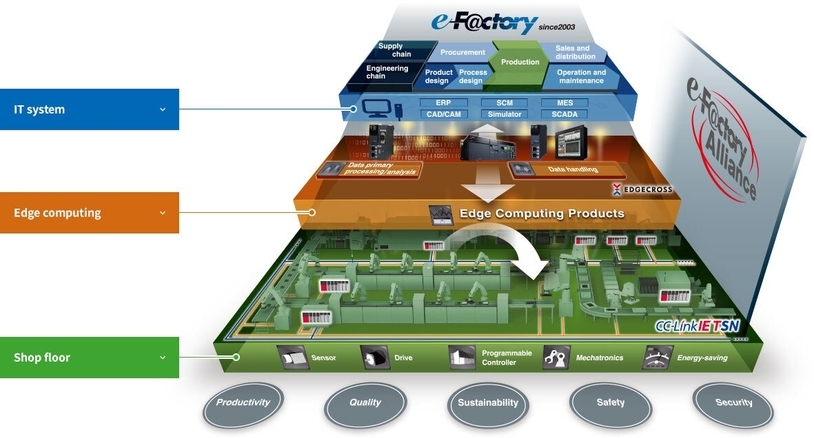
Industry: Factory automation, power systems, semiconductors, robotics Why it fits: Mitsubishi Electric’s “e-Factory” concept integrates IoT, AI, robotics, and big data for advanced manufacturing. The company produces controllers, servo motors, automation software, and industrial robots used worldwide. Strong presence in smart manufacturing solutions for automotive, aerospace, and logistics.
Mitsubishi Electric is one of Japan’s most influential industrial technology companies and a global leader in factory automation, industrial robotics, power systems, and digital manufacturing. With more than a century of engineering heritage, the company is central to Japan’s push toward next-generation industrial competitiveness.
Pioneering the Future of Smart Factories - Mitsubishi Electric is best known for its e-Factory concept — an integrated digital manufacturing ecosystem that connects machines, robots, sensors, and software into one smart production environment.
This ecosystem includes: Programmable Logic Controllers (PLC). Servo motors and drives. SCADA and MES systems. Industrial robots (MELFA series). AI-driven analytics platforms. By combining these components, Mitsubishi Electric helps manufacturers reduce downtime, optimize energy usage, and boost production accuracy.
Robotics and Automation Excellence - The company’s MELFA industrial robots are widely used in: Electronics assembly. Automotive parts production. Material handling. Packaging. Precision inspection. Key strengths include: Ultra-fast cycle times. Compact robotic arms ideal for small-space factories. High repeatability for micro-assembly. Seamless integration with Mitsubishi’s automation software. These capabilities support industries that require intricate, stable, and high-speed manufacturing — a hallmark of Japanese production.
Leadership in Motion Control and Precision Engineering - Mitsubishi Electric’s servo systems are among the most advanced in the world. They offer: Nanometer-level motion accuracy. High-speed response. Energy-efficient operation. Integrated safety systems. These technologies are essential for industries such as semiconductors, precision machinery, and modern automotive manufacturing.
Key Driver of Japan’s Industrial Digital Transformation - Mitsubishi Electric plays a critical role in Japan’s rapid digitalization of factories by enabling: Smart energy management. Industrial IoT deployment. AI-based production optimization. Predictive maintenance. Cyber-secure automation systems. Its long-term R&D investments align with Japan’s national strategy for manufacturing leadership.
Global Influence Across Critical Industries - Mitsubishi Electric’s factory automation systems are used by thousands of companies worldwide, especially in: Automotive OEMs and suppliers. Electronics manufacturers. Aerospace and defense. Food and packaging. Precision machinery OEMs. With its deep engineering expertise and strong supply chain integration, Mitsubishi Electric remains a cornerstone of Japan’s manufacturing renaissance.
Toyota Motor Corporation (Advanced Automotive Manufacturing)
Industry: Automotive, EVs, robotics, mobility. Toyota is a pioneer of lean manufacturing (TPS) and continuously improves with automation, EV production, and AI-driven quality control. Strong focus on solid-state batteries, hybrid technology, and robotic assembly lines. Its global manufacturing principles still influence factories worldwide. Toyota Motor Corporation — The Benchmark for Lean, Automated, and High-Precision Automotive Manufacturing
Toyota is not only Japan’s largest manufacturing company — it is one of the world’s most respected industrial innovators. The Toyota Production System (TPS) transformed global manufacturing and continues to evolve with automation, robotics, and next-generation mobility technologies.
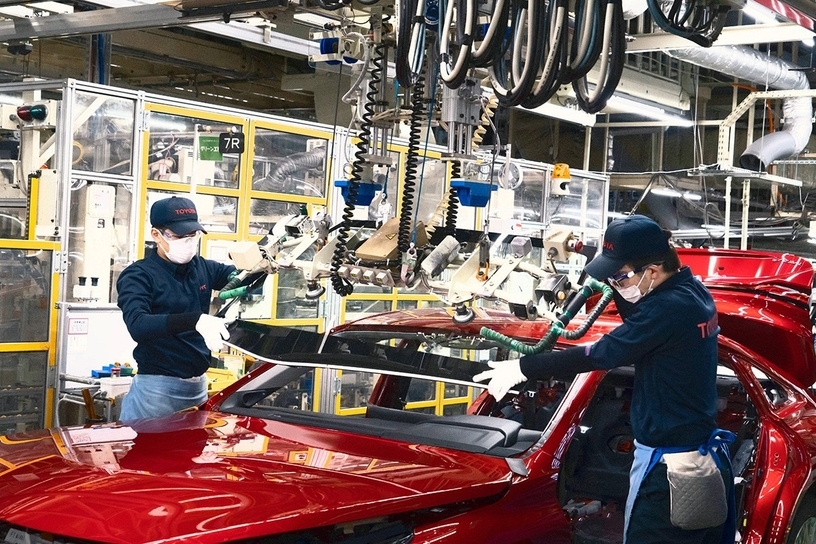
Reinventing Automotive Production for the Electric and Digital Era - Toyota is transitioning its factories from traditional automotive lines to smart, automated, and electrification-focused production systems. Key shifts include: AI-powered quality control systems. Robotics-assisted EV assembly. Fully automated battery production lines. Digital twins for factory simulation. Autonomous material transport within factories. This transformation keeps Toyota competitive as automotive manufacturing enters the era of electrification and AI.
Precision Manufacturing at Global Scale - Toyota’s greatest strength is its ability to produce complex vehicles with extremely low defect rates worldwide. This is achieved through: High-accuracy robotics. Tight supplier integration. Advanced welding and stamping automation. Laser-based measurement systems. Real-time production monitoring. Toyota’s factories remain a global benchmark for efficiency and repeatability.
The Toyota Production System (TPS) — Still Japan’s strongest manufacturing philosophy. TPS reshaped global manufacturing by introducing principles such as: Just-in-Time. Jidoka (automation with human intelligence). Kaizen (continuous improvement). Andon (visual signaling for production issues)
Today, Toyota is evolving TPS to include digital components: IoT sensors across production lines. AI-assisted decision-making. Predictive maintenance. Data-driven inventory control. This fusion of tradition and advanced technology is what defines Japan’s modern manufacturing renaissance.
Leadership in Robotics and Workforce Augmentation - Toyota also develops its own robotics solutions, including: Assembly robots. Autonomous factory logistics systems. Assistive robots for worker support. Humanoid research robots for advanced mobility. These technologies allow Toyota to maintain high production throughput despite labor shortages.
Supply Chain Influence and Ecosystem Power - Toyota’s manufacturing strategies influence thousands of suppliers across Japan and the world. This creates: Robust supply chains. Standardized quality control processes. Shared innovation platforms. Accelerated adoption of smart factory solutions.
Toyota remains the anchor of Japan’s automotive manufacturing leadership.
Reliability as a Core Export - Worldwide manufacturers trust Japanese components because of unmatched consistency, low defect rates, and long-term durability.
Integrated Supply Chains - Japan’s close-knit supply networks make it easier to scale production while maintaining precision. The cooperation between small specialist factories (monozukuri SMEs) and major corporations remains a powerful asset.
Government Support and Strategic Policies - Japan’s government is investing billions in: Digital transformation (DX). Industrial robotics. Chip manufacturing. Green manufacturing technology. This long-term planning strengthens industrial competitiveness.
Leadership in Green and Sustainable Manufacturing - Japanese manufacturers are early adopters of energy-efficient automation, low-carbon factories, and recycling-based production—ensuring global appeal as ESG standards become mandatory.
Opportunities for Global Investors and Businesses
The manufacturing renaissance opens doors for international companies looking to partner with Japan in: Robotics integration. Smart factory solutions. Components sourcing. Joint R&D for EV and AI technologies. Semiconductor ecosystem collaboration. Japan’s stable regulatory environment and innovation culture make it an attractive hub for long-term production strategy.
As global manufacturing undergoes enormous transformation, Japan is proving that tradition and innovation can coexist. By combining automation, robotics, and precision engineering with its established craftsmanship culture, Japan is creating a new competitive edge. This renaissance signals not just a comeback — but a reinvention of what manufacturing leadership looks like in the 21st century.