Explore how Chick-fil-A’s values-driven culture, disciplined franchise model, focused menu strategy, and customer-first service help the brand outperform larger fast-food competitors across the U.S., despite closing every Sunday.
Explore how Chick-fil-A’s values-driven culture, disciplined franchise model, focused menu strategy, and customer-first service help the brand outperform larger fast-food competitors across the U.S., despite closing every Sunday.
Image courtesy of Chick-fil-A
In the hyper-competitive world of fast food, where extended hours, aggressive expansion, and constant promotions are the norm, Chick-fil-A stands apart. The American chicken chain has built one of the most profitable restaurant businesses in the United States by doing the opposite of what the industry expects: closing one day a week, limiting franchise ownership, and putting culture ahead of rapid growth.
Yet despite operating fewer days than competitors, Chick-fil-A consistently generates some of the highest sales per restaurant in the fast-food industry. Its success offers valuable lessons in brand discipline, operational focus, and long-term business strategy.
Chick-fil-A’s roots trace back to 1946, when founder S. Truett Cathy opened a small restaurant called the Dwarf Grill in Hapeville, Georgia. Cathy later refined a pressure-cooked chicken sandwich recipe that became the foundation of the brand. In 1967, the first Chick-fil-A restaurant officially opened inside an Atlanta shopping mall.
Unlike many fast-food chains that chased rapid expansion from the start, Chick-fil-A grew slowly and deliberately. This measured approach allowed the company to refine operations, training, and supply chains before scaling nationwide.
Today, Chick-fil-A is headquartered in Atlanta and operates more than 3,000 restaurants, primarily across the United States. One of Chick-fil-A’s defining business decisions is its narrow menu strategy. While competitors continuously add new items to attract customers, Chick-fil-A focuses almost entirely on chicken.
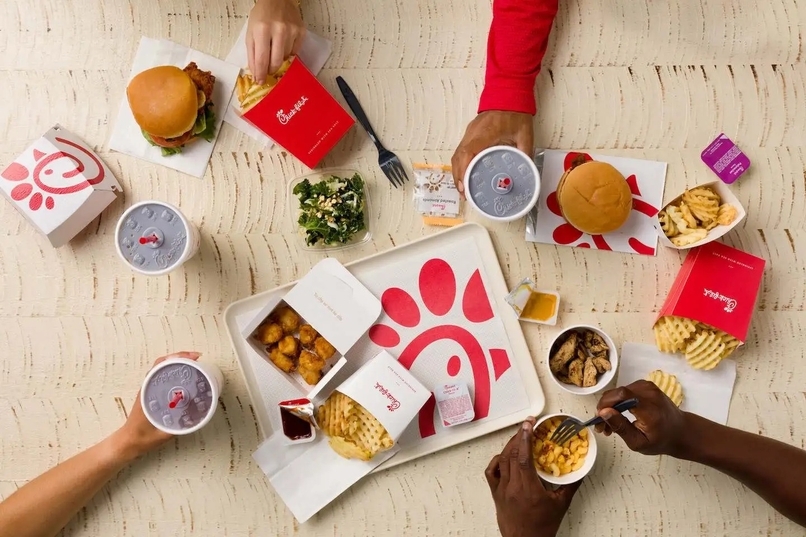
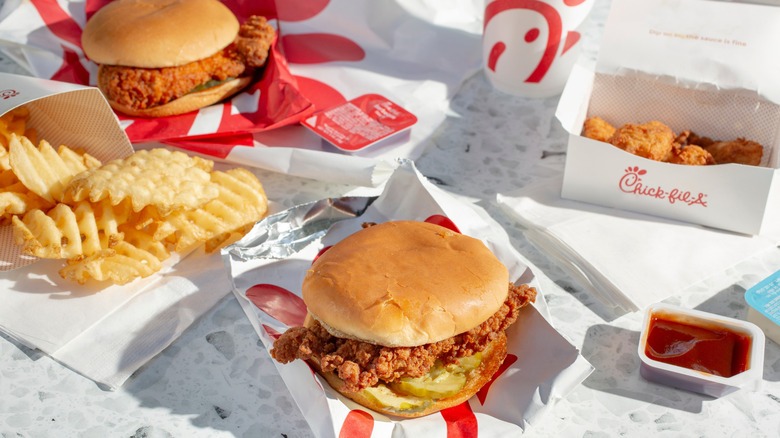
The core menu includes:
This focus simplifies supply chains, reduces kitchen complexity, and allows staff to execute consistently at high speed. From an operational standpoint, fewer menu items mean faster service, lower error rates, and better inventory control.
Perhaps Chick-fil-A’s most visible differentiator is its customer service culture. Employees are trained to respond with “My pleasure” instead of “You’re welcome,” a small detail that reinforces a larger commitment to hospitality.
This service philosophy is not cosmetic. Chick-fil-A invests heavily in employee training, leadership development, and store-level accountability. Managers are expected to lead by example, and frontline workers are empowered to solve customer problems quickly.
The result is consistently high rankings in customer satisfaction surveys. In many studies, Chick-fil-A outperforms not only fast-food competitors but also casual dining chains. In a market where products can be copied easily, Chick-fil-A proves that service quality is difficult to replicate at scale.
Closed on Sundays: A Strategic Constraint That Works
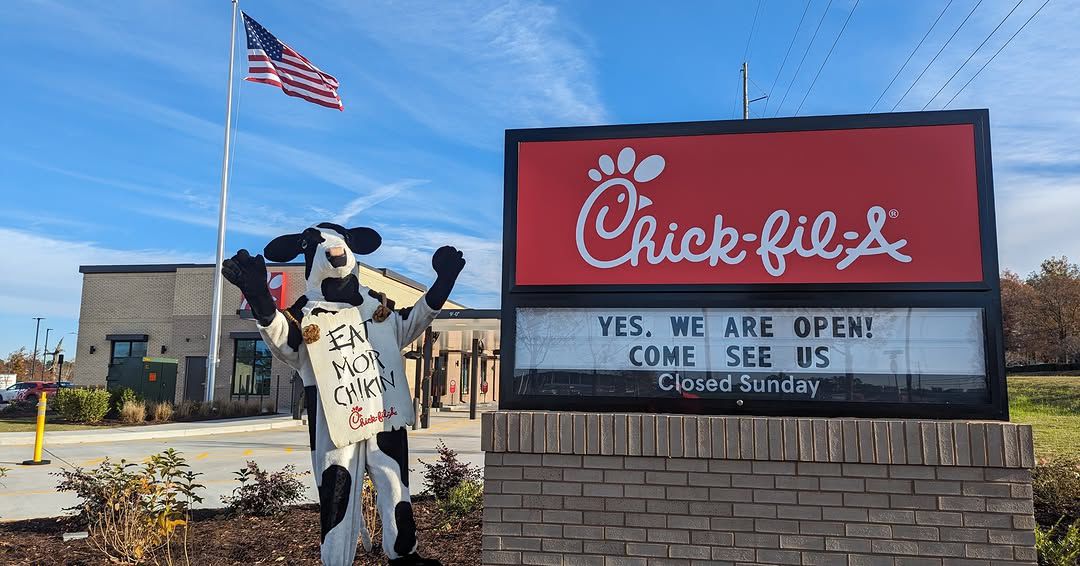
One of the most discussed aspects of Chick-fil-A’s business model is its decision to close all locations on Sundays. This policy reflects the founder’s Christian beliefs, but it also produces tangible business effects. Closing one day a week: Gives employees a guaranteed day off. Reduces burnout and turnover. Simplifies labor scheduling. Strengthens internal culture.
Despite operating fewer days than competitors, Chick-fil-A still achieves higher average revenue per restaurant. This challenges the assumption that longer hours automatically lead to better financial performance. Instead, Chick-fil-A demonstrates that focused execution during limited operating hours can outperform extended but inconsistent operations.
Chick-fil-A Customer Demographics: Who the Brand Really Serves
Chick-fil-A’s customer demographics are the result of deliberate strategy rather than chance, shaped by menu simplicity, store placement, service culture, and brand values. While often labeled a “family brand,” Chick-fil-A serves a broad and diverse audience across the United States. Its core customers are Millennials and Gen X, who drive the majority of repeat visits due to their appreciation for speed, consistency, clean dining environments, and reliable drive-thru convenience for family meals. Gen Z has quickly become an important secondary segment, engaging through mobile ordering, highly efficient drive-thru systems, and the brand’s strong reputation for service quality, amplified by viral menu items and sauce culture on social media. Seniors, by contrast, make up a smaller share compared to traditional diners or coffee chains.
Families play a central role in Chick-fil-A’s success, with the brand strongly over-indexing among households with children, dual-income families, and suburban parents. A kid-friendly menu, consistent quality across locations, and a strong perception of safety, cleanliness, and politeness make it a common “safe choice” for family dining. Income-wise, Chick-fil-A primarily attracts middle to upper-middle-income consumers, typically in the USD 60,000–150,000 household income range. These customers are willing to pay slightly more than standard fast-food prices in exchange for better service and perceived quality, positioning Chick-fil-A as an “affordable premium” option within the fast-food landscape.
Geographically, Chick-fil-A’s strongest presence remains in the Southern and Southeastern United States, particularly in suburban and exurban areas near schools, churches, shopping centers, and office parks, while urban penetration continues to grow at a slower pace. Psychographically, customers tend to value politeness, consistency, brand trust, and community-oriented businesses. They are not necessarily driven by ideology, but many appreciate structure, predictability, and courtesy-driven experiences. Among Gen Z and younger adults, Chick-fil-A’s appeal is especially pragmatic: fast service, app-based rewards, and feeling better treated than at competing chains. For this group, the brand is less about values and more about operational excellence and experience efficiency.
Financial Performance That Defies Industry Norms
Chick-fil-A regularly ranks among the top U.S. fast-food brands by revenue per store. In some years, a single Chick-fil-A location generates significantly more annual sales than competing McDonald’s, KFC, or Burger King outlets.
Key contributors to this performance include: High drive-thru efficiency. Strong repeat customer loyalty. Premium perception despite fast-food pricing. Operational consistency across locations. Importantly, Chick-fil-A does not rely heavily on discounting. The brand’s pricing power reflects trust, quality, and reliability rather than promotional dependency.
Chick-fil-A positions itself as a values-driven company, emphasizing integrity, leadership, and community engagement. The company offers scholarships, educational support, and career development programs for employees.
This emphasis on people extends beyond marketing. Many Chick-fil-A leaders began their careers as hourly employees, reinforcing internal loyalty and cultural continuity. For customers, the brand’s values create a sense of familiarity and trust. For employees, they create stability and upward mobility in an industry known for high turnover.
Chick-fil-A has also faced controversy, particularly related to past corporate donations connected to conservative organizations. These issues sparked public debate and protests in certain markets. In response, the company adjusted its giving strategy and emphasized broader community-focused initiatives. While debate still exists, Chick-fil-A’s core customer base has remained largely loyal, demonstrating the resilience of a strong brand identity. From a business perspective, this highlights the importance of clarity in brand positioning and consistency in execution, even during periods of public scrutiny.

Limited Global Expansion, by Design
Unlike many U.S. fast-food giants, Chick-fil-A has been cautious with international expansion. The brand operates only a small number of locations outside the U.S., including limited presence in Canada and the UK. This restraint reflects a preference for operational control over rapid global scaling. Chick-fil-A prioritizes maintaining service standards and cultural consistency rather than chasing international footprint alone. For business strategists, this approach underscores the value of depth over breadth when brand experience is a core differentiator.
Key Business Lessons from Chick-fil-A
Chick-fil-A’s success offers several transferable lessons:
In an industry driven by speed and scale, Chick-fil-A proves that discipline, values, and operational excellence can create enduring competitive advantage. Chick-fil-A is more than a fast-food chain. It is a case study in how clear values, focused strategy, and people-first operations can outperform industry norms. By resisting the pressure to follow conventional fast-food playbooks, Chick-fil-A has built a brand that is both financially powerful and culturally distinctive.
For entrepreneurs, investors, and business leaders, Chick-fil-A’s story reinforces a simple but often overlooked principle: sustainable success comes from doing fewer things, exceptionally well.