nVIDIA’s Evolution from Graphics Pioneer to AI Powerhouse
NVIDIA’s success was built not only by Jensen Huang but also by co-founders Chris Malachowsky and Curtis Priem. Their technical vision and engineering expertise laid the foundation for GPUs, gaming innovation, and the company’s rise as a global tech leade
NVIDIA has become one of the most important companies in the modern technology landscape, shaping industries ranging from gaming to artificial intelligence (AI), data centers, and autonomous vehicles. Founded in 1993 by Jensen Huang, Chris Malachowsky, and Curtis Priem, NVIDIA began with a focus on graphics chips. Three decades later, it has transformed into a global leader in computing, commanding a market capitalization that now exceeds $2 trillion as of 2025.
Jensen Huang The Visionary Founder Behind NVIDIA’s Global Dominance
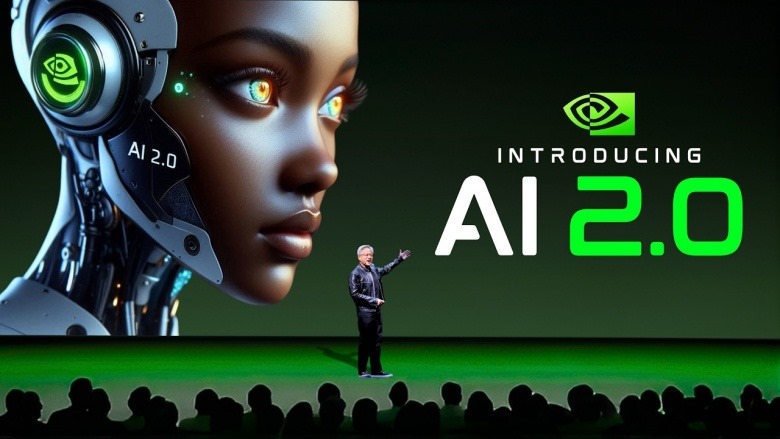
When people think of NVIDIA, they often picture its cutting-edge graphics cards, AI chips, or futuristic technologies like autonomous driving and digital twins. Yet, behind the hardware and software that power much of today’s digital world stands one man: Jen-Hsun “Jensen” Huang, NVIDIA’s co-founder, president, and CEO. Known for his trademark black leather jacket and electrifying keynote presentations, Huang has become one of the most influential figures in technology and business.
Jensen Huang was born in Tainan, Taiwan, in 1963, and immigrated to the United States with his family at the age of nine. The Huang family settled in Kentucky, where he faced cultural and language challenges as a young immigrant. Despite these obstacles, he developed a strong resilience and adaptability that would later define his leadership style.
Huang earned a Bachelor’s degree in Electrical Engineering from Oregon State University (1984) and went on to complete a Master’s degree in Electrical Engineering from Stanford University (1992). It was during his time at Stanford that he sharpened his technical expertise and built the foundation for what would become NVIDIA.
In 1993, at the age of 30, Huang co-founded NVIDIA alongside Chris Malachowsky and Curtis Priem. At the time, the personal computer industry was still in its early growth phase, and the potential for 3D graphics had yet to be realized. Huang believed that graphics processing could extend far beyond video games, potentially revolutionizing industries such as design, research, and eventually artificial intelligence.
Starting NVIDIA was not without risk. With only $40,000 in seed capital, the company faced established competitors like ATI (later acquired by AMD) and Intel. However, Huang’s bold vision, combined with his ability to inspire engineers and investors alike, allowed NVIDIA to carve out its place in the market.
Under Huang’s leadership, NVIDIA introduced the RIVA series of graphics chips in the 1990s, but it was the launch of the GeForce 256 in 1999—dubbed the world’s first GPU—that changed the industry forever. This innovation cemented NVIDIA as a pioneer in gaming and graphics technology.
However, Huang’s greatest decision was perhaps the creation of CUDA (Compute Unified Device Architecture) in 2006. At a time when GPUs were seen only as gaming hardware, Huang bet on their broader computing potential. CUDA enabled developers to use GPUs for scientific and general-purpose applications, paving the way for NVIDIA’s dominance in AI and high-performance computing.
Many of Huang’s strategic moves have involved foresight and risk-taking:
· Betting on AI early when most of the industry was still focused on CPUs.
· Acquiring Mellanox Technologies (2020) to strengthen NVIDIA’s position in data centers and networking.
· Launching Omniverse, a bold move into simulation and digital twin technology.
These decisions showcase his long-term vision and willingness to invest ahead of the curve.
Huang is often described as a visionary yet hands-on leader. Unlike many CEOs of large technology companies, he maintains deep involvement in product strategy and technical direction. Employees and industry insiders note his ability to balance engineering depth with business strategy, making him both a technologist and a businessman.
His leadership traits include:
· Bold Vision: Anticipating shifts in technology decades before competitors.
· Resilience: Leading NVIDIA through tough times, including near-bankruptcy in the early 2000s.
· Inspiration: Known for his charismatic presentations, he communicates NVIDIA’s mission in ways that energize developers, investors, and partners.
· Pragmatism: While ambitious, Huang adapts quickly to industry and geopolitical realities, as seen in NVIDIA’s response to export restrictions in China.
Huang’s contributions have been widely recognized:
· Fortune’s Businessperson of the Year (2017).
· Regularly featured in Harvard Business Review’s list of top-performing CEOs.
· Credited as one of the leading visionaries driving the global AI revolution.
He is also known for his distinctive public persona. His keynote presentations at NVIDIA’s GTC (GPU Technology Conference) are highly anticipated in the tech world, blending showmanship with groundbreaking product announcements.
While Huang has steered NVIDIA to unprecedented heights, challenges remain. Competition from AMD, Intel, and custom AI chipmakers continues to grow. Geopolitical tensions, particularly U.S. restrictions on advanced chip exports to China, also test NVIDIA’s global expansion.
Nevertheless, Huang’s legacy is already cemented. He transformed NVIDIA from a startup with a single product line into a diversified computing powerhouse at the center of gaming, AI, data centers, and autonomous vehicles. Few leaders in tech have managed to stay at the helm of the same company for over 30 years while continuously reinventing it.
Jensen Huang’s story is not just about building a company—it is about reshaping industries. From his beginnings as a Taiwanese immigrant navigating life in America to becoming the CEO of one of the world’s most valuable companies, Huang embodies resilience, vision, and innovation.
The Unsung Co-Founders of NVIDIA: Chris Malachowsky and Curtis Priem
While Jensen Huang is the public face of NVIDIA, the company’s rise to global prominence was also shaped by its two other co-founders: Chris Malachowsky and Curtis Priem. Both played crucial roles in NVIDIA’s early years, bringing technical expertise and vision that complemented Huang’s leadership.
Chris Malachowsky co-founded NVIDIA in 1993 after building a career in microprocessor and system design. Before NVIDIA, he worked at Sun Microsystems, contributing to workstation architecture and system engineering.
At NVIDIA, Malachowsky was instrumental in establishing the company’s technical foundations and culture of innovation. He held various engineering leadership roles and helped drive NVIDIA’s early product development in GPUs and system architecture.
Today, Malachowsky is recognized as a NVIDIA Fellow and continues to serve as a key advisor. Beyond his work at NVIDIA, he has been active in philanthropy and education, supporting universities and programs focused on engineering, computer science, and technology innovation.
Curtis Priem, another co-founder, served as NVIDIA’s first chief technical officer (CTO). He brought deep expertise in graphics and chip design, having previously worked at Sun Microsystems and IBM on advanced workstation graphics.
Priem is credited with shaping NVIDIA’s earliest GPU architectures and establishing the company’s reputation for technical excellence. His vision for the potential of graphics processing helped set the stage for the company’s long-term success.
Priem retired from NVIDIA in 2003, but his impact continues to be felt in the company’s DNA. He later turned to philanthropy, becoming a major supporter of educational and environmental causes, particularly through the Curtis & Elizabeth Priem Foundation.
While Jensen Huang became NVIDIA’s enduring leader and public figure, the contributions of Chris Malachowsky and Curtis Priem were vital in building the company’s foundations. Malachowsky’s engineering leadership and Priem’s technical vision helped transform a small startup with a bold idea into one of the world’s most influential technology companies.
Together, the trio’s complementary skills created a legacy that continues to shape the future of gaming, AI, and accelerated computing.
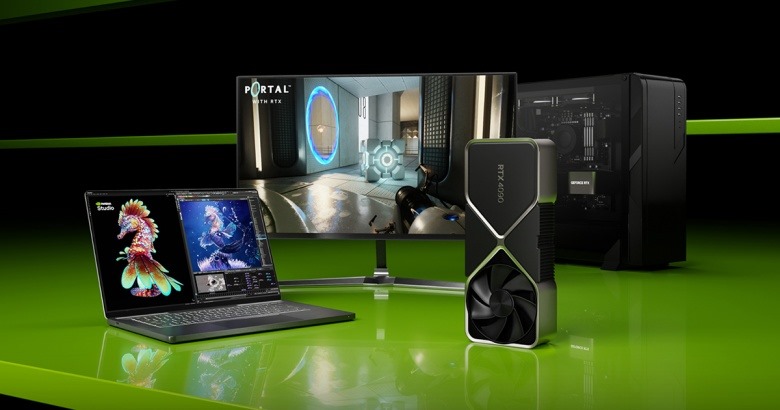
Gaming (GeForce GPUs). NVIDIA’s GeForce product line is the gold standard for PC gaming graphics. Its proprietary technologies like DLSS (Deep Learning Super Sampling) and Ray Tracing (RTX) have redefined real-time graphics.
Data Centers & AI. NVIDIA GPUs power AI training and inference workloads in research, cloud, and enterprise settings. Its CUDA parallel computing platform is widely adopted in AI and high-performance computing. NVIDIA’s data center revenue has recently overtaken gaming as its largest segment.
Automotive & Autonomous Driving. NVIDIA DRIVE platform powers autonomous driving, advanced driver assistance systems (ADAS), and in-car infotainment. Partnerships with Tesla, Mercedes-Benz, and other automakers.
Professional Visualization. GPUs for designers, engineers, and creative professionals (Quadro line, now branded as RTX A-series).
Networking & HPC. After acquiring Mellanox Technologies (2020), NVIDIA expanded into high-speed networking for data centers.
This growth story is not only about hardware but also about vision, timing, and the ability to recognize where computing is headed. NVIDIA’s journey illustrates how a company can move from niche beginnings to becoming one of the most influential players in the global economy.
NVIDIA’s original mission was to develop chips that could accelerate 3D graphics, a crucial demand in the rapidly growing gaming industry of the 1990s. Its RIVA series laid the foundation, but it was the GeForce GPU line, introduced in 1999, that catapulted NVIDIA to the top of the graphics market.
The GeForce brand quickly became synonymous with high-performance gaming, and over the years, NVIDIA has continuously pushed the boundaries of what is visually possible on consumer hardware. Breakthroughs like real-time ray tracing (RTX) and DLSS (Deep Learning Super Sampling) have not only enhanced graphics fidelity but also showcased the company’s ability to merge traditional graphics with machine learning.
Gaming remains an important part of NVIDIA’s identity, but it also served as the gateway for the company’s diversification. The technology powering video games eventually proved vital in areas far beyond entertainment.
CUDA and the Turning Point Toward AI
The most significant inflection point in NVIDIA’s history came in 2006 with the launch of CUDA (Compute Unified Device Architecture). CUDA allowed developers to use GPUs for general-purpose computing, beyond rendering graphics.
This was transformative. Suddenly, researchers and engineers could harness the parallel processing capabilities of GPUs for applications in scientific computing, medical research, and eventually AI. CUDA built a developer ecosystem around NVIDIA that continues to expand nearly two decades later, creating a strong competitive moat.
By the mid-2010s, when deep learning and neural networks began to dominate the AI landscape, NVIDIA was uniquely positioned to capitalize. Its GPUs became the standard for training AI models, enabling breakthroughs in computer vision, natural language processing, and generative AI.
A New Growth Engine
While gaming fueled NVIDIA’s early growth, its data center segment has now become the largest revenue driver. Cloud providers, enterprise IT firms, and research institutions rely on NVIDIA’s GPUs to power workloads in AI training and inference.
The A100 and H100 Tensor Core GPUs, launched in the past few years, are the workhorses of modern AI computing. They are essential for training large-scale models such as ChatGPT and other generative AI platforms. NVIDIA’s upcoming Blackwell architecture, expected to roll out in 2025, promises another leap in performance and efficiency.
The company’s acquisition of Mellanox Technologies in 2020 added high-speed networking and interconnect solutions to its portfolio, allowing NVIDIA to integrate GPUs with advanced networking to optimize performance at the scale of modern supercomputers.
Automotive and Omniverse
NVIDIA has also made bold moves into the automotive industry. Its NVIDIA DRIVE platform is designed for autonomous driving and advanced driver assistance systems (ADAS). Partnerships with automakers like Tesla, Mercedes-Benz, Volvo, and Hyundai highlight how GPUs and AI are becoming integral to transportation.
Another ambitious project is NVIDIA Omniverse, a platform designed to enable real-time 3D collaboration and the creation of digital twins. While initially connected with the concept of the metaverse, Omniverse’s applications in industrial design, robotics, and urban planning are proving to be even more compelling. Companies are using Omniverse to simulate factories, test robotics systems, and optimize logistics before deploying in the real world.
NVIDIA’s financial rise has been remarkable. For most of the 2000s, NVIDIA was seen primarily as a gaming hardware company. But over the past decade, it has transitioned into a diversified computing giant.
· Market Cap (2025): Over $2 trillion
· Revenue Drivers: Data centers, gaming, professional visualization, automotive
· Stock (NVDA): One of the best-performing equities of the past 10 years, often compared to the likes of Apple, Microsoft, and Amazon in terms of returns.
This success reflects not only surging demand for GPUs but also NVIDIA’s ability to continuously reinvent itself and expand into new markets.
Much of NVIDIA’s trajectory can be credited to Jensen Huang, the company’s co-founder and long-time CEO. Known for his trademark leather jacket and charismatic keynote presentations, Huang has become one of the most recognizable figures in the technology industry.
His leadership style emphasizes both vision and execution. Huang recognized early that AI would become the next major computing paradigm and positioned NVIDIA to lead. Unlike many tech CEOs who delegate technical direction, Huang remains deeply involved in product strategy and innovation, giving NVIDIA a unique edge in a competitive field.
Challenges and Competition
Despite its dominant position, NVIDIA faces challenges. Competitors like AMD and Intel continue to invest in GPU and AI chip development. In addition, new players, including cloud providers like Google (TPU) and Amazon (Trainium/Inferentia), are designing their own AI chips to reduce reliance on NVIDIA hardware.
There are also geopolitical factors. U.S. export restrictions on advanced chips to China have impacted NVIDIA’s ability to fully tap into one of the world’s largest markets for AI technology. To adapt, NVIDIA has had to design modified chips for compliance while still serving global demand.
Looking forward, NVIDIA’s future revolves around several key themes:
1. Blackwell GPUs and Beyond – The upcoming GPU architecture promises to push AI performance even further, keeping NVIDIA at the center of computing innovation.
2. AI Software Ecosystem – With CUDA, TensorRT, cuDNN, and other platforms, NVIDIA is not just a hardware provider but also a software company, ensuring developers stay within its ecosystem.
3. Healthcare and Robotics – Expanding into industries that can benefit from AI-driven simulations, from drug discovery to autonomous robotics.
4. Digital Twins and Omniverse – Helping industries design, test, and operate systems virtually before deploying in the real world.
5. Global Infrastructure – Partnering with governments, enterprises, and cloud providers to build AI supercomputers worldwide.
NVIDIA’s evolution from a graphics pioneer to an AI powerhouse is one of the most remarkable stories in modern business. Its ability to anticipate industry shifts, invest in the right technologies, and build a loyal developer ecosystem has secured its place as a cornerstone of the digital economy.
As AI becomes increasingly integrated into every aspect of society, NVIDIA’s influence is set to grow even further. From powering the most advanced language models to shaping the future of autonomous vehicles and digital twins, NVIDIA is not just participating in the next era of computing—it is leading it.