Quantum Computing: The Next Frontier for U.S. Tech Giants
Quantum computing is creating major opportunities for U.S. entrepreneurs, from quantum-safe cybersecurity and AI tools to cloud integration, education platforms, and consulting services. Discover the top business ideas shaping America’s next tech wave.
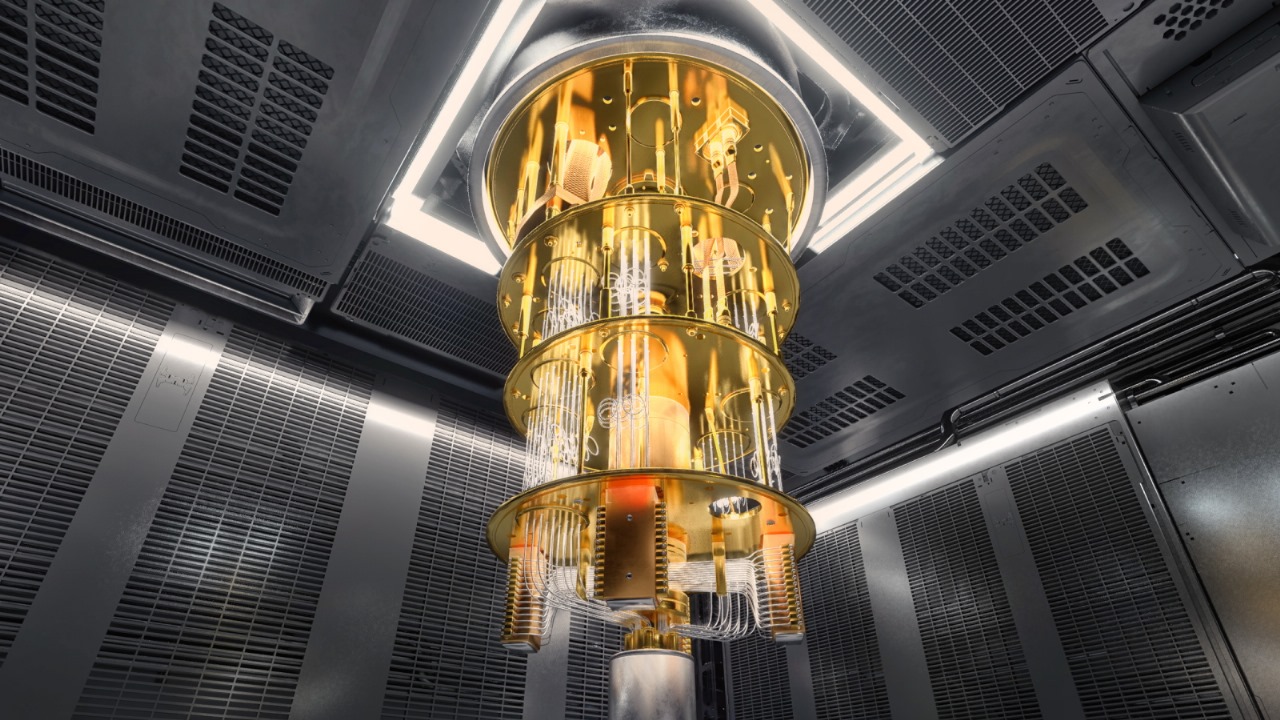
Quantum computing has become one of the most important long-term bets for major U.S. technology companies. Unlike traditional computers that process information in bits (0 or 1), quantum computers use qubits, allowing them to process exponentially more information through superposition and entanglement. This makes them uniquely suited for solving highly complex problems that classical computers struggle with.
Quantum computing is a new type of computing that uses the principles of quantum physics to process information in ways that traditional computers cannot.
Quantum computing is a technology that uses qubits (quantum bits) instead of classical bits.
Classical Bit
Can only be 0 or 1
Quantum Bit (Qubit)
Can be 0, 1, or both at the same time (this is called superposition)
Can be linked with other qubits so that changing one changes the other instantly (entanglement)
Because of this, a quantum computer can explore many possibilities simultaneously, which makes it incredibly powerful for certain types of problems. Quantum computers can solve problems that are too complex or take too long for normal computers, such as: Discovering new medicines. Designing advanced materials. Creating ultra-secure encryption. Optimizing big systems (traffic, supply chains, finance). Accelerating artificial intelligence
We are in the early stage of quantum computing. Companies like Google, IBM, Microsoft, Amazon, and Intel are investing heavily, but we are still years away from large-scale commercial use.
Today, quantum computing is still in the early stages — noisy, error-prone, and expensive — but U.S. tech giants are pouring billions into it because whoever achieves quantum advantage first will lead the next wave of scientific, industrial, and cybersecurity breakthroughs.
Google - Google achieved early fame with its claim of “quantum supremacy” in 2019, showing a quantum computer could solve a problem far faster than a classical one. Recently, Google has focused on developing error-corrected quantum processors, aiming for one million qubits by the 2030s. Target applications: materials science, climate modeling, drug discovery, optimization.
Google gained global attention after announcing its milestone of “quantum supremacy” in 2019. The company is now focused on building error-corrected systems that could scale to one million qubits. Google sees quantum as essential for breakthroughs in climate modeling, material science, and molecular design.
IBM - IBM is pushing accessibility through its IBM Quantum Network, allowing enterprises and researchers to access quantum processors via the cloud. Roadmap includes 100,000-qubit systems and modular quantum architectures. IBM is also advancing quantum-safe cryptography, anticipating future cybersecurity risks.
IBM has built the broadest quantum ecosystem through its IBM Quantum Network, allowing researchers, universities, and companies to experiment via cloud access. Its long-term roadmap includes 100,000+ qubit processors and modular architectures. IBM is also a leader in quantum-safe encryption—critical for future cybersecurity.
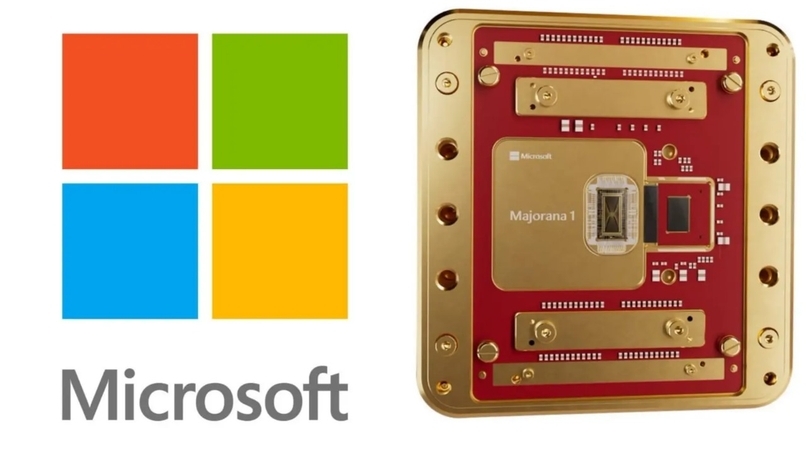
Microsoft - Microsoft focuses on topological qubits, a unique approach that could offer more stability and lower error rates. Its quantum ecosystem integrates seamlessly with Azure Cloud. Focus areas: quantum chemistry, optimization for supply chains, cryptography.
Microsoft is pursuing a unique path with topological qubits, designed to be more stable and resistant to errors. Integrated into Azure Quantum, the company is targeting industries such as pharmaceuticals, logistics, and cryptography.
Amazon (AWS Braket) - Amazon uses a different approach: it doesn’t build its own quantum processors but offers access to multiple hardware types (ion trap, superconducting, neutral atom) through the cloud. AWS is investing in a new quantum research center at Caltech.
AWS Braket provides a hardware-agnostic platform where users can test different quantum technologies—from superconducting qubits to neutral atoms—without building hardware. Amazon is also investing in a major quantum research lab at Caltech.
Intel - Intel is leveraging its semiconductor manufacturing expertise to build silicon-based qubits, which may be more scalable than other qubit systems. Its approach focuses on making quantum processors practical for mass production.
Intel leverages its chip manufacturing expertise to create silicon-based qubits, potentially offering the most scalable route for industrial production. Its roadmap focuses on practical, manufacturable quantum processors.
Why Quantum Computing Matters for the U.S. Economy
National Security - Quantum computers could break current encryption systems. This has accelerated development of post-quantum cryptography and made quantum research a national priority.
Drug Discovery & Healthcare - Quantum simulation could design molecules and proteins faster, cutting R&D timelines and costs.
Finance - Banks and hedge funds are exploring quantum for: Portfolio optimization. Fraud detection. Risk modeling
AI Acceleration - Quantum machine learning (QML) could dramatically speed up model training and pattern recognition.
Quantum Computing The Next Frontier Transforming Business and Everyday Life
Quantum computing has rapidly emerged as one of the most important technological frontiers for the United States. While still in its early stages, quantum innovation is progressing quickly, driven by massive investments from leading U.S. tech giants including Google, IBM, Microsoft, Amazon, and Intel. Although most consumers will never interact directly with a quantum computer, the technology is expected to quietly transform many sectors—healthcare, finance, cybersecurity, transportation, manufacturing, and artificial intelligence—over the next decade.
Traditional computers process information in bits—either a 0 or a 1. Quantum computers use qubits, which can be 0, 1, or both at the same time due to a quantum property called superposition. When multiple qubits become entangled, they can perform calculations simultaneously on an enormous scale.
This ability to handle vast possibilities at once makes quantum machines uniquely suited for extremely complex problems that classical computers cannot solve efficiently, such as molecular simulation, advanced optimization, and high-dimensional data processing.
We are currently in the NISQ era (Noisy Intermediate-Scale Quantum), where systems are powerful but still unstable. However, the potential impact is so large that major U.S. companies and federal agencies are racing to develop scalable, error-corrected systems.
Together, these companies form the backbone of the U.S. quantum race—one that has major implications for economic leadership, national security, and scientific innovation.
Business Applications Taking Shape
Although commercial quantum computers are years away from mainstream availability, early applications are already emerging across multiple industries.
Drug Discovery and Healthcare
Quantum simulation can model molecular interactions with near-atomic precision. This will drastically speed up the discovery of new medicines and personalized treatments. Pharmaceutical R&D timelines could shrink from years to months.
Finance and Banking
Financial institutions are exploring quantum for: Portfolio optimization. Fraud detection. High-speed risk modelling. Algorithmic trading strategies. Quantum tools can analyze huge datasets in real time, offering competitive advantages to early adopters.
Supply Chain and Logistics
Quantum optimization can identify the best possible routing and scheduling solutions among millions of variables. Benefits include: Reduced delivery times. Lower fuel and shipping costs. Improved warehouse efficiency. Ride-hailing companies, airlines, and global logistics players are all testing quantum-enabled models.
Cybersecurity
Quantum computing threatens today’s encryption, pushing governments and corporations to adopt post-quantum cryptography (PQC). U.S. agencies are already transitioning to quantum-resistant standards to protect national and financial systems.
Quantum machine learning (QML) can accelerate complex training processes and enhance pattern recognition. Future possibilities include: More accurate predictive models. Smarter autonomous systems. Real-time large-scale AI reasoning
Consumers may never see a quantum processor, but they will experience its benefits indirectly.
More Accurate Weather Forecasts - Quantum simulations can produce highly accurate climate models, improving disaster preparation and agricultural planning.
Shorter Commutes and Optimized Routes - Quantum engines can power smarter routing for ride-hailing, food delivery, and public transport, reducing congestion in major cities.
Safer Digital Lives - Quantum-safe encryption will protect online banking, digital wallets, cloud accounts, and national infrastructure from next-generation cyber threats.
Better Consumer Products - Quantum-designed materials could lead to stronger structures, advanced batteries, lighter vehicles, and more energy-efficient electronics.
Smarter Digital Services - AI tools, virtual assistants, and search engines will become significantly more intelligent once enhanced by quantum processing.
Despite the excitement, major hurdles remain: Qubits are extremely fragile and require precise conditions. Error rates must be reduced to achieve scalable systems. Skilled quantum engineers and researchers are in short supply. Real-world applications require hybrid classical-quantum platforms. The path forward is complex, but progress is accelerating.
Quantum computing represents a once-in-a-generation technological leap—on the scale of the microprocessor, the internet, and artificial intelligence. The U.S. currently leads the global race, supported by its tech giants, research universities, and government funding initiatives.
As quantum capabilities mature, industries will reinvent how they operate. Companies that explore quantum early—through partnerships, training, and pilot programs—will be better positioned to compete in the next era of technological transformation.
Quantum computing will not replace everyday devices, but it will power the hidden systems that shape our lives. From medicine to finance to national security, its impact will be profound, far-reaching, and inevitable.
Despite huge potential, quantum faces major obstacles: Qubits are unstable and highly sensitive to noise. Building scalable, error-corrected systems is costly. There is a shortage of quantum engineers and specialists. The current era is called NISQ (Noisy Intermediate-Scale Quantum), meaning systems are powerful but still imperfect.
Quantum computing represents the next major technological frontier for U.S. tech giants — on the same magnitude as the birth of the internet, mobile phones, and artificial intelligence. While real-world commercial applications are still emerging, the companies that solve quantum’s biggest engineering challenges will dominate: cybersecurity. Pharmaceuticals. AI. national defense. advanced materials. Anyone writing about future tech, innovation, or industry leadership must include quantum computing as a critical storyline for the next decade.
U.S.-focused quantum computing business ideas for new entrepreneurs.
These ideas match U.S. market demand, government incentives, enterprise needs, and the current stage of the quantum industry. High-Potential Quantum Computing Business Ideas for Entrepreneurs in the USA
Quantum-Safe Cybersecurity Companies
The U.S. government has already mandated a transition to post-quantum cryptography (PQC) for federal agencies. This creates a huge opportunity for startups. Demand from: banks, fintech, healthcare, defense, enterprise IT.
Quantum-safe email, messaging, and VPN systems
Tools that help banks and government contractors migrate to PQC
A service that scans and updates outdated encryption across enterprise systems
Quantum Education, Certification & Workforce Training
The U.S. has a massive shortage of quantum talent. Entrepreneurs can build: Quantum bootcamps for developers. Online academies for business managers. Quantum curriculum for universities and high schools. Corporate training for Fortune 500 companies transitioning to quantum tech. Government grants often support education and workforce development.
Quantum Consulting and Roadmap Services
Most U.S. companies don’t understand how to adopt quantum or how it affects their industry. You can offer: “Quantum Readiness Assessments” Strategy roadmaps for 3–5 years. Industry-specific pilots (healthcare, finance, logistics, energy). Training for leadership teams. This is especially valuable for enterprises in New York, Texas, California, Virginia, and Washington.
Quantum Software-as-a-Service (QSaaS) for Businesses
With AWS Braket, IBM Quantum, and Microsoft Azure Quantum already available, startups do not need to build quantum hardware. Build software that makes quantum accessible: No-code quantum algorithm builder. Industry solutions for logistics, supply chain, or financial modelling. Quantum simulation tools for chemicals & battery materials. Quantum optimization engines. These can run partly on classical computers with quantum acceleration.
Quantum-Enhanced AI Tools (U.S.-friendly niche)
AI startups can integrate quantum-inspired algorithms even without quantum hardware. Examples: Predictive tools for retail & e-commerce. Real-time fraud detection models. Portfolio optimization AI (Wall Street demand is huge). Supply chain forecasting AI (for manufacturing & trucking companies). This is currently one of the fastest ways to enter the quantum market.
Quantum Hardware Supply Chain Manufacturing
The U.S. government is investing in domestic semiconductor and quantum hardware manufacturing. Entrepreneurs can build businesses producing: Cryogenic cooling systems. Microwave control electronics. Photonic components. Qubit shielding materials. Quantum-grade sensors. These products are needed by companies like Google, IBM, IonQ, Rigetti, and university research labs.
Quantum Networking & Communication Solutions
Future quantum networks require: Quantum key distribution (QKD) devices. Quantum repeaters. Fiber-based quantum communication kits. Secure quantum communication hubs for military bases and corporations. The U.S. Department of Energy actively funds startups in this space.
Quantum Cloud Integration for Enterprises
Most large companies are already on AWS or Azure. You can help them adopt quantum cloud platforms. Services include: Migrating workloads to AWS Braket or Azure Quantum. Setting up hybrid classical–quantum workflows. Building APIs for finance, materials, insurance, or logistics. This requires coding knowledge, not advanced physics.
Quantum Simulation for Industry R&D
U.S. pharmaceutical, chemical, energy, and automotive companies need simulations that current computers can’t handle. Entrepreneurs can offer: Drug molecule simulation. Battery material optimization. Alloy and composite design. Climate, wind, and weather simulations. Hydrogen energy modelling. These services can use cloud quantum hardware or quantum-inspired algorithms.
Quantum-Focused Media, Research, and Analysis
U.S. investors, corporates, and policymakers need trustworthy quantum insights. You can create: Quantum news platforms. Market research reports. Investment analysis on quantum startups. Government-compliance guidance (e.g., NIST PQC standards). A U.S. quantum business podcast or YouTube channel