Indonesia’s E-Commerce Landscape: Scale, Speed, and a Market Unlike Any Other
An in-depth look at Indonesia’s e-commerce market, covering Shopee, Tokopedia, Lazada, TikTok Shop, and Bukalapak. Learn how each platform competes, their strengths, and what drives mobile-first, social-driven shopping in Southeast Asia’s digital economy.
Indonesia has emerged as Southeast Asia’s most dynamic e-commerce market, defined not only by its sheer size but by how differently online commerce operates compared to Western or even regional peers. With a population of nearly 280 million people spread across thousands of islands, Indonesia’s digital economy has evolved in uniquely local ways—mobile-first, socially driven, and deeply intertwined with everyday life.
For businesses, investors, and brands, Indonesia represents both an enormous opportunity and a complex operational challenge. Understanding how the ecosystem truly works is essential before entering or scaling in this market.
Indonesia is the largest e-commerce economy in Southeast Asia and one of the fastest-growing globally. Growth has been fueled by three structural factors: Demographics – A young, digitally native population with rising purchasing power. Mobile penetration – Smartphones are the primary gateway to the internet. Platform-led adoption – Marketplaces lowered the barriers for first-time buyers and sellers.
Unlike markets that evolved from desktop-based online shopping, Indonesia leapfrogged directly into mobile commerce. As a result, e-commerce behavior is shaped by apps, notifications, flash sales, and livestreams rather than traditional websites. Indonesia’s e-commerce market is not dominated by a single platform. Instead, it is highly competitive, with each major player carving out a specific strength.
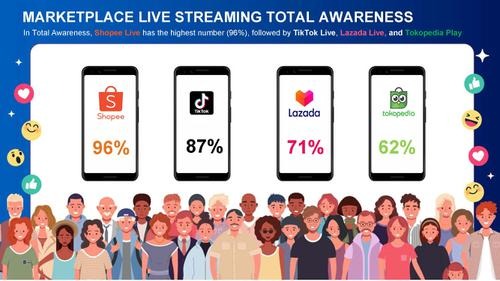
Shopee leads in terms of user traffic and transaction volume. Its dominance comes from aggressive promotions, free shipping subsidies, and a gamified shopping experience. Shopee resonates strongly with price-sensitive consumers and excels in categories such as fashion, beauty, household goods, and fast-moving consumer products. Livestream shopping and in-app engagement features are core to Shopee’s strategy, turning shopping into entertainment rather than a purely transactional activity.
Shopee has established itself as the dominant force in Indonesia’s e-commerce market, consistently leading in both user traffic and transaction volume. Its success is not driven by a single advantage, but by a tightly integrated strategy that combines aggressive pricing, frictionless logistics, deep seller participation, and a highly engaging mobile-first experience. In a market as price-sensitive and competitive as Indonesia, Shopee has positioned itself not just as a shopping platform, but as a daily digital habit for millions of consumers.
Shopee regularly ranks as the most visited e-commerce platform in Indonesia, capturing the highest share of monthly active users and order volumes. This leadership stems from its ability to attract frequent, repeat purchases rather than relying solely on high-ticket transactions.
The platform’s app-centric design encourages daily engagement through notifications, gamified rewards, and time-limited campaigns. Rather than treating e-commerce as an occasional activity, Shopee embeds itself into users’ routines, driving consistent transaction flow across all income segments.
High traffic also creates a self-reinforcing ecosystem: sellers are drawn to Shopee because of its massive user base, while buyers benefit from broader product selection and more competitive pricing.
Shopee’s competitive edge in Indonesia is built on its willingness to engage aggressively in price wars. The platform routinely deploys: Heavy discount vouchers. Platform-funded price cuts. Cashback and coin-based reward systems. Large-scale free shipping subsidies.
Free shipping has become a core expectation among Indonesian consumers, and Shopee has led the market in absorbing delivery costs to reduce purchase friction. Flash sales, often running multiple times per day, create urgency and drive impulse purchases, especially in fast-moving categories.
While these tactics compress margins in the short term, they have proven effective in locking in market share and shaping consumer behavior around Shopee-first shopping.
Shopee performs particularly well in categories that align with frequent, low-to-mid price purchases: Fashion and apparel, where trends change quickly and buyers respond strongly to discounts. Beauty and skincare, driven by influencer recommendations, reviews, and livestream demonstrations. Household items, including daily necessities and value-driven products. Small and medium enterprises (SMEs) offering niche, local, or private-label goods
These categories benefit from Shopee’s high-volume, promotion-heavy model, where visibility and velocity often matter more than brand heritage. For many local SMEs, Shopee serves as the primary sales channel and, in some cases, the foundation of their entire business.
Shopee was among the earliest platforms in Indonesia to fully integrate livestream shopping into its ecosystem, and it continues to invest heavily in this format.
Livestreams allow sellers and influencers to: Demonstrate products in real time. Answer customer questions instantly. Offer exclusive, time-limited deals. Build trust through authenticity and interaction.
This format is especially effective in beauty, fashion, and home products, where visual demonstration and social proof strongly influence purchasing decisions. Livestream shopping blurs the line between entertainment and commerce, turning shopping into an interactive experience rather than a passive transaction. For Shopee, livestreams increase session time, boost conversion rates, and create emotional engagement that traditional listings cannot replicate.
Shopee’s growth in Indonesia is closely tied to its ability to onboard and retain millions of small and medium sellers. The platform lowers entry barriers by offering: Easy store setup and onboarding. Integrated logistics and payment solutions. Seller education programs and performance analytics. Promotional tools designed for small budgets.
Many sellers operate Shopee stores as home-based or side businesses, scaling up as demand grows. Shopee’s infrastructure enables these micro-entrepreneurs to reach a national audience without investing in websites, marketing teams, or logistics networks. Shopee’s interface is intentionally designed to encourage exploration and frequent interaction. Features such as daily check-ins, games, coins, and rewards turn shopping into a habitual activity.
Push notifications alert users to flash sales, expiring vouchers, and personalized deals, driving repeat app opens. This mobile-first strategy aligns perfectly with Indonesia’s smartphone-dominated internet usage and helps Shopee maintain high engagement levels compared to competitors.
Tokopedia, part of the GoTo Group, is widely perceived as Indonesia’s most trusted local marketplace. It performs particularly well in electronics, official brand stores, and higher-consideration purchases. Integration with GoPay and the broader Gojek ecosystem strengthens its position in payments and logistics. Tokopedia is often the platform of choice for established local brands and companies prioritizing long-term customer trust over short-term promotions.
Tokopedia stands as one of Indonesia’s most influential homegrown e-commerce platforms and a central pillar of the GoTo Group ecosystem. While it competes directly with Shopee on scale, Tokopedia’s strategy is notably different. Rather than relying primarily on aggressive price wars, Tokopedia has built its position around trust, brand partnerships, and deep integration with Indonesia’s broader digital economy.
Founded in Indonesia and designed for Indonesian consumers, Tokopedia benefits from strong domestic brand recognition and trust. This local credibility plays a crucial role in categories where authenticity, warranty, and after-sales support matter. Consumers often associate Tokopedia with: Official brand stores. Genuine products. Transparent seller ratings. Reliable dispute resolution. This perception makes Tokopedia particularly appealing to middle-income and urban buyers who prioritize quality and peace of mind over the lowest possible price.
Tokopedia has carved out a dominant position in electronics, gadgets, and high-value consumer goods. Major global and regional brands maintain official storefronts on the platform, using it as a direct-to-consumer channel. Key advantages for brands include: Better control over pricing and promotions. Stronger protection against counterfeit goods. Direct engagement with customers. Access to verified buyer data and insights. As a result, Tokopedia often becomes the preferred platform for planned purchases rather than impulse buys.
Tokopedia’s competitive strength is amplified by its integration with GoTo Group’s broader services, particularly Gojek and GoPay. This ecosystem approach creates multiple touchpoints across a consumer’s daily activities. Key integrations include: GoPay for seamless digital payments. Gojek logistics and delivery services for faster fulfillment. Cross-platform promotions linking transport, food delivery, and shopping. This interconnected ecosystem increases customer stickiness and reduces friction across transactions, reinforcing Tokopedia’s role beyond a standalone marketplace.
Tokopedia adopts a more measured promotional strategy. While discounts and free shipping are still important, the platform places greater emphasis on: Campaigns led by official brands. Category-specific sales events. Loyalty programs tied to ecosystem usage. This approach supports healthier seller margins and encourages sustainable growth, particularly for established businesses.
Tokopedia continues to support millions of Indonesian SMEs, many of which use the platform as their primary digital storefront. Seller tools focus on professionalism and scalability, offering: Store customization and branding options. Sales analytics and performance dashboards. Advertising tools tailored for local sellers. Educational programs for business development. Tokopedia’s emphasis on long-term seller growth aligns closely with government objectives to formalize and digitize small businesses.
Through partnerships and ecosystem integration, Tokopedia provides sellers with multiple logistics options, enabling delivery across Indonesia’s diverse geography. While same-day and instant delivery are concentrated in major cities, standard shipping coverage extends nationwide. The platform continues investing in fulfillment efficiency to meet rising consumer expectations, especially in urban centers.
Tokopedia’s focus on trust and brand integrity presents challenges in an environment where consumers are highly price-sensitive. Competing against heavily subsidized rivals requires continuous balancing between competitiveness and sustainability. Additionally, as social commerce gains momentum, Tokopedia must innovate in content-driven discovery to maintain engagement levels among younger consumers.
Tokopedia occupies a unique position as both a commercial platform and a national digital infrastructure player. Its integration with payments, mobility, and logistics positions it as a cornerstone of Indonesia’s digital transformation.
While Shopee may dominate in sheer transaction volume, Tokopedia excels in credibility, ecosystem depth, and structured commerce. For brands seeking long-term presence in Indonesia, Tokopedia remains a critical channel.
Backed by Alibaba, Lazada focuses on branded merchandise and cross-border commerce. While it no longer leads the market, it remains relevant for international sellers looking to access Indonesian consumers through established logistics and fulfillment systems. Here’s the next section on Lazada, written to match the Shopee and Tokopedia depth, tone, and flow for a full-length business article.
Lazada occupies a distinct position in Indonesia’s e-commerce ecosystem. Backed by Alibaba Group, Lazada was once among the earliest movers in the market and remains an important player today. While it no longer leads in traffic or transactions, Lazada’s strength lies in branded goods, cross-border commerce, and its sophisticated logistics and technology infrastructure.
Alibaba’s majority ownership gives Lazada access to advanced technology, data systems, and operational expertise developed across some of the world’s largest e-commerce markets. This includes: Data-driven recommendation engines. Seller tools refined through Alibaba’s global marketplaces. Proven cross-border commerce frameworks. For international brands and sellers, this backing provides confidence in Lazada’s operational standards and long-term viability.
Lazada has positioned itself as a platform for verified, branded merchandise, particularly in categories such as: Consumer electronics. Home appliances. Fashion and lifestyle brands. Beauty products from established labels. The platform emphasizes authenticity, official brand stores, and quality control, appealing to consumers who prioritize reliability over bargain hunting. This positioning differentiates Lazada from competitors that focus heavily on volume-driven, discount-led growth.
One of Lazada’s key strengths is its cross-border infrastructure, enabling overseas sellers to reach Indonesian consumers with relative ease. Through centralized logistics and fulfillment systems, international merchants can sell without setting up local warehouses immediately.
This capability attracts sellers from China, South Korea, and other regional markets, expanding product variety while maintaining delivery standards. For Indonesian consumers, cross-border listings offer access to global brands and products not always available domestically.
Lazada operates a robust logistics network, supported by Alibaba’s experience in large-scale fulfillment. Warehousing, sorting centers, and last-mile delivery partnerships help ensure consistent service levels, especially in major urban areas.
While delivery times for cross-border goods are longer than domestic shipments, Lazada’s transparency around tracking and fulfillment processes strengthens customer confidence.
In Indonesia’s promotion-driven market, Lazada has adjusted its approach to remain relevant. While discounts and vouchers remain part of its playbook, Lazada increasingly focuses on: Platform-wide shopping festivals. Brand-led campaigns. Enhanced customer experience and service quality. This strategy supports sustainable operations but limits Lazada’s appeal among highly price-sensitive consumers who prioritize the deepest discounts.
Lazada remains an important gateway for brands seeking structured entry into Indonesia and Southeast Asia. Its cross-border capabilities, focus on authenticity, and Alibaba-backed infrastructure make it particularly attractive for international sellers and premium brands.
While it may not dominate headlines or flash-sale metrics, Lazada continues to play a strategic role in shaping Indonesia’s e-commerce landscape—bridging global supply with local demand in a highly competitive market.
TikTok Shop fundamentally changed how Indonesians shop online. Products are discovered through creators, influencers, and livestreams rather than search bars. Purchases are often impulsive, driven by storytelling, demonstrations, and social proof. After regulatory adjustments, TikTok Shop continues to operate with local partnerships, reinforcing the government’s push to balance innovation with domestic business protection.
TikTok Shop has fundamentally reshaped Indonesia’s e-commerce landscape by turning entertainment into a primary driver of transactions. Unlike traditional marketplaces built around search and product listings, TikTok Shop operates on discovery, storytelling, and social influence. Products are not sought out—they are encountered. In Indonesia, where social media engagement ranks among the highest globally, this model has proven exceptionally powerful.
TikTok Shop’s defining advantage is its seamless integration between content and checkout. Users discover products while watching short videos or livestreams, often without the intent to shop. A single tap converts entertainment into a transaction. This content-first approach removes many of the traditional steps in the buying journey: No deliberate product search. No price comparison across multiple listings. No separation between marketing and sales. For consumers, shopping feels spontaneous and engaging. For sellers, it creates unprecedented access to attention.
Livestream commerce sits at the heart of TikTok Shop’s success in Indonesia. Sellers, creators, and hosts demonstrate products in real time, answer questions, and push limited-time offers during live sessions. This format is especially effective for: Beauty and skincare demonstrations. Fashion try-ons. Household and lifestyle products. Affordable impulse items. The interactive nature of livestreams builds trust quickly, particularly among younger consumers who value authenticity over polished brand messaging.
TikTok Shop leverages Indonesia’s massive creator economy. Influencers and everyday users earn commissions by promoting products through short videos and livestreams. This affiliate-driven structure offers several advantages: Low customer acquisition costs for sellers. Scalable, performance-based marketing. Rapid product virality through social sharing. Many small sellers have scaled rapidly by partnering with micro-creators rather than investing heavily in traditional advertising.
TikTok Shop’s algorithm favors engagement, not brand size. As a result, new and lesser-known products can outperform established brands if the content resonates. This has allowed: Local SMEs to gain national visibility. Private-label products to scale quickly. Trend-driven items to move at high velocity. However, this same dynamic also leads to intense competition and short product life cycles.
TikTok Shop’s rapid growth prompted regulatory scrutiny in Indonesia, particularly around fair competition and local business protection. In response, TikTok adjusted its operating model to align with local regulations and partnerships. This evolution highlights Indonesia’s broader approach to digital commerce: encouraging innovation while maintaining oversight to protect domestic sellers and consumers.
Despite its momentum, TikTok Shop faces inherent challenges: Impulse-driven purchasing can lead to higher return rates. Sellers must constantly produce engaging content to stay visible. Brand building is difficult in a fast-moving, trend-based environment. Margins can be thin due to affiliate commissions. Success on TikTok Shop requires creativity, consistency, and adaptability rather than traditional retail discipline alone.
TikTok Shop has changed consumer expectations across the entire e-commerce sector. Livestreaming, creator partnerships, and content-led discovery are no longer optional—they are becoming standard. Even traditional marketplaces are now racing to replicate elements of TikTok Shop’s model, underscoring its influence on the future of online retail in Indonesia.
Bukalapak has pivoted toward empowering small neighborhood shops, or warung, enabling offline merchants to participate in the digital economy. While less visible to urban consumers, this strategy gives Bukalapak deep reach into Indonesia’s informal and semi-formal retail networks.
Bukalapak occupies a distinct and often misunderstood position in Indonesia’s e-commerce ecosystem. While it no longer competes head-to-head with Shopee or Tokopedia for urban consumer traffic, Bukalapak has deliberately shifted its focus toward grassroots commerce—digitizing warungs (small neighborhood shops) and empowering micro-entrepreneurs across Indonesia.
Bukalapak’s early years mirrored other e-commerce platforms, focusing on consumer-to-consumer transactions. Over time, however, the company pivoted toward a model that aligns more closely with Indonesia’s economic structure, where millions of small shops serve as essential community retail hubs.
Through Bukalapak, warung owners can: Purchase inventory digitally at competitive wholesale prices. Sell digital products such as mobile credit, data packages, and bill payments. Access basic financial services. This offline-to-online approach allows Bukalapak to reach areas and customer segments often underserved by traditional e-commerce.
Indonesia’s economy is defined by its “long tail” of micro-businesses. Bukalapak’s platform is designed to support these merchants by simplifying supply chains and reducing reliance on physical distributors. Key offerings include: Bulk purchasing for fast-moving consumer goods. Digital transaction services that generate recurring income. Simple tools tailored for low-tech environments. Rather than chasing high-volume consumer sales, Bukalapak focuses on transaction frequency and utility at the neighborhood level.
By working through existing warung networks, Bukalapak benefits from built-in last-mile distribution. Neighborhood shops act as both sellers and pickup points, reducing delivery complexity in areas where direct home delivery is costly or unreliable. This model is particularly effective outside major urban centers, where infrastructure challenges make traditional e-commerce less efficient.
Bukalapak’s business model reduces exposure to aggressive consumer discounting. Since many transactions involve essentials and digital services, price competition plays a smaller role than availability and convenience. Additionally, its success depends heavily on maintaining trust and engagement among warung owners, requiring continuous education, support, and platform reliability.
Social Commerce as a Core Channel
In Indonesia, social commerce is not a supplementary channel—it is central to how products are discovered and sold. Instagram, TikTok, WhatsApp, and Facebook function as storefronts, marketing platforms, and customer service channels simultaneously. Many sellers operate entirely without standalone websites, relying instead on social messaging and marketplace checkout links.
Livestream selling has become mainstream, particularly for beauty, fashion, and lifestyle products. Consumers value real-time interaction, authenticity, and peer recommendations more than polished brand campaigns.
Indonesia’s payment ecosystem differs sharply from Western markets. Credit card penetration remains low, and consumers rely on a mix of alternative payment methods:
E-wallets such as GoPay, OVO, DANA, and ShopeePay
Bank transfers and virtual accounts
Buy Now, Pay Later (BNPL) services, especially among younger consumers
Cash-on-delivery in selected regions
The success of e-commerce platforms is closely tied to how seamlessly they integrate these payment options, often embedding financial services directly into the shopping experience.
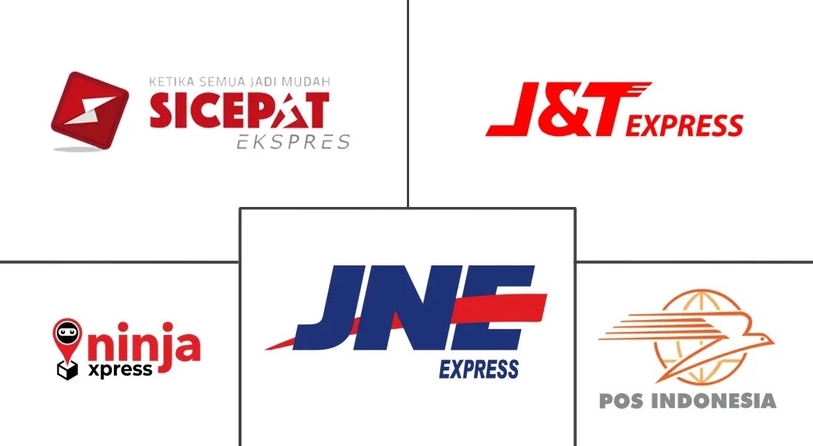
Logistics is both a competitive advantage and a structural challenge in Indonesia. Delivering across an archipelago of more than 17,000 islands requires significant investment and coordination. Major logistics providers include J&T Express, JNE, SiCepat, and Ninja Xpress. In densely populated areas like Java, same-day and next-day delivery are increasingly common. Outside these regions, delivery times are longer and costs higher.
To remain competitive, platforms frequently subsidize shipping, absorbing costs to maintain user growth and retention. Warehousing, fulfillment centers, and last-mile delivery infrastructure play a critical role in determining platform performance.
Certain product categories consistently outperform others in Indonesia’s e-commerce market:
Fashion and apparel
Beauty and skincare
Consumer electronics and accessories
Home and lifestyle products
Food and beverages, including snacks and specialty items
While price sensitivity is high, trust and brand credibility are increasingly important, especially in beauty, electronics, and consumables. Consumers are willing to pay a premium when quality, authenticity, and reviews are convincing. Indonesia’s e-commerce ecosystem is powered by millions of small and micro-entrepreneurs. For many, online marketplaces represent their first formal entry into business.
Platforms actively invest in seller education through training programs, analytics tools, and livestream coaching. OEM manufacturing, white-label products, and private branding are common, enabling sellers to launch quickly with minimal capital.
At the same time, cross-border sellers—particularly from China and South Korea—compete aggressively on price, pushing local sellers to differentiate through branding, storytelling, and customer engagement.
Regulation and Government Oversight
The Indonesian government plays an active role in shaping the e-commerce landscape. Recent years have seen tighter regulations around:
Local entity and warehouse requirements
Tax compliance and reporting
Consumer protection and product standards
Data privacy and digital transactions
These policies aim to protect local businesses and ensure fair competition while still allowing innovation and foreign participation.
Despite its rapid growth, Indonesia’s e-commerce market faces several structural challenges. Intense price competition continues to squeeze margins, while rising customer acquisition costs make profitability difficult, especially for smaller brands. Logistics also remain complex outside major urban centers, adding cost and operational risk to nationwide fulfillment.
At the same time, many sellers are heavily dependent on platform algorithms, paid promotions, and discount-driven traffic. This makes long-term planning unpredictable and weakens direct brand–consumer relationships. As a result, customer loyalty is fragile, with shoppers frequently switching platforms in search of better deals, free shipping, or flash promotions rather than brand affinity.
Indonesia’s e-commerce future will be shaped by deeper integration between commerce, content, and finance. Social-driven shopping, embedded payments, and omnichannel models combining online and offline experiences will continue to grow.
Local brands are expected to gain strength as consumers mature and seek quality over price alone. Meanwhile, regulatory clarity will play a decisive role in determining how platforms and foreign sellers operate in the coming years. For businesses willing to adapt to Indonesia’s unique dynamics, the market offers scale, momentum, and long-term potential unmatched in the region.