Dongfeng Nissan's N7 EV is redefining affordable electric cars in China with high tech, 625 km range, and prices from $16,450. Its success could reshape Nissan’s EV strategy across Southeast Asia and emerging markets.
Dongfeng Nissan's N7 EV is redefining affordable electric cars in China with high tech, 625 km range, and prices from $16,450. Its success could reshape Nissan’s EV strategy across Southeast Asia and emerging markets.
Nissan Motor Co., Ltd. Headquarters: Yokohama, Kanagawa, Japan. Founded: December 26, 1933. Founders: Yoshisuke Aikawa (after merging Nihon Sangyo with other companies). CEO (as of 2025): Makoto Uchida. Global Brands: Nissan (mainstream vehicles). INFINITI (luxury vehicles). Datsun (discontinued in 2022)
Nissan is known for producing a wide range of vehicles, from compact cars and SUVs to trucks, sports cars, and electric vehicles. It is one of the world’s largest automakers by volume and operates in more than 160 countries.
Key Engineering Innovations: VQ engines: Recognized globally for their performance and reliability. CVT (Continuously Variable Transmission): Pioneered use in mainstream cars. ProPILOT Assist: A semi-autonomous driving system that helps with lane keeping, adaptive cruise control, and traffic jam assist.
Nissan’s Electric Vehicle Leadership: 100% Electric Vehicles (Battery Electric Vehicles - BEVs)
Pioneer in Mass EV Adoption. Nissan LEAF was the first mass-market EV (launched in 2010). At one point, it was the best-selling EV globally. Helped normalize EV usage for daily commuting and city driving.
Strong Tech in Affordable Segments. e-POWER technology offers EV-like performance without plug-in charging. Ideal for developing markets with poor charging infrastructure (e.g., Southeast Asia).
Global Production Footprint. Produces EVs in Japan, UK, US, and China. Strong brand recognition in Europe, Japan, and parts of Asia.
Future-Proofing with Solid-State Battery R&D. Nissan aims to commercialize solid-state batteries by 2028, which promise: Faster charging. Higher energy density. Greater range. Lower fire risk.
Nissan is still respected for its EV heritage, but its position is now more of a resilient mid-tier player than a front-runner. To regain its leadership, Nissan will need: Faster rollout of competitive EVs. Clear EV strategies for China and the U.S. Execution of its solid-state battery breakthroughs.
Nissan is a pioneer in electric mobility, being one of the first major automakers to mass-produce an all-electric car.
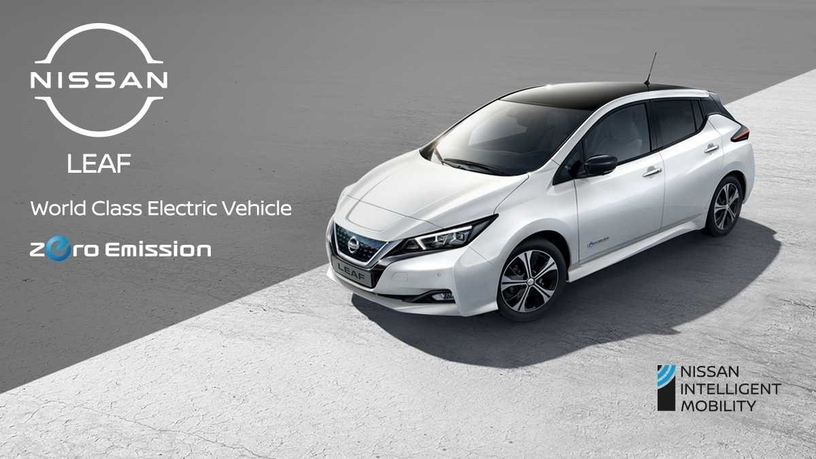
Nissan LEAF (Launched in 2010). World’s first mass-market EV. Over 600,000 units sold globally (as of 2025). Offers up to 398 km (WLTP) range. Regenerative braking, e-Pedal technology, and over-the-air updates. Affordable and widely adopted for city driving. The LEAF is one of the world's best-selling electric cars. It offers a driving range of up to 398 km on a single charge, depending on the battery configuration. The LEAF is known for its affordability, practicality, and user-friendly features, making it a popular choice for urban commuters.
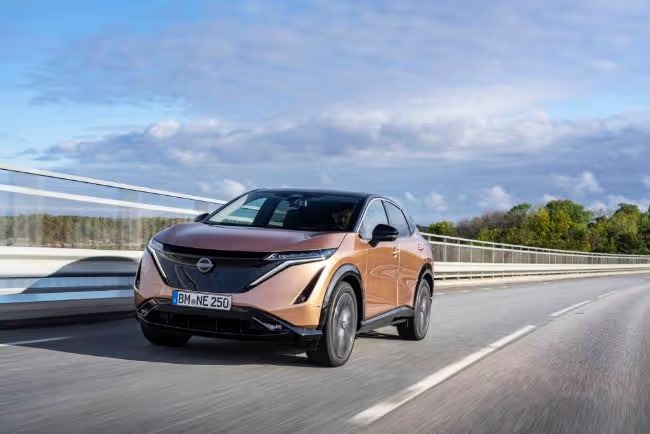
Nissan ARIYA (Launched in 2022). A fully electric crossover SUV with elegant styling and advanced features. Multiple powertrains and battery configurations, including e-4ORCE all-wheel-drive technology. Range of up to 507 km (WLTP). Spacious interior and cutting-edge infotainment system. The ARIYA is a fully electric crossover SUV that combines performance with advanced technology. It boasts a range of up to 507 km and offers features like e-4ORCE all-wheel control for enhanced stability and comfort.
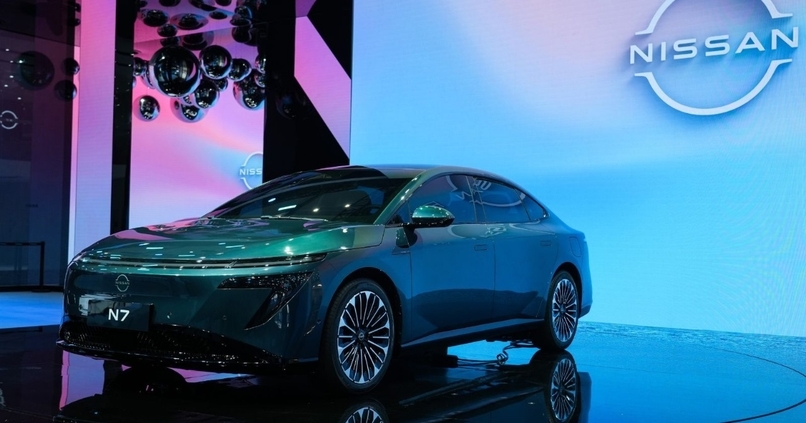
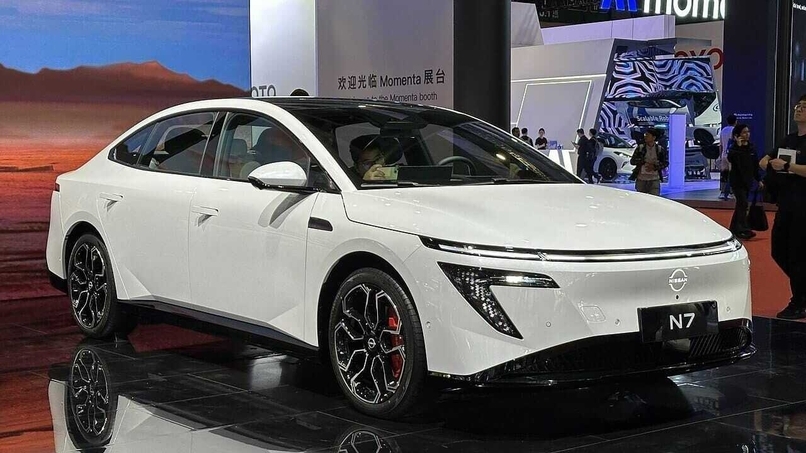
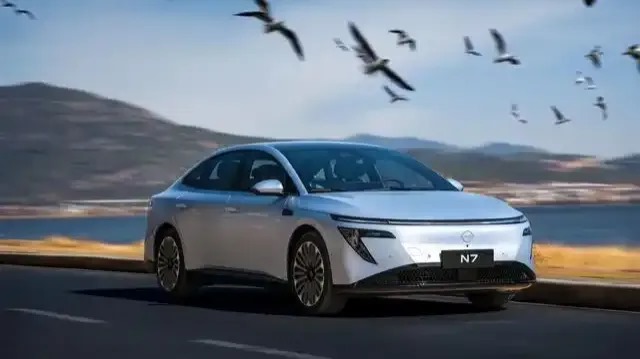
The Dongfeng Nissan N7 EV marks Nissan's bold return to electric leadership, especially in China. Co-developed with Dongfeng, this sleek, tech-forward sedan offers up to 625 km range at a price starting around $16,450. With smart features, local production, and strong early demand, the N7 repositions Nissan as a serious EV contender—not only in China but potentially across Southeast Asia and other emerging markets.
Electrified but Not Plug-in. Unlike traditional hybrids, Nissan’s e-POWER system uses: A gasoline engine to charge the battery. The wheels are powered solely by an electric motor. Instant torque and smooth EV-like driving experience. No need for external charging. Highly efficient in stop-start traffic. Popular e-POWER Models: Nissan Kicks e-POWER (Compact SUV). Nissan Note e-POWER (Urban Hatchback). Nissan Serena e-POWER (Minivan). Nissan X-Trail e-POWER (Family SUV)
Nissan's e-POWER is an innovative electrified powertrain that delivers an EV-like driving experience without the need for external charging. In this system, a gasoline engine charges a battery, which in turn powers an electric motor that drives the wheels. This setup provides instant torque and smooth acceleration, similar to a full EV, while eliminating the need for plug-in charging.
Models equipped with e-POWER technology include: Kicks e-POWER: A compact SUV delivering 95 kW of power and 280 Nm of torque. Note e-POWER: A hatchback offering efficient urban mobility. Serena e-POWER: A spacious MPV suitable for families. X-Trail e-POWER: An SUV combining versatility with electrified efficiency.
Global Partnerships & Alliances
Nissan is a founding member of the Renault–Nissan–Mitsubishi Alliance, one of the largest automotive groups globally. Key points: Shared technology platforms and powertrains. Joint development of electric vehicles and autonomous technologies. Cost-sharing to enhance global competitiveness.
Future Plans & Sustainability
Nissan is committed to carbon neutrality by 2050 and electrifying all new models in key markets by 2030. Strategic Goals: Launch 16 new EVs by 2026. Develop solid-state batteries by 2028–2029 (faster charging, more range). Expand global EV production capacity. Introduce next-gen AI and autonomous driving systems.
Global Manufacturing and Market Presence. Nissan has manufacturing plants in: Japan (main facilities in Tochigi, Yokohama, Oppama). United States (Tennessee, Mississippi). Mexico, UK, Spain, China, India, Thailand, Indonesia
United States. The U.S. remains Nissan's largest global market. In 2024, Nissan sold 924,008 vehicles in the U.S., marking a 2.8% increase from the previous year. Popular models include the Altima, Rogue, and Sentra. The upcoming third-generation LEAF EV and the first plug-in hybrid Rogue SUV are part of Nissan's strategy to revitalize its lineup. Enhancing competitiveness through new model launches and technological innovations. Addressing challenges related to brand perception and product appeal.
China. China is Nissan's second-largest market. In 2024, sales declined by 12.2%, totaling 696,631 vehicles. Intense competition from domestic brands like BYD and Geely. Rapid market shifts towards electric vehicles (EVs) and plug-in hybrids. Investing an additional $1.4 billion by 2026 to launch 10 new energy vehicles by 2027. Recent introductions include the Frontier Pro plug-in hybrid and the N7 electric sedan.
Japan. Japan is Nissan's home market. In 2024, sales slightly decreased by 1.1%, totaling 475,379 vehicles. The Serena minivan, equipped with e-POWER technology, continues to be a strong performer. The Qashqai and Juke also maintain popularity. Emphasizing technological advancements, such as e-POWER and ProPILOT Assist. Maintaining a strong domestic presence amidst evolving consumer preferences.
Europe (UK and Nordic Countries). In 2024, Nissan sold 354,937 vehicles in Europe, a 3.2% increase from the previous year. The Sunderland plant produces models like the Qashqai and Juke. The Qashqai was the UK's best-selling new car in 2022. High adoption rates of EVs bolster sales of models like the LEAF and ARIYA. Expanding EV offerings to meet stringent environmental regulations. Leveraging local manufacturing to cater to regional demands.
Southeast Asia. Indonesia: In 2024, Nissan's sales were 1,010 units, a 30.3% decrease from the previous year. The sixth-generation Serena e-POWER was launched in July 2024, aiming to rejuvenate the brand's presence. Thailand: The Serena e-POWER was introduced in March 2025, targeting the MPV segment. Philippines: In 2024, Nissan sold 26,774 vehicles, securing a 5.64% market share and ranking fourth among automotive brands.
Strategic Focus: Introducing e-POWER models to meet growing demand for fuel-efficient vehicles. Strengthening dealership networks and after-sales services to enhance customer satisfaction. Nissan Motor Corporation operates in several key global markets, each presenting unique opportunities and challenges. Here's an in-depth look at Nissan's performance and strategies in its top markets:
Nissan's global strategy involves tailoring its approach to each market's unique dynamics, focusing on innovation, localization, and customer-centric initiatives to drive growth and competitiveness.
Future Innovations
Nissan is actively developing next-generation solid-state batteries, aiming to mass-produce them by 2029. These batteries promise higher energy density, faster charging times, and improved safety compared to current lithium-ion batteries. The goal is to make EVs more affordable and accessible to a broader audience.
Additionally, Nissan plans to launch 30 new models by 2026, with 16 being fully electric, as part of its strategy to accelerate electrification and meet growing global demand for EVs.
As the global EV race intensifies, a new contender from China is gaining traction: the Dongfeng Nissan N7 EV. Unveiled in 2025 as a sleek, mid-sized electric sedan, the N7 represents more than just another vehicle rollout. It signals a strategic revival for Nissan in the world’s largest and most competitive EV market—and a potential game-changer for emerging markets globally.
The N7 EV is the product of Dongfeng Nissan—a joint venture between Japan’s Nissan Motor Co. and China’s Dongfeng Motor Group. Built on the Tianyan platform, which supports electric, plug-in hybrid, and range-extender variants, the N7 was designed with the Chinese consumer in mind.
What sets the N7 apart?
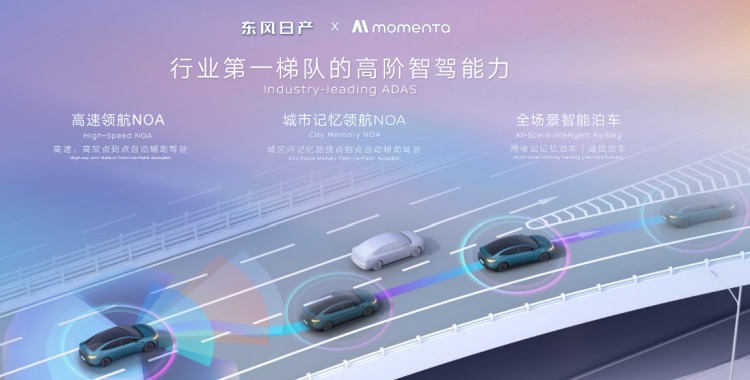
Two powertrain options: 160 kW (215 hp) motor with a 58 kWh battery. 200 kW (268 hp) motor with a 73 kWh battery. Range: Up to 625 km (CLTC). Starting price: Just ¥119,900 (~USD $16,450). Acceleration: 0–100 km/h in 6.9 seconds. Technology: Qualcomm Snapdragon 8295P chip, 15.6” touchscreen, advanced ADAS from Momenta. Interior: 12-point massage seats, 14-speaker system, panoramic sunroof
Dongfeng Nissan clearly targeted mainstream urban consumers with the N7, delivering a combination of affordability, performance, and luxury features at a price point that undercuts most competitors.
A Strategic Response to a Shrinking Legacy
Nissan has seen its market share erode in China over the past few years, as domestic EV giants like BYD, XPeng, and Li Auto outpaced legacy automakers in innovation and localization.
The N7 marks a pivotal pivot: Localized design and production reduce costs dramatically. Platform flexibility allows future variants across powertrains. Advanced tech partnerships, including Momenta (ADAS), make the car competitive with Chinese brands.
This is no longer a Japan-first model adapted for China. The N7 is China-first, and potentially China-to-global.
Record Demand and Early Wins
Within just 18 days of preorders, the N7 surpassed 10,000 orders, making it the fastest-selling joint-venture EV launch in China to date. Its blend of low pricing, modern styling, and rich feature set is resonating with younger, tech-savvy buyers.
This is a key milestone for Dongfeng Nissan, and a wake-up call for other global automakers: localization is no longer optional—it’s the only way to compete in China’s evolving auto market.
Southeast Asia in Focus: Will the N7 or Its Derivatives Expand Regionally?
While currently exclusive to China, the N7 opens up new possibilities for expansion into other price-sensitive, urbanizing regions like Southeast Asia. Should Nissan adapt the N7 for CKD (completely knocked down) production or tweak it for ASEAN standards, it could dominate the sub-$25,000 EV segment across the region.
A Blueprint for Global Revival?
The N7’s launch is more than a regional experiment—it may signal how Nissan reboots its global EV strategy: Affordability-first: Competing with Tesla on price and range, not just innovation. Regional innovation hubs: Using local partnerships like Dongfeng to speed development. Platform strategy: Tianyan allows scalable production across markets and vehicle types
With Nissan planning to roll out solid-state batteries by 2028, the N7 could become the first in a new wave of ultra-affordable, long-range EVs with global reach. The Dongfeng Nissan N7 is not just a model. It’s a strategy—to regain market share, reestablish credibility, and re-enter the global EV conversation. As legacy automakers struggle to keep up with China’s EV acceleration, Nissan’s N7 shows what’s possible when global vision meets local execution. Affordable. Capable. Scalable. The N7 could be the blueprint for EVs in the new automotive era.