From Kitchen Candy to Global Empire — The Mars Story
From humble kitchen beginnings to a $45B global powerhouse, Mars Incorporated has built an empire spanning M&M’s, Snickers, petcare, and more. Discover the Mars family’s secretive rise, strategic expansions, and how their brands became worldwide icons.
When you unwrap an M&M or take a bite of a Snickers, you’re holding more than just a snack — you’re tasting over a century of ambition, innovation, and family-driven business strategy. Behind these brands stands Mars, Incorporated, one of the largest privately-owned companies in the world, controlled entirely by the elusive and immensely wealthy Mars family.
The Mars story began in 1911, when Franklin Clarence Mars started selling buttercream candies from his kitchen in Tacoma, Washington. Early struggles pushed him to Minneapolis, where he officially founded the Mars Candy Factory.
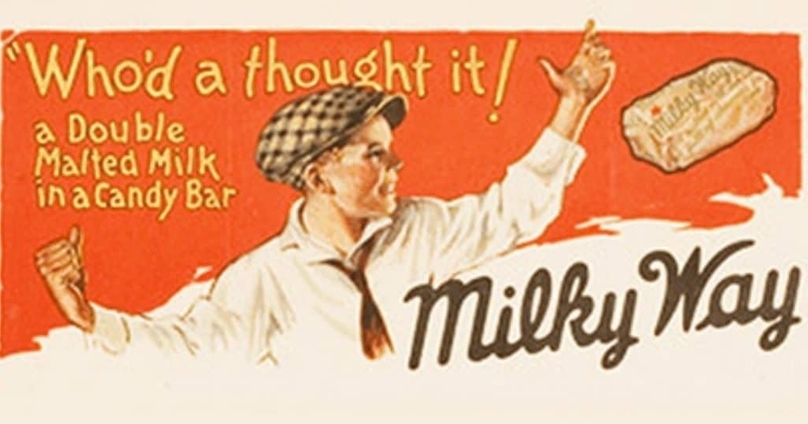
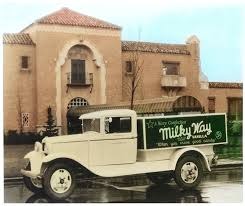
In 1923, Franklin’s son, Forrest Mars Sr., introduced the Milky Way bar, inspired by a popular malted milk drink. The product’s success was staggering, turning Mars from a local candy maker into a national player almost overnight.
Mars, Incorporated. Private, family-owned multinational corporation. Headquarters: McLean, Virginia, USA. Founded: 1911. Founder: Franklin Clarence Mars. 100% family-owned by the Mars family. Revenue: Estimated $45–50 billion annually (as of recent years). Employees: Over 140,000 globally. Industry: Food, confectionery, pet care, and other consumer goods
1911 – Franklin Mars began selling buttercream candies from his kitchen in Tacoma, Washington. Early struggles forced him to move to Minneapolis, Minnesota, where he officially founded Mars Candy Factory.
1920s – Mars launched the Milky Way bar, which became an instant hit in the U.S. 1923 – His son, Forrest Mars Sr., joined the business and suggested a new idea: a chocolate-covered nougat bar inspired by a popular malted milk drink. This became the Milky Way bar, which became a hit across America. The success of Milky Way allowed Mars to expand its production capacity.
1930s – The company expanded internationally, opening facilities in the UK. Forrest Sr. had a more aggressive business vision than his father. After tensions, he left the U.S. to expand overseas.
1932 – Moved to the UK and launched the Mars Bar (different from the U.S. version). Also created Maltesers (chocolate malt balls) in 1936. By the late 1930s, Mars had factories in both the U.S. and Europe, laying the foundation for an international supply chain.
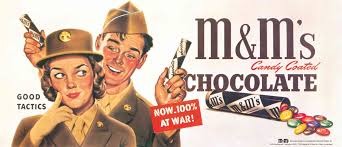
1941 – M&M’s were introduced, initially as a military ration. 1941 – Forrest Mars Sr. partnered with Bruce Murrie (son of Hershey’s president) to develop M&M’s — chocolate coated in a sugar shell to prevent melting. This product was perfect for the U.S. military during WWII — stable in warm climates and easy to transport. Initially, M&M’s were exclusive to soldiers, but after the war they were released to the public, becoming a nationwide sensation. This was Mars’ first true global product because the U.S. military presence introduced M&M’s to people around the world.
The defining moment came in 1941 when Forrest partnered with Bruce Murrie of Hershey’s to develop M&M’s. The candy’s sugar shell prevented melting, making it perfect for the U.S. military during WWII. For years, M&M’s were exclusive to soldiers, but after the war, they hit the civilian market and became an instant hit. The wartime exposure meant M&M’s were already familiar to troops stationed worldwide — a built-in international marketing campaign before the brand even went global.
Post-war, Mars introduced and expanded global icons like Snickers, 3 Musketeers, and Twix, while moving into new territory: pet care. Acquiring brands such as Pedigree and Whiskas in the 1960s gave Mars a firm foothold in the pet food market, especially in Europe and Australia.
By the 1970s, Mars was no longer just a chocolate company — it had evolved into a multi-category global food business.
Mars diversified beyond confectionery into pet food and other food products. 1950s – M&M’s expanded globally, and Mars introduced new products like Snickers and 3 Musketeers internationally. The company diversified into pet food, acquiring brands like Pedigree and Whiskas, which became huge in Europe and Australia. By the 1970s, Mars was no longer just a candy company — it was a multi-category food giant with operations in multiple continents. Mars invested in local factories in Europe, Asia, and Latin America, allowing them to produce products closer to the market.
The company adapted flavors to suit regional tastes: Green Tea M&M’s in Japan. Coconut flavors in Southeast Asia. Spicy varieties in Mexico. Marketing emphasized fun, quality, and reliability, building a consistent image across countries while still respecting local culture.
Local Manufacturing, Global Mindset (1980s–1990s)
Mars invested heavily in local factories, cutting transportation costs and allowing product adaptation for regional tastes: Green Tea M&M’s in Japan. Coconut flavors in Southeast Asia. Spicy varieties in Mexico. This “global brand, local flavor” approach became a hallmark of Mars’ expansion strategy.
2008 – Mars acquired Wrigley, the world’s largest chewing gum manufacturer, for $23 billion. In a bold move, Mars acquired Wrigley (the world’s largest chewing gum maker) for $23 billion, instantly expanding into Orbit, Extra, Doublemint, and other gum/mint brands. This acquisition made Mars the world’s largest confectionery company, overtaking competitors like Hershey and Nestlé. The Wrigley Acquisition In a bold $23 billion deal, Mars acquired Wrigley, the world’s largest chewing gum manufacturer, adding Orbit, Extra, Doublemint, and 5 Gum to its portfolio. This cemented Mars’ position as the largest confectionery company in the world, overtaking Hershey and Nestlé.
Dominating Pet Care (2010s) - Mars doubled down on pet care, acquiring premium nutrition brand Royal Canin and veterinary groups such as Banfield Pet Hospital, VCA Animal Hospitals, AniCura, and BluePearl. Today, Mars is not just a candy maker — it’s a global leader in pet food and veterinary services, making the company far less dependent on chocolate sales.
2017 – Mars restructured into distinct business segments to focus on diversified growth. Mars doubled down on its pet food business, acquiring Royal Canin and several veterinary service companies such as: Banfield Pet Hospital (U.S.).VCA Animal Hospitals (North America).AniCura (Europe).This gave Mars dominance in pet nutrition and healthcare, making it less dependent on confectionery revenue.
(2020s) - Modern Era – Sustainability, Health, and Experience . Mars invests heavily in sustainability: Cocoa for Generations program for ethical cocoa sourcing. Renewable energy projects in factories. Focus on health-oriented products and plant-based food innovation. Expanded M&M’s World flagship stores in major tourist cities like New York, London, Shanghai, and Las Vegas, turning the brand into an immersive experience.
In the 21st century, Mars has focused on sustainability, health, and brand experience. Initiatives include: Cocoa for Generations — sustainable cocoa sourcing. Renewable energy investments in manufacturing. Expansion of M&M’s World stores in tourist cities like London, Shanghai, and Las Vegas. Mars also invests in plant-based food research and nutrition science, showing its adaptability in changing consumer markets.
Business Segments. Mars operates in three main segments:
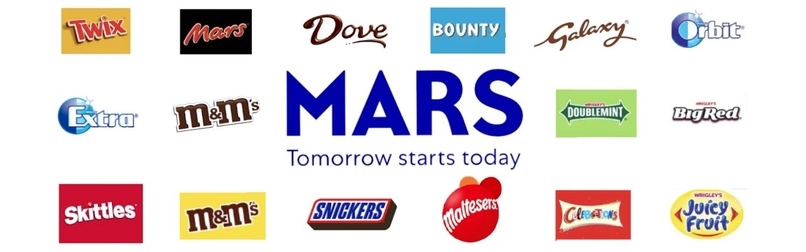
Mars Wrigley – Confectionery & Gum. Famous brands: M&M’s, Snickers, Milky Way, Skittles, Twix, Orbit, Extra, Doublemint, 5 Gum. Operates in over 180 countries with manufacturing facilities worldwide.
Mars Petcare. One of the largest pet care companies in the world. Brands include: Pedigree, Whiskas, Sheba, Royal Canin, Iams, Eukanuba, Nutro, Temptations. Also owns veterinary services: Banfield Pet Hospital, VCA, AniCura, BluePearl.
Mars Food & Nutrition. Brands: Uncle Ben’s (now Ben’s Original), Dolmio, Seeds of Change, MasterFoods, Suzi Wan. Focuses on ready-to-eat meals, sauces, rice, and health-focused products.
Global Presence. Operations: More than 80 countries. Manufacturing Sites: 140+ globally. Top Markets: USA, UK, China, Australia, Germany, Japan. Known for adapting products and flavors to local tastes while keeping strong global brand identities.
Mars’ global dominance comes from five core strategies: Innovative Products – M&M’s candy shell, Snickers, Twix — timeless hits. Military & Cultural Exposure – WWII spread M&M’s worldwide. Local Manufacturing – Factories in strategic markets to cut costs and adapt flavors. Diversification – Candy, gum, pet food, packaged meals — multiple income streams. Private Ownership – The Mars family controls all decisions, allowing long-term investments without shareholder pressure.
The original M&M's were brown, yellow, green, red, and violet. Red M&M’s were discontinued in 1976 due to health concerns over a red dye, even though it wasn’t used in the product — they returned in 1987. M&M’s have traveled to space—they’re a popular snack on NASA missions.
From a small U.S. candy kitchen to a multinational giant, Mars became a global brand by blending product innovation, wartime opportunity, market adaptation, and aggressive diversification — all while staying 100% family-owned.
Corporate Culture & Values. Allows long-term strategic planning without shareholder pressure. Five Principles: Quality, Responsibility, Mutuality, Efficiency, and Freedom — these guide company operations globally.
Sustainability Initiatives: Cocoa for Generations program (sustainable cocoa sourcing). Renewable energy investments. Animal welfare commitments in pet care
Competitive Advantages. Global Brand Portfolio: Multiple billion-dollar brands. Strong Distribution Network: Leveraging global supply chains and local manufacturing. Innovation: Continuous product development and seasonal launches. Brand Loyalty: Products like M&M’s, Snickers, and Pedigree have multi-generational followings.
Financial & Market Standing. One of the largest privately-owned companies in the U.S. Consistently ranked among the top 5 global confectionery companies. Estimated market share in global chocolate: ~14–15%.
Interesting Facts. The Mars family is one of the wealthiest families in the world, with an estimated net worth exceeding $100 billion. Mars keeps a low media profile, preferring privacy despite its massive size. M&M’s have even been to space as part of NASA missions. Mars owns gum, chocolate, pet food, and ready meals, making it one of the most diversified consumer goods companies globally.
Here’s a comprehensive profile of the Mars family, one of the wealthiest and most private dynasties in the world — the owners of Mars, Incorporated, the company behind M&M’s, Snickers, Pedigree, and many other global brands.
Mars’ journey to global dominance is built on: Innovative products (M&M’s candy shell, Snickers, Twix). Military exposure during WWII that seeded global awareness. Local production to suit regional tastes and cut costs. Diversification into gum, pet food, and packaged meals. Private ownership allowing steady, patient expansion. From a kitchen in Washington to factories in over 80 countries, Mars has proven that family ownership, innovation, and global adaptability can build an empire that spans generations — and continents.
Global Presence
Operations in over 80 countries. Over 140 factories worldwide. Products sold in more than 180 countries.
The Mars family business empire is built on three pillars:
It’s a vertically integrated global empire — controlling everything from production and branding to distribution — and all of it remains 100% family-owned.
Inspired by Spanish Civil War: Forrest Mars Sr. (son of Mars Inc. founder Frank Mars) reportedly saw soldiers eating chocolate pellets with a hard sugar shell (to prevent melting) and brought the idea to the U.S.
WWII Use: Originally sold exclusively to the U.S. military due to their ability to withstand warm climates.
1941: First M&M’s produced with a plain chocolate center.
1954: Peanut M&M’s introduced (originally in tan color only).
The Mars family — now in its fourth generation — has an estimated combined net worth exceeding $100 billion. Despite their massive wealth, they remain intensely private, rarely granting interviews or appearing at public events.
They run the company based on Five Principles: Quality, Responsibility, Mutuality, Efficiency, and Freedom. By keeping Mars, Incorporated private, they can focus on long-term growth instead of quarterly shareholder demands.
Family Name: Mars. Nationality: American. Net Worth: Estimated $100–160 billion (collectively, as of recent years). Industry: Confectionery, Pet Care, Food Products. Public Image: Extremely private — rarely give interviews, avoid public events, and keep personal lives away from media. Generations in Business: 4th generation currently involved.
Founder: Franklin Clarence Mars (1883–1934). Started selling homemade buttercream candies in 1911 from his kitchen in Tacoma, Washington. Founded Mars, Incorporated in 1920 in Minneapolis, Minnesota. Created the Milky Way bar in 1923, which became a massive hit and allowed the company to expand nationally.
First Generation
· Franklin Clarence Mars – Founder.
· Married twice, father of Forrest Mars Sr.
Second Generation
· Forrest Edward Mars Sr. (1904–1999). Took over the business after Franklin’s death. Expanded Mars internationally (UK factory in Slough in the 1930s). Co-created M&M’s in 1941 with Bruce Murrie (son of Hershey’s president). Developed Snickers, Mars Bar, Skittles expansion, and pet food division. Known as fiercely competitive and secretive, with a hands-on management style.
Third Generation
· Children of Forrest Mars Sr.: Forrest Mars Jr. (1931–2016) – Former co-president, helped grow Mars into a diversified giant. John Franklyn Mars (b. 1935) – Billionaire businessman, still involved in strategic oversight. Jacqueline Mars (b. 1939) – Major shareholder, philanthropist in arts, culture, and environmental causes.
Fourth Generation
· Includes various heirs and heiresses such as Victoria Mars (former chairwoman), Valerie Mars, and Pamela Mars-Wright — some have held executive or board positions within Mars, Incorporated. This generation focuses heavily on sustainability, brand expansion, and health-oriented products.
The Mars family fortune comes from 100% private ownership of Mars, Incorporated. Forbes often lists Jacqueline Mars and John Mars among the richest individuals in America, each with personal net worths exceeding $30 billion. The family has never taken the company public, allowing them to retain full control and avoid quarterly earnings pressures.
The Mars family has maintained a long-term growth mindset: Keep the company private. Reinvest profits back into innovation, expansion, and sustainability. Avoid unnecessary publicity. They live relatively modest lifestyles compared to their wealth — though they own large estates, they avoid celebrity culture. The Mars family is known for being one of the most secretive billionaire families in the world. They rarely appear in media or give interviews. Most of their philanthropy is conducted quietly, without publicity.
Major areas of giving: Environmental conservation (Oceans, Wildlife, Sustainable Agriculture). Education and research grants. Arts and cultural institutions. Jacqueline Mars is particularly active in funding museums and heritage preservation.
The Mars family transformed a small candy kitchen business into a global consumer goods empire. Iconic brands under their ownership — M&M’s, Snickers, Twix, Skittles, Pedigree, Royal Canin — have become cultural staples worldwide. They pioneered brand globalization by tailoring flavors and marketing to local cultures while maintaining consistent quality.
M&M’s were originally only for military use during WWII before being sold to the public. The Mars family fortune grew even more after acquiring Wrigley in 2008. The family’s strict Five Principles guide all operations: Quality, Responsibility, Mutuality, Efficiency, Freedom. They are often compared to the Walton family (Walmart owners) in terms of wealth and secrecy.
The Mars family’s business is essentially Mars, Incorporated, which has grown from a small candy-making operation into one of the largest privately-owned companies in the world — spanning confectionery, pet care, and food products.
Here’s the detailed breakdown of their businesses:
Confectionery (Mars Wrigley Segment). This is the original core business that made the Mars family famous.
Chocolate & Candy Brands:
· M&M’s – one of the best-selling candies globally.
· Snickers – top-selling chocolate bar worldwide.
· Twix – chocolate-covered biscuit bars.
· Mars Bar – nougat and caramel chocolate bar.
· Milky Way – chocolate-covered nougat bar (differs in U.S. and Europe).
· 3 Musketeers – whipped nougat bar (U.S. market).
Pet Care (Mars Petcare Segment) - One of the largest pet food and veterinary service providers in the world.
Pet Food Brands: Pedigree – dog food. Whiskas – cat food. Royal Canin – premium pet nutrition. Sheba, Cesar, Iams, Eukanuba, Nutro, Temptations.
Veterinary Services: Banfield Pet Hospital – largest private veterinary practice in the U.S. VCA Animal Hospitals – operates in North America. AniCura – European veterinary group. BluePearl Specialty and Emergency Pet Hospital.
Food & Nutrition (Mars Food Segment) - Mars has a global presence in packaged foods beyond candy.
Rice & Grains: Ben’s Original (formerly Uncle Ben’s) – rice products. Seeds of Change – organic grains and sauces.
Sauces & Meal Solutions: Dolmio – pasta sauces. MasterFoods – seasonings and condiments (popular in Australia). Suzi Wan – Asian-inspired food products.
Health, Sustainability, and Research
Mars Edge – nutrition science and health-focused products. Mars Sustainable Solutions – cocoa sustainability, renewable energy, and supply chain ethics. Food science research in areas like plant-based nutrition and responsible sourcing.
Limited Editions: Pumpkin Spice, Mint, Fudge Brownie, Hazelnut Spread, and many others have been released as seasonal or test market items.
M&M's Characters: Anthropomorphic "spokescandies" debuted in ads in the 1950s and became full-fledged mascots in the 1990s (Red, Yellow, Blue, Green, Brown, and Orange are the main ones).
Marketing and Cultural Impact
M&M’s World: Flagship retail stores in cities like New York, Las Vegas, London, and Shanghai.
Movies & Media: The characters have been featured in major ad campaigns, Super Bowl commercials, and short animations.
Customization: Customers can order personalized M&M’s with messages or logos (popular for weddings and events).
Going International (1930s). Ambitious and forward-thinking, Forrest Mars Sr. expanded beyond the U.S. in the 1930s, moving to the UK and launching the Mars Bar and Maltesers. By the end of the decade, Mars had plants in both North America and Europe — a move that set the foundation for a truly international supply chain.
Available in over 100 countries. Often adapted to local preferences (for example, matcha flavor in Japan). One of the best-selling candy brands worldwide. M&M’s became a worldwide success thanks to a combination of strategic marketing, innovation, brand consistency, and global distribution by Mars, Incorporated. Here’s a detailed breakdown of the key factors that made M&M’s a global candy icon:
Strong Brand Backing by Mars, Incorporated. Mars is one of the largest global confectionery companies with immense resources and international reach. M&M’s benefited from Mars' existing distribution channels, allowing rapid expansion into global markets. Mars also used its global R&D and marketing teams to tailor M&M’s for different regions and tastes.
Innovative Product Design. The candy-coated shell solved the common problem of chocolate melting — this made M&M’s ideal for warm climates, military rations, and global shipping. Early adoption by the U.S. military during WWII created brand trust and visibility.
Global Appeal and Versatile Flavors. M&M’s are designed to be simple, colorful, and universally appealing. Mars introduced local flavors (e.g., green tea in Japan, coconut in Southeast Asia, chili in Mexico) to suit regional palates. New flavors and formats (Peanut, Crispy, Caramel, Minis) kept the product exciting and adaptable worldwide.
Memorable Mascots and Advertising. The M&M’s characters (Red, Yellow, Green, etc.) became global mascots, making the brand relatable across cultures. Humorous, animated ads with personality-driven candies transcended language barriers. M&M’s regularly feature in Super Bowl ads, TV campaigns, viral videos, and collaborations.
Global Flagship Stores and Experiences. M&M’s World stores in tourist-heavy cities (New York, London, Las Vegas, Shanghai) act as brand experiences. These stores combine retail with immersive experiences, photo ops, and customized candy stations — reinforcing global presence.
Customization and Personalization. M&M’s became a gift and event candy by offering customizable messages and packaging (e.g., weddings, birthdays, corporate events). This turned the product into more than just a snack — it became a shareable and emotional product, which helped spread the brand organically.
Smart Global Marketing Campaigns. Mars invested heavily in localized marketing for different countries. Strategic use of celebrity endorsements, seasonal campaigns, and cultural tie-ins made M&M’s relevant in each market.
Consistent Quality and Trust. Consumers around the world associate M&M’s with consistent taste, quality, and fun. This reliability built brand trust and loyalty — essential for global longevity.
Pop Culture Integration. M&M’s appeared in films, games, theme parks, and more — becoming part of global pop culture. They've been featured in NASA space missions, adding a layer of fascination and credibility.
Affordable Luxury. M&M’s are positioned as a premium yet affordable treat — making them accessible to a wide income demographic globally.
M&M’s global success didn’t happen by accident — it’s the result of smart branding, innovation, cultural adaptation, and emotional marketing. It’s more than just a chocolate — it’s a universal symbol of fun and color.