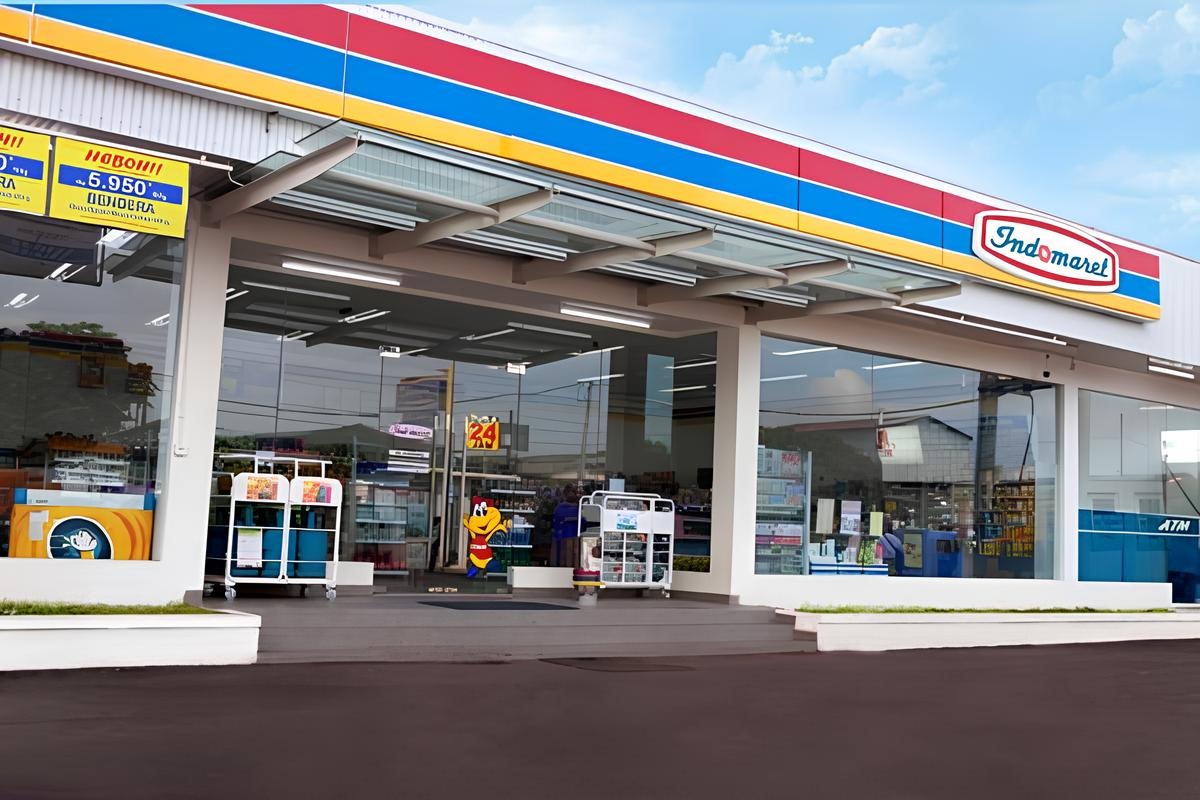
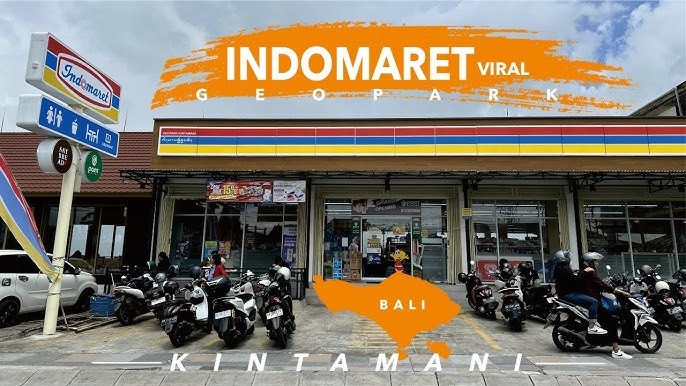
Indomaret reshaped Indonesia’s retail landscape by standardizing everyday shopping from major cities to small villages, becoming a trusted first stop for travelers and a daily essential for local communities.
Indomaret reshaped Indonesia’s retail landscape by standardizing everyday shopping from major cities to small villages, becoming a trusted first stop for travelers and a daily essential for local communities.
For decades, Indonesia’s retail economy was shaped by small, family-owned warungs scattered across neighborhoods, villages, and roadside corners. These stores were deeply rooted in local communities, offering familiarity and convenience, but often struggled with inconsistent supply, informal pricing, and limited product range. As Indonesia urbanized and mobility increased, consumer expectations changed—and Indomaret emerged as the company that quietly transformed how an entire nation shops.
Today, Indomaret is no longer just a minimarket chain. It has become Indonesia’s most recognizable retail infrastructure, serving everyone from urban professionals to rural households, and from daily commuters to intercity travelers. Its success offers a rare case study in how a single standardized retail concept can operate profitably across one of the world’s most geographically complex countries.
Indomaret is a major Indonesian convenience store/minimarket chain, operating under the company PT Indomarco Prismatama. It’s the largest convenience store network in Indonesia, with tens of thousands of outlets nationwide.
Founded: 20 June 1988, first store in Ancol, North Jakarta. Initially called Indomart before being rebranded to Indomaret. Started franchising in 1997, becoming one of the first modern retail franchise models in Indonesia and rapidly expanding thanks to local franchise partners. Owned largely by Indoritel, with ties to the Salim Group, one of Indonesia’s major conglomerates.
Store Network: Over 21,800 stores across 32 provinces in Indonesia (and still growing). Stores are strategically located in residential neighborhoods, offices, malls, transit hubs, and tourist areas to maximize convenience. Offers more than 5,000 product types, including food, beverages, household items, and daily essentials.
Indomaret operates on a hybrid model combining: Company-owned outlets – managed directly by the corporation. Franchise outlets – owned and operated by individual partners, with support from the head company. This franchise system has been a key driver of rapid expansion and local entrepreneurship. Indomaret has evolved beyond the classic neighborhood minimarket: Daily essentials and groceries. Combines retail with casual dining, ready-to-eat meals, coffee, seating areas, and social space. Larger formats with fresh produce, fruits, meats, and premium products.
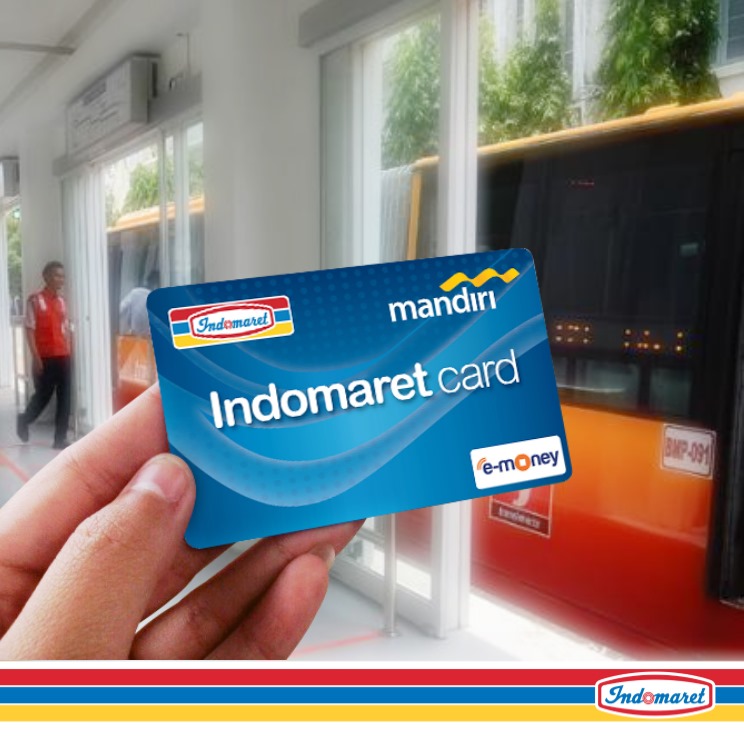
Digital & Additional Services. Indomaret has expanded into digital and service offerings: E-commerce platform for delivery or in-store pickup. Bill payments (utilities, phone, etc.), ticket purchases, courier pickup, e-wallet top-ups, and more. Collaborations with payment standards like QRIS for simplified digital payments.
Indomaret has won multiple national franchise awards, including “Perusahaan Waralaba Unggul.” It’s widely regarded as a favorite and reliable minimarket for everyday shopping among Indonesian consumers. Indomaret operates alongside competitors like Alfamart, Circle K, Lawson, but maintains strong brand recognition and reach due to its extensive network, variety, and convenience focus
One Retail Concept for an Entire Nation
Indonesia is not a simple market. It consists of thousands of islands, vast income differences, and contrasting lifestyles between metropolitan cities and rural villages. Indomaret addressed this fragmentation with a simple but powerful idea: one store concept, applied nationwide.
Whether located in Jakarta, Yogyakarta, Lombok, or a small village in Central Java, an Indomaret store looks familiar. The layout, pricing logic, product assortment, and service offerings remain largely consistent. This uniformity creates trust. Consumers know what they will find, how much it will cost, and how the store operates—regardless of location. This consistency is one of Indomaret’s strongest competitive advantages. It reduces friction for consumers and allows the company to scale efficiently while maintaining brand reliability.
Gradually Replacing Traditional Retail Without Eliminating It
Indomaret did not replace traditional warungs overnight, nor did it attempt to erase them entirely. Instead, it positioned itself as a modern alternative aligned with changing consumer behavior. Fixed pricing, clean store environments, longer operating hours, and reliable stock availability appealed to younger consumers, working families, and travelers.
In many areas, Indomaret became the default convenience store. Yet its expansion also created economic transitions rather than outright displacement. Many former small retailers became franchise partners, employees, logistics partners, or suppliers. In this way, Indomaret embedded itself into local economies instead of standing apart from them.
Rather than abruptly eliminating traditional retail, Indomaret positioned itself as a modern alternative that met changing consumer expectations: Fixed pricing instead of negotiation. Clean, air-conditioned spaces. Reliable product availability. Broader product selection, from daily essentials to digital services.
In many areas, Indomaret became the new default convenience store, particularly for younger consumers and working families. At the same time, many former warung owners transitioned into franchise partners, employees, or suppliers—embedding Indomaret into local economies rather than standing apart from them.
A Unified Retail Concept for a Fragmented Market
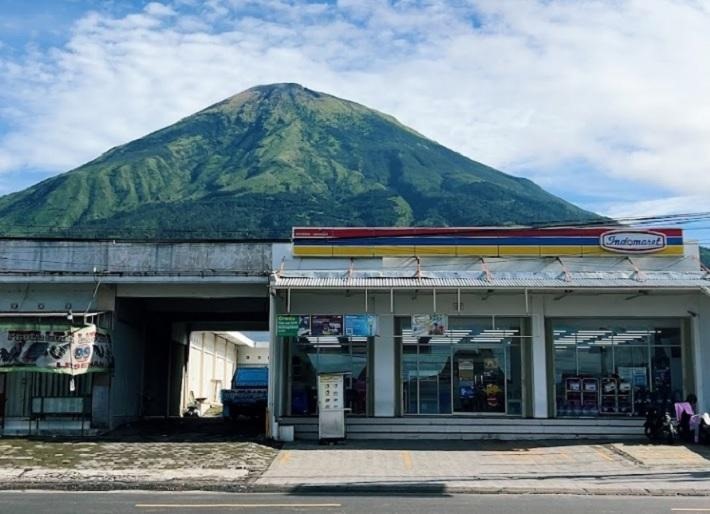
Indonesia’s geography presents a unique challenge: thousands of islands, diverse income levels, and vastly different consumer behaviors between urban and rural areas. Indomaret addressed this complexity with a one-concept store strategy—a standardized layout, product assortment, pricing system, and operational model that could be replicated almost anywhere. Whether in Jakarta’s business districts or remote villages in Java, Sumatra, or Sulawesi, an Indomaret store looks familiar. This consistency builds consumer trust, reduces learning curves, and allows customers to know exactly what to expect regardless of location.
Franchise-Led Expansion: From Cities to Villages
One of Indomaret’s most powerful growth engines is its franchise model. By enabling local entrepreneurs to operate stores with centralized support—logistics, IT systems, merchandising, and branding—Indomaret scaled rapidly without relying solely on corporate-owned outlets.
This model proved especially effective in semi-urban and rural areas: Local partners understand neighborhood demand. Centralized distribution ensures consistent stock. National pricing protects affordability. As a result, Indomaret achieved something rare in emerging markets: urban-grade retail standards operating profitably in villages.
Behind the storefronts lies a sophisticated national distribution network. Indomaret’s centralized warehousing and logistics system allows it to: Supply thousands of SKUs consistently. Maintain stable pricing nationwide. Support remote locations with minimal disruption. This logistics backbone is what enables Indomaret to operate as a single retail organism, rather than disconnected local stores.
Indomaret didn’t stop at selling groceries. Its stores gradually evolved into multi-service community hubs, offering: Utility and bill payments. E-wallet top-ups and QR payments. Ticketing and courier services. Ready-to-eat meals and coffee (Indomaret Point). In villages where banking access is limited, Indomaret often functions as a financial access point, further embedding itself into daily life.
This logistics backbone enables Indomaret to function as a single national system rather than a collection of local stores. For consumers, it means product familiarity and stable pricing. For suppliers, it means access to nationwide distribution. For investors, it represents a high barrier to entry for competitors.
Redefining Retail Access in Indonesia
Indomaret’s success is not merely about scale—it’s about access. By bringing the same retail experience from metropolitan centers to rural communities, Indomaret helped standardize consumer access to goods, services, and pricing across Indonesia.
This shift represents a broader transformation:
Indomaret’s journey offers a powerful lesson for emerging economies: modern retail doesn’t need to be exclusive to cities. With the right mix of franchising, logistics, and local integration, a single retail concept can serve an entire nation.
Today, Indomaret stands not just as a convenience store chain, but as one of Indonesia’s most influential retail institutions, quietly reshaping how millions of people shop—from dense urban centers to the smallest villages.
Why Travelers Always Stop at Indomaret First
For travelers moving between Indonesian cities, Indomaret has become an unspoken ritual. Arriving in a new destination often brings uncertainty—where to buy essentials, how much things cost, and what’s available nearby. Indomaret removes that uncertainty instantly.
Travelers rely on Indomaret for bottled water, snacks, ready-to-eat meals, toiletries, phone credits, data packages, and basic medicines. The fact that these products are the same across the country builds confidence and convenience. There is no need to adapt or ask questions; familiarity travels with the customer.
Along highways, near terminals, in urban neighborhoods, and deep in rural areas, Indomaret functions as a dependable pit stop. In many smaller towns, it is often the most complete retail option available.
Traveling across Indonesia means moving through different cities, regions, and sometimes entirely different ways of life. From Jakarta to Yogyakarta, Surabaya to Lombok, or small towns deep in Java and Sumatra, every destination has its own rhythm. Yet for many travelers, there is one familiar constant that signals arrival: Indomaret.
For city travelers, road trippers, backpackers, and domestic tourists alike, Indomaret has quietly become the first place to visit after reaching a new destination.
Arriving in a new city often comes with uncertainty—where to buy essentials, how much things cost, and what’s available nearby. Indomaret eliminates that uncertainty. Its standardized store layout and nationwide product range give travelers instant orientation.
Within minutes, travelers can find: Bottled water and isotonic drinks. Ready-to-eat meals and snacks. Toiletries and personal care items. Phone credits, data packages, and e-wallet top-ups. Ice, tissues, face masks, and travel-size essentials. No explanations needed. No bargaining. No guesswork.
Designed for On-the-Go Needs
Indomaret’s product mix is particularly suited for travelers. Unlike traditional markets or specialty shops, it offers a compact yet comprehensive selection of items commonly needed on the move. For road trips and intercity travel, Indomaret becomes a natural pit stop: Coffee and breakfast items in the morning. Quick lunches or late-night snacks. Hydration and energy drinks for long drives. Simple medicines and personal hygiene products. In many areas, especially outside major cities, Indomaret operates longer hours than surrounding shops—making it reliable regardless of arrival time.
One Product Standard, Nationwide
One of Indomaret’s strongest advantages for travelers is product consistency. A bottle of mineral water, a packet of instant noodles, or a popular snack brand purchased in Jakarta is the same one found in a village hundreds of kilometers away. This nationwide standard creates: Price confidence. Product familiarity. Trust in quality and safety. For travelers, this consistency reduces friction and allows them to focus on the journey rather than logistics.
From Airports to Villages
Indomaret’s presence extends across transportation routes and destination types: Near bus terminals and train stations. Along highways and rest areas. Inside urban neighborhoods and rural villages. This widespread coverage means travelers don’t need to search far for supplies. In many small towns, Indomaret is often the most complete retail option available, making it an essential part of the travel experience.
More Than Shopping: A Travel Utility Hub
Beyond products, Indomaret functions as a travel support center: Mobile data and SIM-related services. Digital payments via QRIS and e-wallets. Bill payments and ticketing services. ATM access in selected locations. For travelers moving between cities, these services simplify daily logistics without needing banks or specialized stores.
A Shared Experience for Domestic Travelers
Over time, Indomaret has become part of a shared travel ritual in Indonesia. Travelers may differ in destination, purpose, and budget, but the experience of stepping into an Indomaret upon arrival is widely familiar. It represents: Comfort in familiarity. Assurance of availability. A quick reset before exploring a new place. In a country as large and diverse as Indonesia, this kind of retail consistency plays a subtle but meaningful role in mobility and domestic tourism.
The Quiet Companion of Indonesian Travel
Indomaret rarely positions itself as a travel brand, yet it has become one by function. Its standardized products, predictable pricing, and nationwide reach make it a dependable companion for travelers crossing cities and regions. From major metropolitan centers to small villages, Indomaret stands as a reminder that wherever the road leads, some things remain the same—and sometimes, that’s exactly what travelers need.
More Than a Store, a Daily Utility Hub
Indomaret’s role extends beyond retail. Its stores increasingly function as community service points, offering bill payments, digital wallet top-ups, QR payments, ticketing services, and courier drop-offs. In areas with limited banking access, Indomaret effectively becomes a financial access point. This evolution transforms Indomaret from a convenience store into daily infrastructure, further strengthening customer dependence and increasing transaction frequency.
Is Indomaret a Public Company?
Despite its scale and influence, Indomaret itself is not currently a publicly listed company. Its core retail operations are run by PT Indomarco Prismatama, which remains private. However, investors can gain indirect exposure through its parent entity, PT Indoritel Makmur Internasional Tbk, which is listed on the Indonesia Stock Exchange. Over the years, discussions about a potential Indomaret IPO have surfaced, though no official plan has been confirmed. Still, the idea of an Indomaret IPO remains compelling—and raises an important question for investors.
From an investor perspective, an Indomaret IPO would likely be viewed positively. The business operates in essential consumer retail, characterized by high transaction frequency and relatively defensive demand. Daily necessities do not disappear during economic downturns, making the revenue base more resilient than many other sectors.
Indomaret’s scale, brand trust, and franchise-driven cash flow model would appeal to long-term investors seeking stability rather than speculation. However, valuation discipline would be critical. Convenience retail operates on thin margins, and investors would closely examine store-level profitability, logistics costs, rent exposure, and future growth drivers.
An IPO would also signal maturity—greater transparency, improved governance, and long-term capital planning. For the broader market, it would mark Indomaret’s transition from a dominant private operator to a fully institutional-grade company.
A Blueprint for Emerging Markets
Indomaret’s story is not just about retail success; it is about nationwide access. By delivering consistent products, pricing, and services from major cities to remote villages, Indomaret helped standardize everyday consumption across Indonesia.
Its journey demonstrates that modern retail does not need to be exclusive to urban centers. With the right combination of logistics, franchising, and local integration, a single retail concept can serve an entire nation.
Whether or not an IPO happens, Indomaret has already achieved something rare. It has become a silent companion in daily life, travel, and commerce—shaping how Indonesia shops, moves, and connects, one store at a time.