Global Trade of Lump Charcoal and Charcoal Briquettes in the Modern Market
Explore the worldwide trade of lump charcoal and briquettes — from Indonesia’s coconut shell exports to major import markets in the US, EU, and Middle East. Learn key buyers, export trends, and the rise of sustainable charcoal products in global demand.
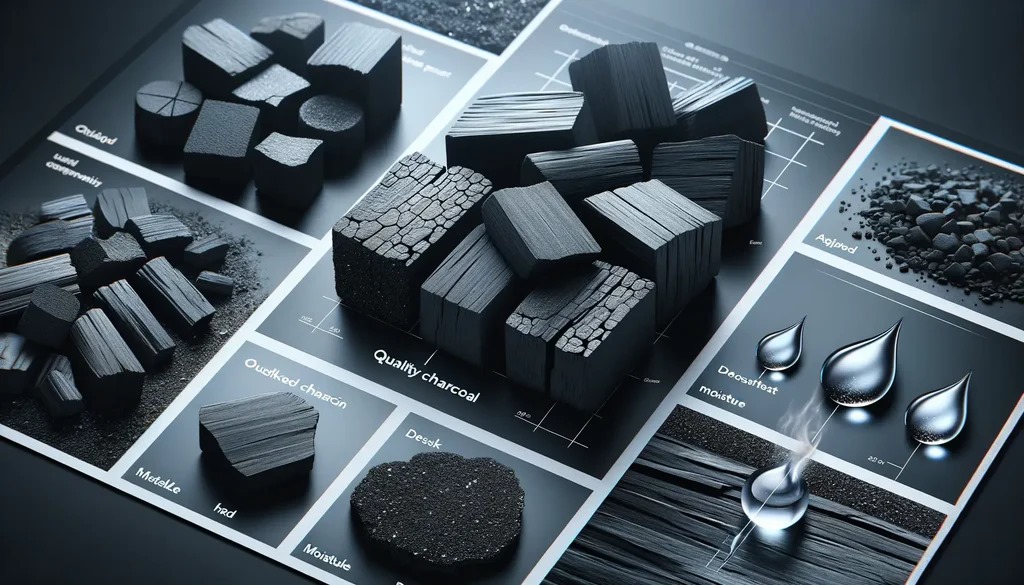
Top Qualities of Lumpwood Charcoal - Image courtesy of Hillside Woodfuels
The global market for lump charcoal and charcoal briquettes has evolved far beyond backyard grilling. Once seen as a simple commodity, charcoal has become a valuable export for tropical nations and a strategic import for countries with strong barbecue cultures, shisha consumption, or industrial fuel demand. As sustainability and natural products gain importance, demand for high-quality charcoal—particularly from renewable sources—continues to rise.
Charcoal remains one of the oldest energy sources, but its modern applications are expanding rapidly. Today, it serves not only for cooking and heating but also as an industrial input in metallurgy, water purification, and even cosmetics.
The two most traded forms are lump charcoal and charcoal briquettes.
Lump charcoal is produced by slowly burning hardwoods like oak, hickory, or mangrove in low-oxygen conditions. It’s valued for being 100% natural, burning hotter, and leaving little ash.
Charcoal briquettes, on the other hand, are made by compressing charcoal dust mixed with natural binders such as starch. They burn longer, more evenly, and are easier to transport, making them the preferred option for mass grilling and shisha use.
According to recent global trade data, the charcoal market is valued at over USD 6 billion annually, with continuous growth driven by the hospitality industry, outdoor cooking culture, and renewable energy initiatives.
The world’s top charcoal producers are concentrated in regions rich in tropical forests and agricultural by-products.
Indonesia – The leading exporter of coconut shell charcoal and hardwood lump charcoal. Its products are highly sought after in the Middle East and Europe for their clean burn and sustainability.
Nigeria and Ghana – Major suppliers to the European Union, particularly for barbecue-grade charcoal.
Vietnam and Thailand – Strong in producing both wood-based and coconut-shell charcoal, exporting to Japan, Korea, and the USA.
Brazil – Exports high-density hardwood charcoal mainly for industrial use and premium BBQ markets.
India and Sri Lanka – Rising players focusing on coconut-based briquettes and eco-charcoal.
Indonesia’s advantage lies in its abundant coconut industry. By converting coconut shells into briquettes, producers transform agricultural waste into a high-value export while supporting sustainable production.
Demand for charcoal imports is strongest in countries where outdoor cooking and hospitality sectors are well-established.
Major importing buyers and their primary uses for lump charcoal and charcoal briquettes around the world:
United States
One of the largest importers, driven by its strong barbecue culture and year-round consumption.
Main Uses: Backyard barbecues and restaurant grills. Retail private labels (Home Depot, Walmart, Costco). Premium lump charcoal for steakhouses and smokehouses
Major Buyers / Importers:
· Royal Oak Enterprises – One of the largest charcoal distributors in the U.S. (buys both domestic and imported lump charcoal).
· Kingsford (Clorox Company) – Imports raw materials and blends with domestic charcoal for mass-market briquettes.
· BBQGuys, Fogo Charcoal, Jealous Devil, Kamado Joe – Use imported hardwood charcoal from South America and Southeast Asia for high-end grilling.
Buyer Focus: Sustainable sourcing, consistent carbonization, and long-burning performance.
European Union (Germany, Netherlands, France, UK, Spain)
Countries like Germany, the UK, France, and the Netherlands import significant volumes, emphasizing FSC-certified and low-emission charcoal.
Main Uses: Outdoor barbecues and home-use briquettes. Restaurant-grade lump charcoal. Eco-certified and FSC-approved products
Major Buyers / Importers:
· Grill Trade GmbH (Germany) – Distributor for BBQ charcoal across Central Europe.
· Big K Products (UK) – Imports from Indonesia, South America, and Africa.
· Carbo Trade and Holzkohlewerk Lüneburg GmbH (Germany) – Large importers with FSC certification requirements.
· Charcoal House (Netherlands) – Imports coconut and hardwood charcoal for retail and food service.
Buyer Focus: Low-smoke, high-carbon charcoal with FSC/PEFC certification and eco-friendly packaging.
Middle East (UAE, Saudi Arabia, Kuwait, Qatar, Egypt)
The biggest consumer region for shisha and hookah charcoal. The UAE, Saudi Arabia, and Qatar import thousands of tons of coconut shell briquettes monthly.
Main Uses: Shisha/Hookah lounges and wholesale distributors. BBQ and catering companies. Retail markets for household grilling
Major Buyers / Importers:
· Al Fakher Trading (UAE) – Major hookah brand sourcing coconut shell briquettes.
· Blue Diamond Charcoal (Saudi Arabia) – Imports premium cube briquettes from Indonesia and Vietnam.
· Shisha King Trading (Dubai) and Al Ahram Charcoal (Egypt) – Distributors specializing in shisha charcoal.
Buyer Focus: Odorless, long-lasting coconut shell briquettes (typically 25x25x25 mm or 26x26x26 mm), high calorific value, low ash (<2.5%).
Japan
Premium markets for high-quality white charcoal (binchotan type) and clean-burning briquettes.
Main Uses: Yakiniku (grill restaurants). Binchotan-style premium lump charcoal. Eco-friendly and odor-free indoor grilling
Major Buyers / Importers:
· Kishu Charcoal Co., Iwami Binchotan, and Sumibi Japan Co. – Importers and refiners of white charcoal.
· Restaurant supply distributors import Indonesian or Vietnamese hardwood lump charcoal as a cost-effective alternative to domestic binchotan.
Buyer Focus: High fixed carbon (>85%), low moisture (<5%), no sparks, and odor-free burning.
Buyer Focus: Sustainably produced, high-carbon charcoal for eco-conscious consumers.
Emerging Asia (Vietnam, Thailand, Philippines)
Main Uses: Manufacturing and re-export. Domestic use and tourism market. OEM packaging for international buyers
Major Buyers / Importers:
· Local exporters like Namco Charcoal, Thai Charcoal Co., and Coco Green Co. supply both local and export markets.
· Act as intermediaries between Southeast Asian producers (Indonesia, Malaysia) and buyers in Japan or the EU.
Africa (South Africa, Ghana, Nigeria)
Main Uses: Local consumption and EU export hubs. Industrial heating and metallurgy
Major Buyers / Importers:
· Braai Culture distributors (South Africa) – Supply regional supermarkets.
· European charcoal import agents often re-export from African sources to Europe.
Buyer Focus: Hardwood charcoal with medium to high carbon content, kiln-dried, and packaged in retail-ready bags.
Commercial & OEM Buyers
Beyond traditional distributors, there’s a growing segment of OEM and private-label buyers who import unbranded charcoal for repackaging under their retail labels.
Common OEM buyers include: Supermarket chains (Carrefour, Tesco, Aldi, Lidl). Outdoor and home improvement stores (Home Depot, Lowe’s, B&Q). Food service distributors supplying hotels and catering companies
These buyers typically require: Custom bag design and labeling. Consistent calorific value. Stable monthly supply capacity (1–5 containers/month)
Trade Dynamics and Pricing
Charcoal pricing is influenced by multiple factors:
· Raw material cost (hardwood or coconut shell availability)
· Moisture content and fixed carbon levels
· Packaging and certification
· Shipping routes and freight rates
In 2025, export prices range roughly between USD 350–800 per ton FOB, depending on product quality, origin, and packaging. Premium shisha briquettes with consistent cube size and low ash fetch higher prices, especially when certified by SGS or backed with quality test reports.
Importers often prefer long-term supply contracts with reliable exporters to ensure stable quality and timely delivery, especially during the summer barbecue season and Ramadan in the Middle East.
Sustainability and Certification Trends
Environmental concerns have pushed the charcoal industry toward responsible sourcing. Unsustainable wood harvesting is being replaced by agricultural waste-based materials such as coconut shells, bamboo, and palm kernel shells.
Certifications like FSC (Forest Stewardship Council), PEFC, and EcoCert are increasingly required by European buyers. These not only ensure sustainable sourcing but also enhance brand credibility.
Producers investing in cleaner carbonization technology, such as retort kilns, gain a competitive edge through reduced emissions and consistent quality. This shift supports the global move toward low-carbon energy solutions and circular economies.
For producers, the best opportunities lie in private label (OEM) partnerships and wholesale B2B supply. Retail chains and distributors across Europe and North America are open to working with manufacturers that offer:
· Eco-friendly packaging (kraft paper bags, recyclable boxes)
· Custom branding options
· Competitive CIF pricing
· Consistent product quality and laboratory test results
Digital platforms such as Alibaba, Global Sources, and TradeIndia have also expanded the visibility of small and medium-sized exporters. Participating in trade fairs—like Gulfood (Dubai), SIAL (Paris), and Anuga (Germany)—helps establish direct relationships with major buyers.
Challenges in the Charcoal Trade
Despite the growth potential, the industry faces several challenges:
Environmental regulations limiting deforestation and emissions
Quality inconsistencies due to varied production methods
Import restrictions requiring specific testing or labeling standards
Producers who focus on sustainable sourcing, traceability, and improved packaging are better positioned to meet global buyer expectations.
The charcoal market is evolving toward cleaner, smarter, and more sustainable practices. As consumers demand transparency and eco-responsibility, exporters from Asia and Africa have the opportunity to redefine the market by emphasizing renewable materials and circular production.
Lump charcoal and briquettes will continue to power the world’s grills, restaurants, and shisha lounges—but the next phase of growth will belong to producers who combine traditional craftsmanship with sustainable innovation.
The worldwide trade of lump charcoal and charcoal briquettes reflects the intersection of tradition, technology, and sustainability. From Indonesia’s coconut shell exports to Europe’s eco-certified imports, the sector shows no signs of slowing down. With the right certifications, consistent quality, and strong B2B partnerships, charcoal producers can capture long-term value in this global market.