Japan’s automotive industry is accelerating toward an electric future. Learn how Toyota, Nissan, Honda, Mazda, Mitsubishi, and Subaru are shaping the nation’s EV transformation through innovation, partnerships, and sustainability.
Japan’s automotive industry is accelerating toward an electric future. Learn how Toyota, Nissan, Honda, Mazda, Mitsubishi, and Subaru are shaping the nation’s EV transformation through innovation, partnerships, and sustainability.
Image Courtesy of Nikkei Asia
For decades, Japan has been at the forefront of automotive innovation. From Toyota’s hybrid Prius to Nissan’s early electric Leaf, the country built a reputation as a leader in cleaner transportation. Yet when it comes to battery-electric vehicles (BEVs), Japan has been more cautious than other major markets. Today, the country stands at a crossroads: balancing its reliance on hybrid technologies with growing global momentum for full electrification.
This article explores Japan’s EV market — its current status, government goals, industry players, challenges, and where the biggest opportunities lie for the next decade.
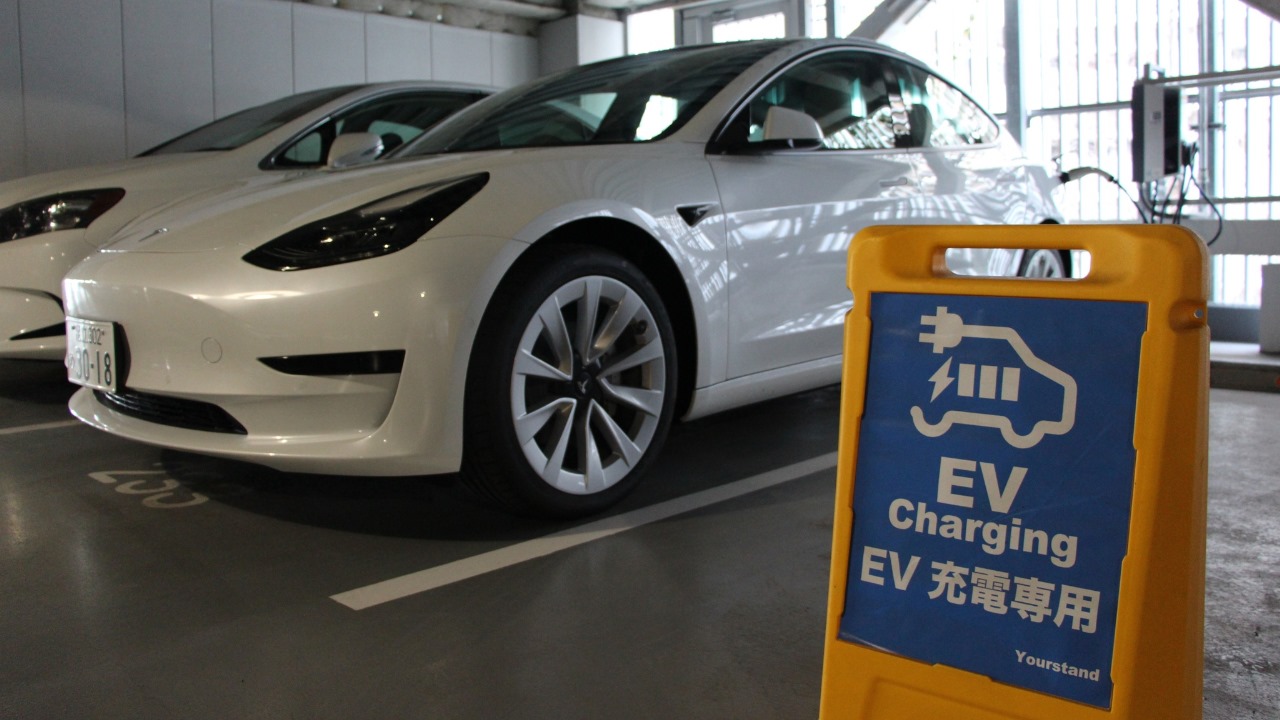
The Japanese EV market is valued in the tens of billions of dollars and is projected to grow steadily through 2030. However, sales penetration of BEVs remains low compared to other regions. Reports place Japan’s EV penetration at just 3–4% of new car sales, far behind China and Europe, where adoption rates have soared. In fact, 2024 saw a year-on-year decline in EV unit sales, underscoring how adoption remains uneven despite ambitious plans.
The paradox is striking: Japan helped pioneer electrification but now risks lagging behind global peers unless its market accelerates.
Japan’s government has set a bold target: by 2035, all new passenger vehicles sold should be “electrified.” Unlike the European Union’s full-BEV focus, Japan’s definition includes hybrids, plug-in hybrids, battery-electric vehicles, and hydrogen fuel-cell cars.
Policy tools to support this shift include:
The government’s balancing act is clear: it wants to maintain Japan’s strong automotive industry while pushing toward carbon neutrality.
Japan’s major automakers are not moving in lockstep when it comes to EVs.
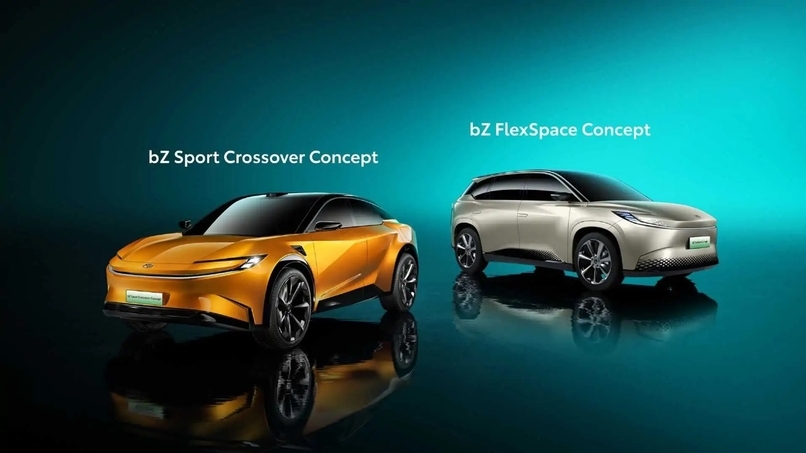
Toyota has long been cautious about BEVs, focusing instead on hybrids and hydrogen. However, pressure from regulators and investors has pushed the company to announce an expansion of its BEV lineup under the “bZ” brand. Toyota now plans dozens of new models and is scaling up battery production capacity.
Toyota bZ4X - A battery-electric SUV. Specs for one version (72.8 kWh battery, AWD) include around 214 hp, ~357–367 km (EPA-equivalent) range, with battery under-floor layout.
Toyota is also updating the bZ4X in some markets with better battery management and preconditioning to improve cold-weather performance. Currently Toyota has a limited number of fully electric models compared to hybrids and plug-in hybrids. As of 2024, Toyota has about five in-house developed EV models, mainly in Japan and China.
Toyota is investing in battery manufacturing and supply chain capacity. For example, there was a planned battery plant in Fukuoka prefecture to produce next-generation batteries, but it was delayed due to slower-than-expected EV demand. Toyota is collaborating with companies like Idemitsu Kosan (for solid electrolyte / materials), and Sumitomo Metal Mining (for cathode materials) to advance the battery R&D.
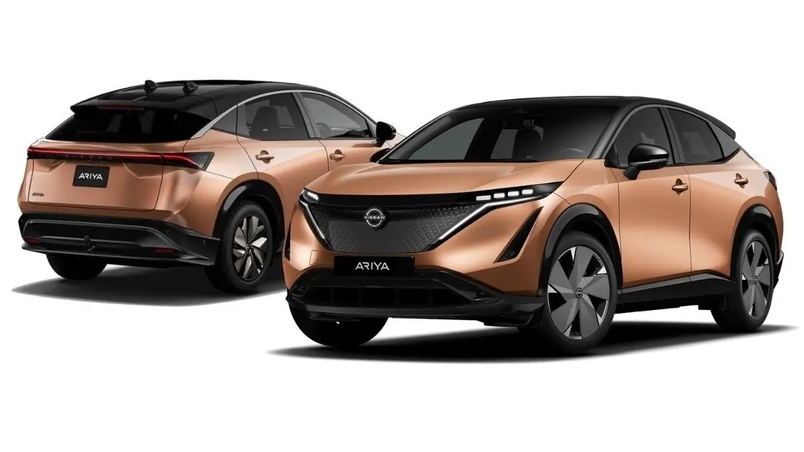
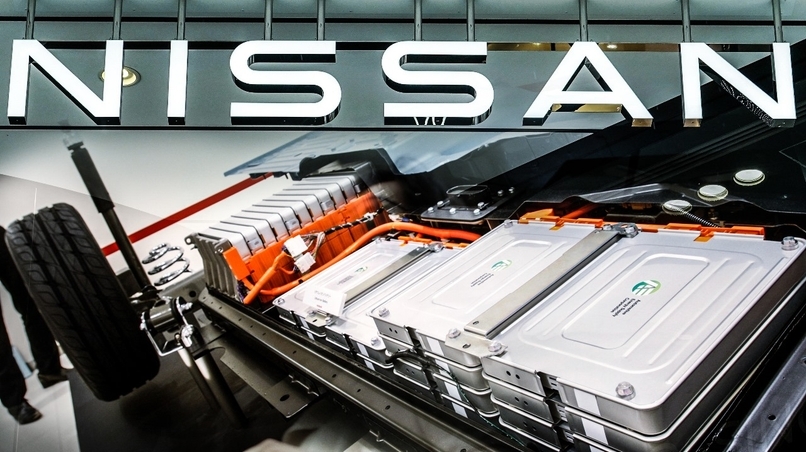
Nissan took an early lead with the Leaf, one of the world’s first mass-market EVs. Today, it is refreshing its portfolio with models like the Ariya and expanding battery partnerships.
Nissan’s long-term vision for electrification is called “Ambition 2030”. Under that, they plan to introduce 23 electrified models by fiscal 2030, including 15 all-EV models, aiming for more than 50% of global sales (Nissan + Infiniti) to be electrified by then. There is also a more aggressive update: in recent adjustments, Nissan has increased that to 27 electrified models by FY 2030, 19 of them EVs. In Europe, almost 98% of sales are expected to be electrified by FY 2026. In Japan, they expect about 58% electrified vehicles by FY 2026. China’s target has been adjusted (some reduction from earlier planned share) but remains part of the global push. Nissan is aiming to reduce EV production costs — for example, they want EV production costs to fall by ~30% by 2030.
Nissan Leaf: This remains one of the most iconic EVs in the world. While updates are incremental, Leaf continues to be a core EV for Nissan’s line, especially in Japan and other markets. (Exact specs vary by market and version.)
Nissan Ariya: An electric SUV introduced more recently; popular for its styling and range. The Ariya has undergone refreshes, particularly for the Japanese market.
“Electrified” models: Besides full BEVs, Nissan is also pushing its hybrid, “e-POWER” (series hybrid / range-extender style) and plug-in hybrid models in places where full BEVs are less practical. Their strategy includes a “diverse portfolio” so that markets with different infrastructure constraints are covered.
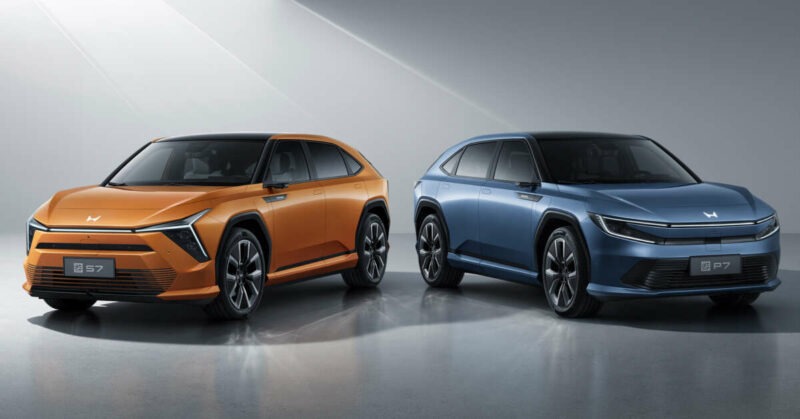
Honda plans to invest ≈ ¥10 trillion (around USD 65 billion) through fiscal year 2031 into electrification and software, up from earlier lower pledges. One of Honda’s central EV-pillars is the “0 Series”, a global flagship EV line with seven models planned to launch worldwide by 2030, ranging from small to large. By 2030, Honda aims for ≈ 2 million EV units/year of production capacity. For global sales, Honda has set a long-term goal of 100% of its automobile sales being BEVs + FCVs (battery electric + fuel cell) by 2040.
In Japan, Honda is targeting BEVs + FCVs unit sales ratio of 20% by 2030, rising to 80% by 2035. Including hybrids, Honda aims to make all vehicle sales electrified (i.e. hybrids + EVs + FCVs) by 2040.
Small/kei-EV segment: starting with N-VAN e: (commercial mini-EV) then kei car EVs (very small, low cost) to suit Japanese regulation, urban environment. Upgraded HEV (hybrid electric vehicle) platforms (especially the e:HEV two-motor system) will be renewed for better efficiency, lighter weight, shared across more models. The e:HEV and electrified AWD (e-AWD) will supplement the EV rollout, to allow a smoother transition.
The launch and market reception of N-VAN e: and the N-ONE-based EV in Japan — whether they meet price, range, and usability for customers. Implementation of the 0 Series — first of the seven flagship EVs, especially in terms of range, battery cost, charging speed, user features. Progress at the solid-state battery demo facility: timeline to mass production, metrics (energy density, cycle life, cost). Reduction in battery procurement costs and production cost (esp in North America) to hit Honda’s 20%+ / 35%+ targets. Sales mix in Japan (EV + FCV ratio), whether Honda reaches ~20% BEV/FCV share by 2030 locally, and then ~80% by 2035. Hybrid tech improvements (e:HEV, e-AWD) — how much Honda uses hybrid as bridging tech; whether hybrids continue to be profitable, well-accepted.
Mazda is using a “multi-solution” electrification strategy: instead of going “all-in” for BEVs, Mazda plans to offer a diverse mix of powertrains (BEVs, plug-in hybrids, hybrids, even unique systems like rotary generator hybrids) in order to respond to varying customer preferences and regulatory requirements.
Their 2030 Management Policy frames the period up to 2030 as the “dawn of electrification.” Under that, Mazda is optimizing investment (battery, platform, etc.), focusing on flexibility, and trying to leverage existing assets / factories rather than building entirely new ones.
Mazda’s "Lean Asset Strategy" aims to optimize costs: make better use of existing production lines, reduce the magnitude of capital expenditure, shorten lead times, improve flexibility.
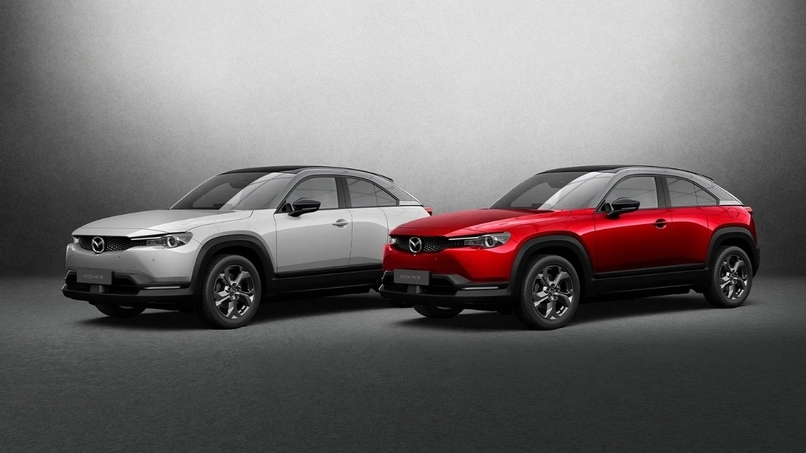
Mazda MX-30 (e-SKYACTIV R-EV / Rotary-EV version)
The MX-30 is Mazda’s compact crossover, offered with internal combustion, mild‐hybrid, and the series-type plug-in hybrid version called e-SKYACTIV R-EV. In the R-EV version: it uses a rotary engine purely as a generator (i.e. to produce electricity) plus a motor drive, with a modest battery (≈ 17.8 kWh) and a fuel tank to give extended range, reducing “range anxiety” for longer drives. Pure EV mode is possible for everyday use. It has also been recognized in Japan: the e-SKYACTIV R-EV system won the “Executive Committee Special Award” for Car of the Year Japan 2024-2025.
Upcoming Dedicated BEV Model (from 2027)
Mazda will launch its first battery EV built on a dedicated EV platform around 2027. It will be produced in Japan, for global markets, with battery cells in collaboration with Panasonic Energy.
Mazda is building a new module-pack plant in Iwakuni City, Yamaguchi Prefecture, for cylindrical lithium-ion cells/packs, in partnership with Panasonic Energy. These packs will power Mazda’s first dedicated BEVs built on its own platform. The planned capacity is ~10 GWh/year.
Mitsubishi has historically been more active in plug-in hybrid electric vehicles (PHEVs) than in full battery EVs. Their strategy leans on hybrid and plug-in hybrid as transitional technologies. They also have some smaller “kei-car” class electric vehicles in Japan, plus efforts around charging services, connected features etc.
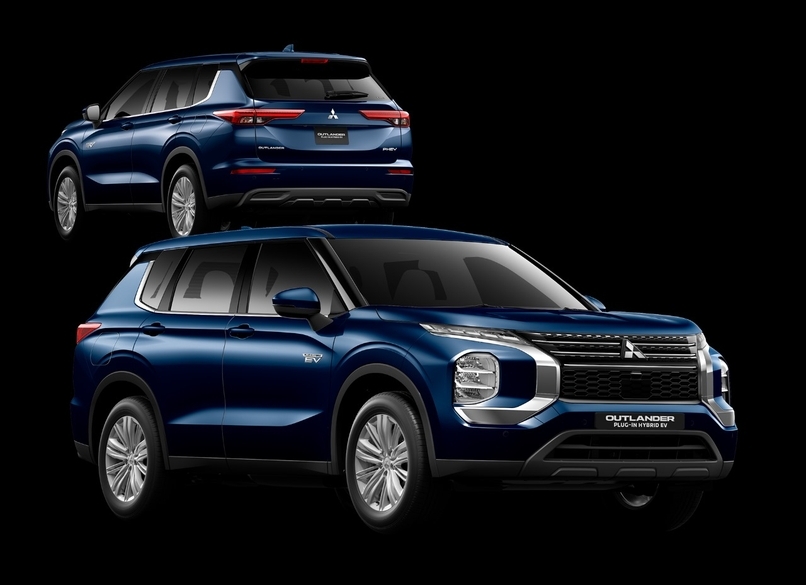
The Outlander PHEV was refreshed (new battery, higher performance) in many markets, including Japan, with the new generation launched December 2021. A more recent update (2024/2025) boosts EV-only range to over 80 km (WLTP in Europe; for Japan a similar improvement is expected) and improves motor output ~20%. Also improvements in ride quality, upgraded interior & tech features (e.g. larger displays, improved suspension) in the refreshed versions.
Mitsubishi is exploring “smart-charging” services: In 2024, they started a proof of concept in Japan that lets Outlander PHEV owners use connected tools to optimize when their PHEV charges (e.g. to match electricity price or grid load) via an app.
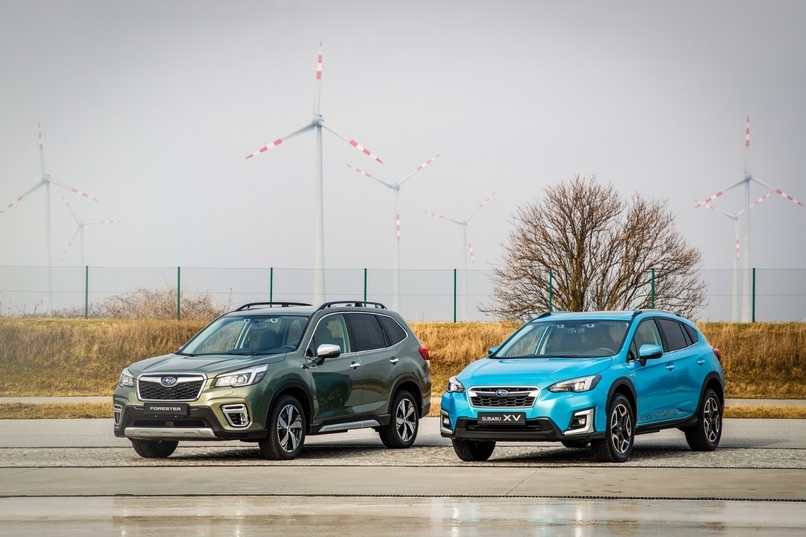
Subaru has been relatively late to full battery-electric vehicles (BEVs) compared to some peers, but is now accelerating its plans. Their goal is for 50% of their global vehicle sales to be BEVs by 2030, which would correspond to around 600,000 units annually. They plan to launch eight BEV models by the end of 2028. The first four (including their current model) will come by end-2026, then another four by 2028. To support this, Subaru is reorganizing its domestic production system: starting mixed ICE/BEV production at its Yajima plant from ~2025; adding dedicated EV production lines later (around 2027 at Oizumi, etc.). Subaru Solterra is Subaru’s first global BEV. It’s an electric SUV, co-developed with Toyota, built on a platform jointly developed (e-Subaru Global Platform) with Toyota. Besides Solterra, several new EV crossovers are planned. At least three new all-electric crossovers are to be introduced through 2026 (in addition to the Solterra). These are jointly developed / influenced by Toyota.
The Charging Infrastructure Challenge
Market studies estimate that Japan’s charging infrastructure sector — including hardware and services — is expanding rapidly, but from a relatively small base. Growth will depend on deploying more fast-charging hubs in cities and highways, as well as solutions for apartment dwellers who lack dedicated parking spaces.
Fleet electrification offers one promising route: by installing chargers at depots for delivery vans, taxis, and buses, companies can achieve scale without waiting for nationwide coverage. Still, the overall charging density in Japan lags behind Europe and China, and catching up will require sustained investment.
Batteries and Supply Chains
One area where Japan still holds a competitive edge is batteries. Japanese companies remain leaders in producing high-quality cells, developing advanced materials, and supplying the manufacturing equipment used worldwide.
Partnerships with global players, along with emerging recycling initiatives, are helping Japan secure a role in the evolving EV battery ecosystem. Over time, recycling and “second-life” uses for batteries — such as energy storage — could become valuable industries in their own right.
Key Challenges Holding Back Adoption
Despite clear strengths, Japan faces hurdles that slow EV growth:
1. Consumer habits — Japanese buyers remain deeply attached to hybrids, which are cheaper, familiar, and practical.
2. Charging gaps — Without widespread chargers, many consumers hesitate to switch.
3. Electricity mix — EVs only deliver major environmental benefits if the grid is decarbonized. Japan’s reliance on fossil fuels complicates this.
4. Costs and choice — Limited BEV models and high upfront prices deter mainstream adoption.
These barriers explain why Japan’s EV adoption curve has been flatter than expected, even as global momentum builds.
Charging and services: Building fast-charging networks, home-charging packages, and vehicle-to-grid (V2G) solutions.
Fleet electrification: Delivery companies, ride-hailing fleets, and municipal buses can electrify quickly with centralized infrastructure.
Battery recycling: As EV sales rise, recycling used batteries will become a lucrative business.
Localized manufacturing: Scaling up EV production domestically reduces costs and helps Japan stay competitive globally.
For investors, suppliers, and entrepreneurs, these opportunities represent Japan’s “second wave” of automotive innovation.
Outlook for the Next Decade
The road ahead for Japan’s EV market is not without obstacles. Hybrids will likely continue to dominate in the short term, but government incentives, falling battery costs, and broader infrastructure buildouts will gradually shift momentum toward BEVs.
By the late 2020s, Japan could begin closing its gap with Europe and China if automakers deliver compelling models and charging networks expand. Success will depend on coordination — between policymakers, automakers, utilities, and consumers — to ensure EVs become practical, affordable, and sustainable.
In many ways, Japan is entering its most critical automotive chapter since the rise of hybrids two decades ago. If it seizes the moment, it has the potential to once again lead the world into a new era of clean mobility.