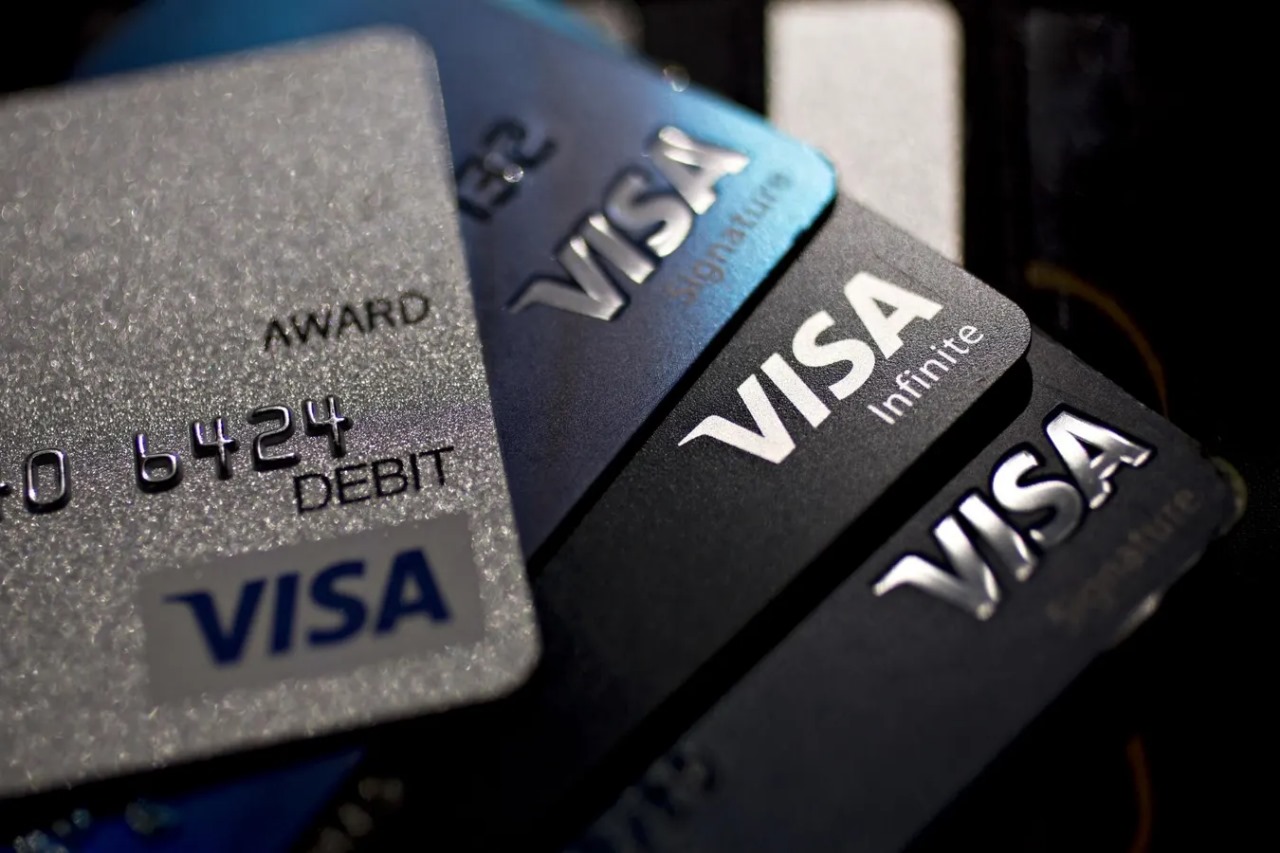
Discover how Visa grew from BankAmericard into a global payment leader. Learn its history, business model, revenue streams, technology, fintech partnerships, tokenization, AI security, and cross-border influence in today’s digital economy.
Discover how Visa grew from BankAmericard into a global payment leader. Learn its history, business model, revenue streams, technology, fintech partnerships, tokenization, AI security, and cross-border influence in today’s digital economy.
Visa is one of the most influential payment networks in modern commerce, connecting banks, merchants, consumers, fintechs, and governments through a platform that moves trillions of dollars across borders. What began as a simple charge card concept in the 1950s has evolved into a global digital infrastructure powering secure, fast, and increasingly intelligent transactions. Today, Visa’s network spans more than 200 countries and territories, supported by advanced technologies, data-driven systems, and partnerships that keep the company at the front of the global payments ecosystem.
Visa’s roots trace back to 1958 when Bank of America introduced the BankAmericard program—the first consumer credit card that could be used across multiple merchants. Its success prompted a licensing model that allowed banks across the United States and eventually worldwide to issue the card. In 1976, the program officially became “Visa,” reflecting a name that could be recognized in multiple languages and markets.
Dee Hock is considered the founder and primary architect of what would become Visa.
Although the earliest version of the card (BankAmericard) was launched by Bank of America, it was Dee Hock who transformed the fragmented, chaotic credit card system into a unified global network with the structure, brand, and rules that became Visa.
He served as the founding CEO of National BankAmericard Inc. (NBI)—the company created in 1970 to manage, standardize, and expand the card program. He later led Visa International, cementing its global identity.
Visa’s story begins in 1958, when Bank of America launched the BankAmericard, the first consumer credit card usable across multiple merchants and locations. Key points: It was introduced in Fresno, California. Unlike earlier charge cards, this one allowed revolving credit (pay over time). Bank of America issued the card directly and covered merchant costs, fraud, and infrastructure. The program grew quickly but also faced challenges due to fraud, poor merchant training, inconsistent rules, and operational difficulties.
1960s – Licensing Model and Expansion Across the U.S. As usage increased, Bank of America realized it could not run the system alone. They began licensing the BankAmericard brand to other banks, allowing them to issue the card under the same network. However, the system became messy: Different banks had inconsistent rules. Fraud was rising. There was no centralized governance. Operations and settlement lacked standardization. This chaotic environment later set the stage for Dee Hock’s involvement.
1968–1970 – Dee Hock Enters and Rebuilds the System. In the late 1960s, Dee Hock—then a relatively unknown banker—was tasked with helping solve growing issues with the BankAmericard program. He realized the system needed a completely new structure, not simply operational fixes.
Dee Hock proposed: A member-owned organization where issuing and acquiring banks jointly govern the network. Standardized rules for transaction processing. A centralized brand identity. Clear dispute workflows. A neutral body overseeing security and settlement. This was groundbreaking for the time.
In 1970, Bank of America handed over control of the BankAmericard program to the newly formed National BankAmericard Inc. (NBI). Dee Hock became the founding CEO. This was the beginning of Visa as a formal organization. NBI: Unified issuing and acquiring banks. Standardized fraud controls. Built the early version of today’s global settlement system. Managed the brand and operational rules. Created the foundation of the network cooperative structure
1974 – BankAmericard Goes International. NBI launched IBANCO, an international organization to manage the brand overseas. This marked the true global expansion, with partnerships in Europe, Asia, and Latin America.
1976 – The Birth of the Name Visa. Dee Hock led a worldwide rebranding effort. He selected the name Visa because: It was short. Easy to pronounce in most languages. Symbolized acceptance, mobility, and global access. Could unify the brand across different countries. The iconic blue-white-gold logo was rolled out globally.
1980s–1990s – Becoming a Global Network. Visa expanded rapidly as electronic payments gained adoption. Key milestones: Rollout of VisaNet, the centralized electronic authorization, clearing, and settlement system. Global acceptance grew to millions of merchants. Introduction of debit cards. Adoption by major banks in Europe, Asia, the Middle East, and Latin America. Growth of cross-border travel and international commerce helped Visa scale. Visa became the leading global card brand by transaction volume and acceptance footprint.
2000s – Visa’s Modernization and Corporate Transformation. Visa reorganized its regional entities (Visa USA, Visa International, Visa Europe, etc.) into a unified global company. Key events: Development of tokenization. EMV chip adoption. Rise of online payment systems. Partnerships with ecommerce platforms and fintechs. Strengthening AI-driven fraud detection
2008 – Visa Inc. IPO. Visa went public in 2008 on the New York Stock Exchange. It became one of the largest IPOs in financial history. This officially transformed Visa into a global publicly traded technology company, no longer a bank-owned cooperative. Visa Europe later joined the global structure in 2016.
Visa now operates in 200+ countries and territories and processes trillions of dollars annually. The network supports: Credit, debit, prepaid. Tokenized mobile payments. Cross-border ecommerce. Virtual cards. Real-time payments. Digital wallets. Open banking integrations. Visa has partnerships with banks, governments, fintechs, super-apps, ecommerce giants, and technology providers.

Over time, Visa transformed from a bank-owned consortium into an independent public company. Its 2008 IPO became one of the largest in financial history. The transition marked Visa’s shift from a traditional card association to a technology-driven payment network focused on scaling electronic commerce.
Visa does not issue credit cards, provide credit, or set interest rates. Instead, it runs the technology rails that enable transactions across its network. Its business model is built on:
Service Revenues. Fees charged to issuers and acquirers for services such as transaction processing, fraud management, and network participation.
Data Processing Revenues. Income generated from authorization, clearing, and settlement. These fees scale with the number of transactions rather than the transaction value.
International Transaction Revenues. Cross-border fees charged when a card issued in one country is used in another—one of Visa’s most profitable segments.
Value-Added Services. Products that enhance security, analytics, loyalty, tokenization, BNPL solutions, and risk management tools. This segment is growing rapidly as Visa expands beyond traditional card payments. This model allows Visa to maintain high margins while continuously investing in global infrastructure and digital technology.
Visa’s platform, VisaNet, can process over 65,000 transactions per second, supported by advanced data centers across the world. Its key technological advantages include:
Tokenization. Sensitive card numbers are replaced with secure digital tokens, reducing fraud for online and mobile payments. Tokenization is now widely used across Apple Pay, Google Wallet, Samsung Pay, and many regional wallet partners.
AI-Driven Fraud Detection. Visa analyzes billions of data points in real time to detect unusual behavior. The company uses artificial intelligence models trained on decades of historical transaction patterns, reducing approval friction while maintaining strong security.
Cloud-Based Infrastructure. Gradual migration toward cloud-native architecture allows faster deployment of new features, improved scalability, and more efficient cross-border routing.
Contactless and NFC Innovations. Visa played a major role in popularizing tap-to-pay worldwide, with adoption accelerating in Asia, Europe, and the Middle East.
Small and medium-sized businesses (SMEs) face constant challenges with cash flow, supplier payments, international transactions, and fraud prevention. Visa has developed an ecosystem of tools specifically designed to help entrepreneurs run operations more efficiently, improve financial visibility, and scale globally. These tools extend far beyond traditional credit cards, offering digital solutions built for modern business environments.
B2B Payments Made Easier. Visa supports business-to-business payments through solutions that make accounts payable and receivable more efficient.
Visa Commercial Cards (Business Credit & Debit). These cards help entrepreneurs: Separate personal and business spending. Track expenses for accounting and tax purposes. Earn rewards or cashback that can be reinvested. Pay suppliers with extended credit terms (improving cash flow)
Visa Business Payables Solution (VBPS). A digital payable platform enabling: Automated invoice payments. Supplier payments through virtual cards. Reduced manual processing and paperwork. Full transaction visibility. This is especially valuable for SMEs transitioning from cash or bank-transfer-only systems.
Supplier Enablement. Visa helps businesses onboard suppliers to accept card payments. Benefits include: Faster settlement. Reduced payment disputes. Simplified reconciliation. Improved vendor relationships
Visa Virtual Cards for Security & Automation. Virtual cards are one of the most powerful tools Visa offers SMEs. A digital-only card number created for a specific transaction or vendor. Secure online purchases without exposing the main card. Single-use numbers to prevent fraud. Automated recurring billing with controlled spending limits. Employee travel & expense (T&E) management. Subscription management for SaaS tools. Key Advantages: Instant issuance (ideal for fast-paced businesses). Controlled spending (set limits by amount, category, or vendor). Reduced need for reimbursements. Automatic integration with accounting software. Industries like ecommerce, travel agencies, wholesalers, and marketing firms rely heavily on Visa virtual cards.
Cross-Border Payments & FX Tools. For SMEs selling globally, Visa simplifies international payments and currency management.
Visa Foreign Exchange Services. Visa offers competitive FX tools that help businesses: Pay overseas suppliers in their local currency. Reduce high bank conversion fees. Predict costs with more transparent FX rates. Support multi-currency accounts (through partner banks)
Visa Business Cards for International Travel. These cards often include: Dynamic Currency Conversion (DCC) options. Lower foreign transaction fees. Travel insurance and purchase protection. Simplified cross-border reconciliation
Visa’s Cross-Border Payment Network. Entrepreneurs using Visa-enabled financial platforms (like Stripe, Wise, Revolut Business, Airwallex, PayPal, or local banks) can: Receive international payments faster. Reduce SWIFT transfer delays. Avoid manual FX conversions. Operate more efficiently in global markets. Visa continues to integrate with fintech platforms globally, making FX and cross-border payments more accessible to SMEs.

Visa helps entrepreneurs improve cash flow—one of the biggest challenges for small businesses.
Extended Payment Cycles. With Visa business credit cards, SMEs get: Up to 30–55 days of interest-free credit. The ability to pay suppliers instantly without affecting cash reserves. Improved cash positioning for growth or inventory purchases
Buy-Now-Pay-Later Features for Business. Through partner banks and fintechs, Visa offers: Installment payments for large purchases. Flexible repayment options. Better financial planning for SMEs that need to manage seasonal revenue cycles. Merchant Acceptance & Ecommerce Growth. For SMEs selling products or services, Visa offers acceptance tools that boost sales. Visa Acceptance Solutions. Merchants can accept: Visa contactless. Visa credit and debit. Visa mobile payments (Apple Pay, Google Wallet). Visa in ecommerce checkout pages. Visa recurring payments for subscriptions.
Visa Checkout & Tokenized Payments. Tokenization helps: Reduce cart abandonment. Secure one-click payments. Improve customer trust. Enable subscription models.
Visa & Payment Gateways. SMEs can integrate Visa acceptance through: Stripe. PayPal. Adyen. Shopify Payments. Square. Local acquiring banks. This ensures fast onboarding, fraud protection, and global reach.
Security & Fraud Management for SMEs. Visa’s advanced security tools help businesses protect their revenue. Visa Token Service. This replaces card numbers with encrypted tokens, preventing theft in ecommerce environments. Visa 3D Secure 2.0. Helps businesses: Reduce fraud. Authenticate customers easily. Lower chargeback rates. Maintain frictionless checkout experiences
Visa Risk & Identity Solutions. SMEs benefit from: Real-time fraud scoring. Identity verification tools. Alerts for unusual activities. Secure authentication. Even small merchants gain enterprise-level security.
Visa Tools for Online Entrepreneurs & Startups. Visa has specific offerings for digital-first SMEs: Visa Business Reporting. A dashboard that provides: Spending breakdowns. Employee card usage. Category classification. Real-time alerts Visa Digital Enablement Program (VDEP). Helps online businesses integrate digital wallets and mobile payments easily. Visa Installments for Ecommerce. Allows merchants to offer customers flexible installment plans—boosting conversion and average order value.
Visa Partnerships Benefiting SMEs. Visa collaborates with fintechs, banks, and platforms SMEs frequently use: Shopify. Stripe. Square. Xero & QuickBooks. Wise Business. Revolut Business. Airwallex. Payoneer. GoDaddy, Wix, WordPress ecommerce. Regional neobanks & financial apps. These partnerships help SMEs scale faster with simpler finance tools and smoother cross-border operations. Visa’s strong presence in digital payments is not just a result of legacy adoption—it reflects ongoing investment, agility, and collaborations with the global fintech sector.
Visa works with thousands of fintech companies through programs such as Visa Fintech Fast Track and Visa Ready. These partnerships support businesses that offer digital banking, e-wallets, BNPL platforms, remittance services, and embedded finance solutions.
Examples include: Revolut and N26 for mobile banking. Stripe and Adyen for payment processing. Gojek, GrabPay, and ShopeePay in Southeast Asia. Crypto and Web3 payment startups integrating Visa for on-ramps and off-ramps. Through these alliances, Visa embeds its technology in the evolving digital economy while remaining relevant to younger, mobile-first consumers.
Fraud remains one of the biggest challenges in digital finance. Visa uses adaptive machine learning to score every transaction in milliseconds. Tools like Visa Advanced Authorization and Visa Risk Manager help banks and merchants minimize chargebacks, false declines, and identity theft.
Visa continues to dominate cross-border transactions thanks to: Global acceptance. Currency conversion expertise. Low-latency routing. Compliance and regulatory support across markets. With international travel and ecommerce rebounding, this segment remains a major growth driver.
Visa has increasingly positioned itself beyond card-based transactions. Through acquisitions such as Tink (open banking) and Currencycloud (cross-border remittances), Visa is expanding into real-time banking transfers, API-based payments, and alternative payment channels.

Every merchant that displays the Visa logo benefits from a shared trust foundation built over decades. The brand represents reliability, universal access, and digital readiness. Governments collaborate with Visa for digital financial inclusion, SMEs rely on Visa for B2B payments, and banks depend on Visa for secure transaction processing. The company’s global reach allows businesses of all sizes—from small retailers to multinational corporations—to operate across borders with consistent, dependable payment systems.
Visa’s next era will be shaped by: AI-driven risk tools. Cloud and edge computing. Partnerships with digital wallets and super-apps. Web3 and tokenized value transfers. Open banking integrations. Continued expansion in emerging markets. Infrastructure supporting digital government payments
While new competitors emerge in fintech and blockchain, Visa’s combination of scale, trust, and technology has positioned it to remain a central force in the global financial system.