Tony Fernandes turned debt-ridden AirAsia into Asia’s top low-cost airline. Discover how his vision, bold leadership, and digital innovation transformed a failing carrier into a global brand connecting millions across ASEAN and beyond.
Tony Fernandes turned debt-ridden AirAsia into Asia’s top low-cost airline. Discover how his vision, bold leadership, and digital innovation transformed a failing carrier into a global brand connecting millions across ASEAN and beyond.
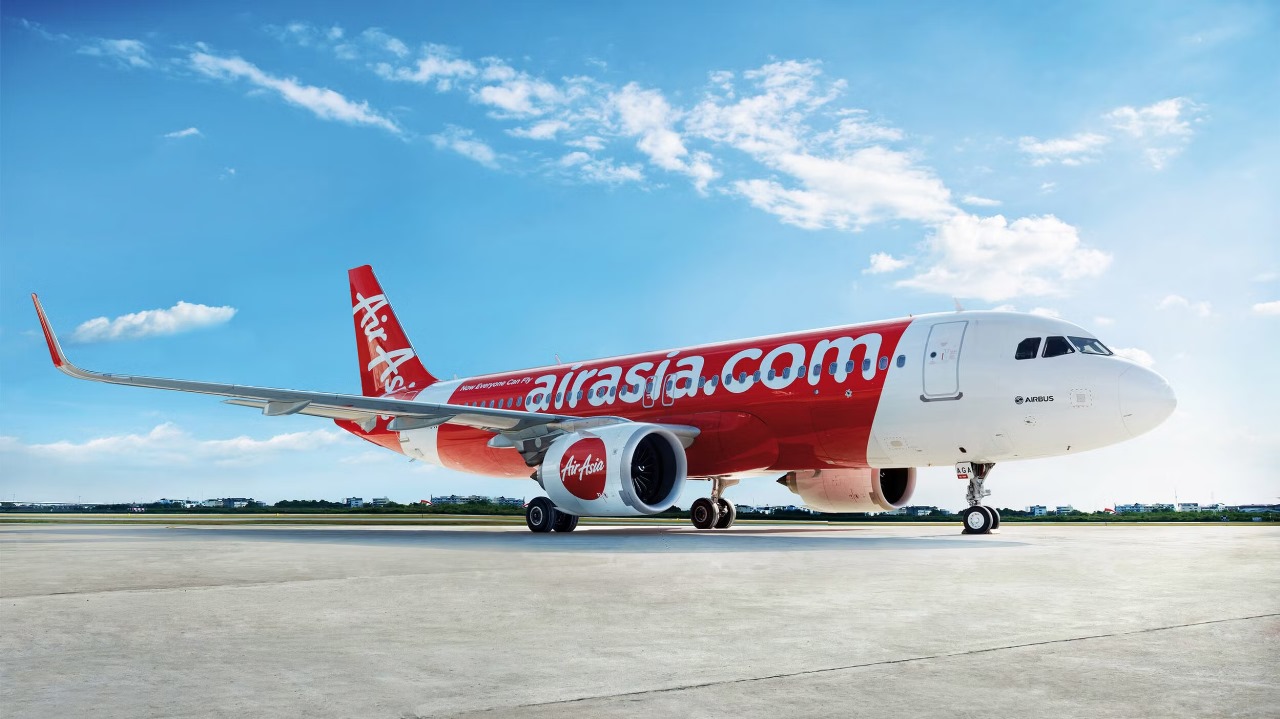
Image courtesy of Simple Flying
When Tony Fernandes bought AirAsia in 2001, few believed he could save it. The small Malaysian carrier was drowning in debt, struggling against bigger competitors, and barely known beyond its home market. Yet within just a few years, AirAsia became a symbol of affordable air travel in Asia — proving that vision, timing, and relentless execution could rewrite aviation history.

AirAsia was founded in 1993 as a government-linked company under DRB-HICOM. By 2001, it had accumulated around USD 11 million in debt and operated just two aging Boeing 737s on limited domestic routes. The airline was losing money and morale was low. Few Malaysians could afford to fly, and Malaysia Airlines dominated the skies. The company had no strong brand identity or clear market positioning.
When Malaysia’s government liberalized aviation, Fernandes saw a gap: flying was still a luxury for most Asians. Inspired by European and U.S. budget airlines such as Ryanair and Southwest Airlines, he wanted to prove that “Now Everyone Can Fly.”
That same year, Malaysia’s government began to open its skies to private operators. For Tony Fernandes, then a music industry executive at Warner Music, this was a once-in-a-lifetime opportunity. Inspired by low-cost carriers such as Ryanair and Southwest Airlines, he believed Southeast Asia was ready for a similar revolution. Fernandes mortgaged his home, left his high-paying job. Instead of starting from scratch (which would have required an expensive new license), he bought AirAsia for only 1 Malaysian Ringgit (about USD 0.25) and took on USD 11 million in debt. It was a bold move — he mortgaged his home and convinced investors that a low-cost airline could thrive in Asia.
The Low-Cost Model Transformation
Fernandes immediately restructured AirAsia around a lean, low-cost model, focusing on volume, efficiency, and accessibility. Here’s how he did it:
Single Aircraft Type - He standardized the fleet to Airbus A320s (later replacing the old Boeings), reducing maintenance and training costs.
High Aircraft Utilization - Planes spent more time flying and less time idle. Quick turnarounds (as fast as 25 minutes) allowed more flights per day.
No-Frills Concept - Passengers only paid for what they needed — the ticket. Everything else (meals, baggage, seat selection) was optional. This drastically cut operating costs.
Direct Online Bookings - Instead of relying on travel agents, AirAsia focused on online booking and ticketless travel, pioneering e-commerce in the region. This approach saved commission fees and attracted younger, tech-savvy travelers.
Aggressive Marketing - The slogan “Now Everyone Can Fly” captured public imagination.
AirAsia marketed heavily in the media, emphasizing low fares and accessible travel for all Malaysians, even first-time flyers.
Rapid Expansion and ASEAN Growth (2002–2007)
Within just a year of Tony Fernandes’ takeover, AirAsia achieved profitability — a remarkable turnaround for a company once drowning in debt. The transformation was fueled by bold expansion and an unrelenting focus on low-cost efficiency. In 2002, AirAsia launched new domestic routes across Malaysia, connecting key destinations such as Kota Kinabalu, Penang, and Langkawi. The following year, the airline made its international debut with routes to Bangkok and Singapore. This growth continued in 2004 with the creation of Thai AirAsia, a joint venture with Shin Corporation, owned by Thai Prime Minister Thaksin Shinawatra’s family, followed by the formation of Indonesia AirAsia in 2005 through the acquisition of Awair. Between 2010 and 2013, AirAsia further expanded its ASEAN footprint by establishing Philippines AirAsia, AirAsia India, and AirAsia Japan. This regional network allowed the airline to dominate short-haul routes and build one of the most recognizable aviation brands in Asia. By 2002, AirAsia had cleared all its debts and began reporting profits, operating at 40–50% lower costs than traditional carriers. Its promotional fares — sometimes as low as RM 1 (USD 0.25) — perfectly embodied Fernandes’ vision of making air travel accessible to everyone.
Fernandes adopted a “Think ASEAN” mindset — positioning AirAsia not just as Malaysia’s airline, but as Southeast Asia’s airline.
He believed in building cross-border partnerships rather than ownership-heavy subsidiaries, ensuring local relevance and political support in each country.
This decentralized yet unified model became AirAsia’s biggest competitive advantage.
AirAsia flies to over 160 destinations across 25+ countries, focusing on ASEAN and East Asia.
Their hubs include:

Profitability Through Precision
Fernandes’ management style blended creativity and discipline. While his personality was energetic and media-friendly, behind the scenes he built a culture focused on metrics, cost control, and continuous improvement. His open-door policy encouraged employees to suggest new ideas, creating a sense of ownership and shared purpose.
As AirAsia matured, Fernandes looked beyond aviation. He launched AirAsia X, a long-haul low-cost carrier serving destinations such as Japan, Korea, and Australia. The company later diversified into adjacent industries:
In 2022, the holding company rebranded as Capital A Berhad, reflecting its transformation from a pure airline to a digital lifestyle and travel ecosystem.
Building a Low-Cost Model for Asia
Fernandes and his small team moved fast. Instead of competing directly with full-service airlines, they reimagined AirAsia as a no-frills, low-fare carrier built on efficiency and simplicity. The guiding principle was clear: “Now Everyone Can Fly.”
1. Simplifying the Fleet – Fernandes standardized operations using a single aircraft type, the Airbus A320. This reduced maintenance costs, training needs, and scheduling complexities.
2. Maximizing Aircraft Utilization – AirAsia’s planes spent more time in the air and less time on the ground. Turnaround times were slashed to about 25 minutes, enabling more daily flights per aircraft.
3. Ticketless, Direct-to-Consumer Sales – AirAsia was one of the first airlines in Asia to fully embrace online bookings, bypassing travel agents and saving commission costs.
4. Unbundled Pricing – Passengers paid only for what they used. Meals, baggage, and seat selection became optional add-ons, keeping base fares low and revenue diversified.
5. Bold Marketing – Fernandes’ message resonated across Asia: flying was no longer just for the wealthy. AirAsia’s red branding, friendly service, and frequent promotions built a loyal customer base quickly.
Innovation & Digital Transformation
AirAsia has rebranded its holding company as Capital A Berhad, reflecting its evolution from an airline into a diversified digital and lifestyle group.
Capital A focuses on:
Today, AirAsia connects more than 160 destinations across 25 countries, employing thousands and carrying over 700 million passengers since inception. The airline has won Skytrax’s World’s Best Low-Cost Airline award for 13 consecutive years.
Tony Fernandes’ journey is now a case study in business schools worldwide. From buying a failing airline for one ringgit to building a multi-billion-dollar brand, his success demonstrates the power of bold risk-taking, strategic simplicity, and belief in accessibility.
Tony Fernandes’ transformation of AirAsia: Made flying affordable for millions in Asia for the first time. Created a globally recognized low-cost brand. Proved that an ASEAN-based company could compete with global giants. Inspired similar low-cost models like Lion Air, Cebu Pacific, VietJet, and Scoot.
Beyond Airlines
As AirAsia grew, Fernandes diversified into:
· AirAsia X (long-haul, low-cost flights to Japan, Australia, and the Middle East)
· BigPay (fintech arm)
· Teleport (logistics and cargo)
· AirAsia Super App (now AirAsia MOVE) – combining travel, delivery, and lifestyle services
In 2022, AirAsia rebranded its holding company as Capital A Berhad, reflecting this broader ecosystem.
AirAsia has started investing in sustainable aviation fuel (SAF) research, carbon offset programs, and fleet upgrades to more efficient Airbus A321neo aircraft to reduce emissions.

Awards
AirAsia has been named:
AirAsia’s story is more than a corporate turnaround — it’s a cultural shift. By democratizing air travel, Tony Fernandes opened the skies to millions who had never flown before. His vision turned a struggling carrier into an engine of regional connectivity and economic growth. Two decades later, AirAsia remains a reminder that innovation often begins with a simple idea and the courage to take flight.