DuPont Leading the Future of Advanced Materials and Sustainable Innovation
DuPont leads innovation in advanced materials across semiconductors, safety, mobility, and biotechnology. From Tyvek and Nomex protection to bio-based materials and EV solutions, DuPont drives sustainable growth and technologies shaping a smarter future.
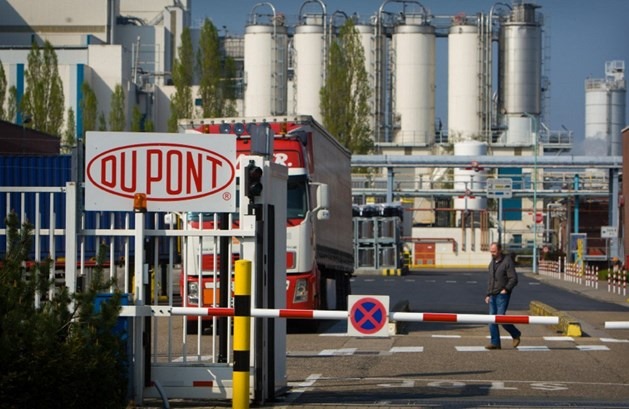
DuPont (full name: E.I. du Pont de Nemours and Company) is one of the oldest and most influential American science and technology companies, with roots dating back to 1802. It was originally founded by Éleuthère Irénée du Pont, a French immigrant, as a gunpowder mill on the Brandywine River in Delaware. Over the centuries, DuPont evolved into a global materials, chemicals, and innovation leader.
1802–1900s: Began as a gunpowder producer supplying the U.S. military. Gradually diversified into chemicals and materials.
Early–Mid 1900s: Became a global innovation powerhouse, developing numerous synthetic materials that shaped modern industry.
2015–2019: Merged with Dow Chemical to form DowDuPont, the world’s largest chemical company at the time. Later split into three independent entities: Dow Inc. – focused on materials science. DuPont – focused on specialty products. Corteva Agriscience – focused on agriculture
DuPont has been behind some of the most iconic materials in modern life, including:
· Nylon (1935) – revolutionized textiles and consumer goods.
· Teflon (1938) – nonstick coating used in cookware and aerospace.
· Kevlar (1965) – used in bulletproof vests, helmets, and tires.
· Tyvek – used in home construction, medical packaging, and protective clothing.
· Nomex – fire-resistant fiber used in firefighting and racing suits.
· Corian – solid surface material used in countertops and interiors.
Electronics & Industrial: Materials for semiconductors, displays, and electronic devices.
The Electronics & Industrial (E&I) segment of DuPont focuses on providing high-performance materials and process solutions that power the global electronics supply chain — from semiconductor fabrication to flexible displays, circuit boards, and 5G communication systems.
This division serves key industries such as: Semiconductors. Smartphones and consumer electronics. Automotive electronics. Data centers and computing. Telecommunications (5G/6G). Healthcare and wearable technology
Semiconductor Materials
Semiconductors are the backbone of the digital age, and DuPont provides critical materials used throughout the chip manufacturing process, including:
CMP (Chemical Mechanical Planarization) Slurries and Pads. Used to smooth wafer surfaces during chip fabrication. Ensures precision in ultra-thin transistor layers at nanoscale nodes (e.g., 3nm, 5nm chips). DuPont is a leading supplier after its 2019 merger with Dow’s electronic materials business.
Photoresists and Advanced Lithography Materials. These materials allow light-based etching of microcircuits on silicon wafers. DuPont’s Dry Film Photoresist (Riston®) is widely used in printed circuit boards (PCBs). Offers EUV (Extreme Ultraviolet) compatible materials for next-generation chips.
Etchants, Cleaners, and Deposition Materials. Used in etching and patterning of semiconductor layers. Includes etchant chemicals, metal deposition films, and dielectric materials for memory and logic chips.
Packaging and Interconnect Solutions. Advanced dielectric and conductive films, adhesives, and encapsulation materials protect chips from heat, moisture, and mechanical stress. Used in 3D chip packaging, wafer-level packaging, and system-in-package (SiP) designs.
Display Technologies
DuPont’s materials play a vital role in OLED (Organic Light Emitting Diode) and LCD (Liquid Crystal Display) panels found in smartphones, TVs, and automotive displays.
OLED Materials. DuPont is a global innovator in soluble OLED materials, used in inkjet-printed displays. These materials offer better brightness, efficiency, and flexibility compared to traditional vapor-deposited OLEDs. Enables bendable and rollable displays for next-generation devices.
Photoresists and Alignment Layers for LCDs. Used in thin-film transistor (TFT) backplanes that control LCD pixels. Provides uniform light alignment, enhancing brightness and color accuracy.
Optical Films and Adhesives. Improves display contrast, durability, and touch performance. Used in cover glass lamination and flexible display modules.
Interconnect Solutions for Electronic Devices
Modern electronics — from smartphones to EVs — rely on compact, reliable, and high-speed interconnections. DuPont supplies specialized materials that enable miniaturization and signal integrity:
Flexible Circuit Materials. DuPont’s Kapton® polyimide film and Pyralux® laminates are used in flexible printed circuits (FPCs). Key applications: foldable phones, wearable devices, aerospace, and medical sensors.
Thermal Management Materials. Includes thermally conductive adhesives and films for heat dissipation. Crucial for power modules, 5G base stations, and data centers.
Electronic and Optical Adhesives. Used to bond, seal, and protect delicate components. Includes epoxy, silicone, and UV-curable formulations that maintain high performance under extreme temperatures.
Automotive Electronics
DuPont’s materials are essential for electric and autonomous vehicles, supporting: High-voltage insulation films for EV batteries. EMI shielding materials for sensors and ECUs. Thermal interface materials for inverters and onboard chargers. Flexible circuits and connectors for infotainment systems.
Photovoltaic and Energy Applications
DuPont is also advancing energy electronics, especially solar cell materials: Tedlar® films used as backsheet protection in solar panels — offering UV and weather resistance. Solamet® metallization pastes improve solar cell efficiency by optimizing electrical contact.
Sustainability & Future Focus
DuPont’s Electronics & Industrial division emphasizes sustainable innovation: Reducing carbon footprint in semiconductor supply chains. Developing bio-based polymers and recyclable films. Supporting energy-efficient display and lighting technologies.
They also collaborate with major tech and chip manufacturers (like TSMC, Samsung, Intel, and LG Display) to co-develop next-generation materials for AI, quantum computing, and 6G-ready devices.
Key Facilities and R&D Centers
· Wilmington, Delaware (HQ)
· Hsinchu, Taiwan – Semiconductor Materials Center
· Seoul, South Korea – Display R&D
· Matsusaka, Japan – CMP slurries production
· Suzhou, China – Electronics manufacturing & support
Water & Protection: Filtration, protective garments, and safety solutions (e.g., Tyvek, Nomex).
The Water & Protection segment develops advanced materials and systems designed to protect people, the environment, and critical infrastructure.
It serves diverse sectors, including water treatment & filtration, construction & building materials, industrial & occupational safety, energy & utilities and healthcare and emergency response.
Water Filtration and Purification Technologies
DuPont is a global leader in water treatment solutions, providing technologies for municipal, industrial, and residential water systems. Following its 2019 merger with Dow’s water business, DuPont became one of the world’s largest water technology companies, offering a full suite of filtration solutions.
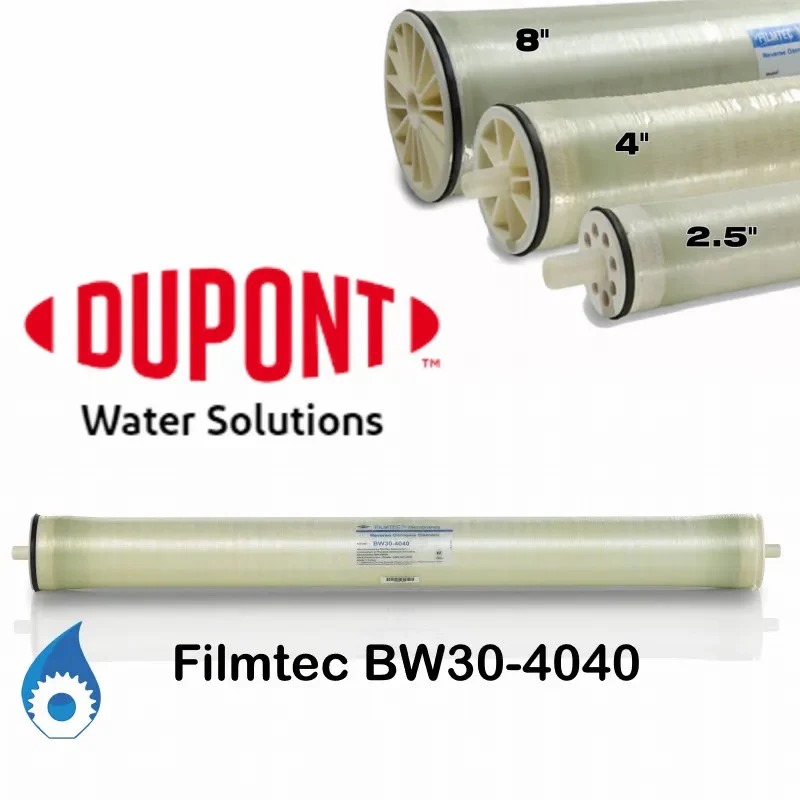
Reverse Osmosis (RO) and Nanofiltration. FilmTec™ membranes are the backbone of RO and nanofiltration systems. Used in desalination plants, industrial process water, and residential filters. Provides high salt rejection and energy-efficient filtration.
Ultrafiltration (UF) and Microfiltration (MF). Removes bacteria, viruses, and suspended solids. Applied in drinking water purification, wastewater reuse, and food & beverage processing. Ion Exchange Resins. AmberLite™ and AmberSep™ resins are used for demineralization, softening, and chemical purification. Critical in power generation, pharmaceuticals, and semiconductor water systems.
Sustainability in Water Solutions. DuPont develops low-energy membranes that reduce carbon footprint. Active in water reuse and zero-liquid discharge (ZLD) systems. Partners with cities and industries to combat water scarcity and contamination.
DuPont has been a global leader in personal protective equipment (PPE) for decades. Its materials are trusted by firefighters, industrial workers, healthcare professionals, and military personnel worldwide.
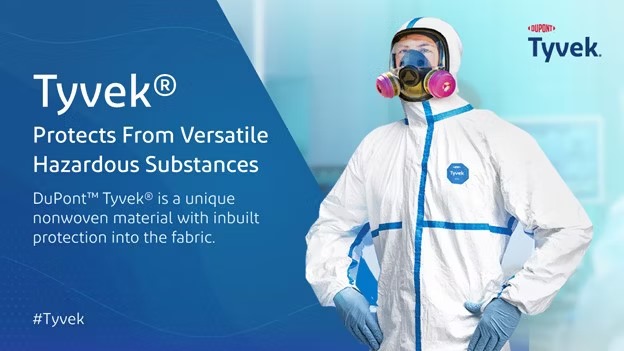
Tyvek® A nonwoven fabric made from high-density polyethylene fibers. Lightweight, breathable, and resistant to particles, liquids, and chemicals. Applications: Protective coveralls for chemical, medical, and cleanroom environments. Construction wraps for building insulation and moisture protection. Medical packaging and industrial envelopes. Tyvek® Housewrap is also used in energy-efficient home construction, preventing air leakage while allowing vapor permeability — enhancing durability and insulation performance.
Nomex® A meta-aramid fiber known for flame resistance and thermal stability. Does not melt or drip under heat exposure — essential for firefighters, military, racing drivers, and industrial workers. Applications: Firefighter turnout gear. Motorsport and aviation suits. Electrical insulation (Nomex paper for transformers and motors). Industrial uniforms in oil, gas, and chemical sectors
Kevlar® A para-aramid fiber with five times the strength of steel (by weight). Used in bullet-resistant vests, helmets, cut-resistant gloves, and reinforced cables. Also applied in aerospace, automotive components, and smart composites.
Thermal & Electrical Protection. DuPont develops multi-layer systems combining Nomex, Kevlar, and Tyvek for protection against heat, chemicals, and electrical arc flash. Used in utilities, manufacturing, defense, and space exploration.
Construction & Building Materials
DuPont’s Water & Protection division also drives innovation in modern construction, focusing on durability, energy efficiency, and sustainability.
Tyvek® Building Envelope Systems. Used for weatherproofing homes and commercial buildings. Improves energy efficiency by preventing air infiltration while allowing vapor to escape. Reduces mold, mildew, and structural degradation.
Styrofoam™ Brand Insulation. Durable extruded polystyrene (XPS) foam for walls, roofs, and foundations. Provides thermal insulation and moisture resistance. Integral to green building certifications (LEED, BREEAM).
ArmorWall™ & AirGuard® Systems. Advanced air and moisture barrier technologies. Enhance building sustainability and indoor comfort.
Safety and Industrial Applications
DuPont materials safeguard operations across industries such as: Oil & gas (flame-resistant clothing, filtration systems). Mining (dust control and filtration). Utilities and power (arc flash suits, insulation). Healthcare (protective suits, sterile packaging). Emergency response (chemical and biological hazard suits). Its protection ecosystem combines materials, garment design, and digital monitoring for smarter workplace safety.
Sustainability & Circular Innovation
Sustainability is embedded in this division’s strategy: Closed-loop recycling for Tyvek and Nomex fibers. Water filtration technologies that enable reuse and lower energy costs. Eco-design in construction materials to enhance building life cycles. Collaboration with UN Water programs and industrial decarbonization initiatives.
The Water & Protection division defines DuPont’s mission to protect what matters most — people, the planet, and performance. It continues to expand in areas like: Circular economy PPE recycling. Next-gen desalination membranes. Smart textiles for safety. Carbon capture filtration materials.
Mobility & Materials: Advanced polymers for automotive, aerospace, and energy sectors.
The Mobility & Materials (M&M) segment provides high-performance materials that enhance efficiency, safety, and sustainability in transportation and industrial applications.
It focuses on helping manufacturers: Lightweight vehicles and aircraft. Improve fuel and energy efficiency. Enable electric and hybrid systems. Enhance durability, comfort, and safety
After the DuPont–Dow merger, this segment inherited a broad portfolio of engineering polymers and adhesives, positioning DuPont as a top materials supplier to global automotive and aerospace OEMs.
Engineering Polymers and High-Performance Resins
DuPont’s engineering polymers are the foundation of its materials innovation, replacing metal components with lighter, stronger, and more sustainable alternatives.
Zytel® – Nylon (PA66, PA6, and PA610). A versatile nylon resin used in under-the-hood automotive parts. Known for high strength, flexibility, and chemical resistance. Applications: Engine covers, brackets, air intake manifolds. EV battery components. Electrical connectors.
Crastin® – Polybutylene Terephthalate (PBT). Offers excellent electrical insulation and dimensional stability. Used in sensors, switches, and electronic housings for vehicles.
Delrin® – Acetal Resin (POM). Combines high stiffness and low friction, ideal for mechanical gears, safety belts, and door systems. Delrin® is known for precision and durability in dynamic components.
Hytrel® – Thermoplastic Elastomer. Flexible and durable, bridging the gap between rubber and plastic. Common in hoses, seals, cables, and vibration dampers.
Vespel® – Polyimide Composite. Used in extreme temperature environments (up to 300°C+). Critical for aerospace bearings, jet engine seals, and thermal insulation. Retains strength under vacuum, radiation, and chemical exposure.
Automotive & Electric Vehicle (EV) Applications
DuPont plays a major role in the global automotive transformation toward electric and autonomous vehicles. Its materials improve battery efficiency, powertrain safety, and weight reduction.
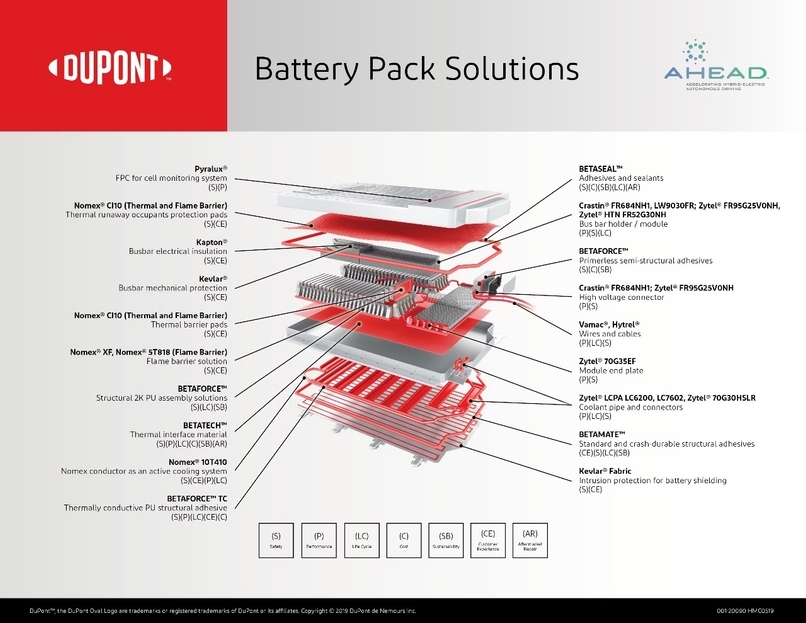
EV Battery Systems. Thermal management adhesives and films regulate battery temperature. Electrical insulation materials protect high-voltage systems. Viton™ fluoroelastomers ensure chemical resistance to lithium-ion electrolytes. Thermal runaway barriers enhance safety in EV battery packs.
Lightweight Structural Components. Replaces metal with nylon-based composites to reduce vehicle weight. Enables improved fuel efficiency and range extension in EVs.
Adhesives and Sealants. BETAFORCE™ and BETASEAL™ adhesive systems bond dissimilar materials (metal, glass, plastic, carbon fiber). Used in EV body assembly, glazing, and crash-resistant structures. Reduce vibration and noise — essential for luxury EVs.
Connectivity and Electronics. DuPont materials ensure signal integrity for ADAS (advanced driver-assistance systems), sensors, and radar modules. Dielectric polymers and shielding materials enhance performance in 5G automotive electronics.
Aerospace & Defense Applications
DuPont materials have long supported aviation and space industries, known for extreme durability, heat resistance, and reliability.
Vespel® and Nomex® in Aerospace. Vespel® components are used in jet engines, valves, and bearings — maintaining strength at high altitudes. Nomex® honeycomb composites form lightweight interior panels and structural components in aircraft.
Kevlar® Reinforcements. Used in aircraft armor, fuselage panels, and composite materials for helicopters and drones. Reduces overall weight while maintaining impact resistance.
Space-Grade Polymers. DuPont materials are used in NASA spacecraft insulation, wiring, and seals. Resistant to vacuum, radiation, and thermal cycling.
Energy and Industrial Systems
Beyond mobility, DuPont’s M&M products support renewable energy systems and industrial applications.
Renewable Energy. Tedlar® PVF films protect solar panel backsheets from UV, moisture, and temperature fluctuations. Materials enhance efficiency and lifespan in wind turbine components and hydrogen fuel cells.
Industrial and Power Equipment. Electrical insulation for transformers, capacitors, and motors. Elastomers and coatings used in chemical processing, oil & gas, and manufacturing machinery.
Research & Innovation Focus
DuPont’s R&D teams work on next-generation materials to meet mobility megatrends: Lightweight composites for vehicle electrification. High-voltage insulation for compact EV platforms. Thermally stable polymers for next-gen battery chemistries. Recyclable and bio-based plastics for sustainability goals.
Sustainability & Circular Materials
Sustainability is central to DuPont’s materials strategy: Recycling initiatives for engineering plastics. Lightweighting to reduce fuel use and CO₂ emissions. Renewable feedstocks in polymer production. Collaboration with OEMs (like Tesla, GM, Toyota, and Airbus) to enable carbon-neutral material solutions. DuPont’s materials support automotive life-cycle optimization, from raw materials to end-of-life recovery.
Global Manufacturing & R&D Footprint
Key DuPont Mobility & Materials centers: Wilmington, Delaware (HQ). Geneva, Switzerland – Automotive technical center. Tokyo, Japan – Advanced polymers R&D. Shanghai, China – EV component development. Midland, Michigan, USA – Engineering resins and adhesives.
Biotechnology & Sustainable Materials: Investments in renewable sources and bio-based innovations.
DuPont’s Biotechnology & Sustainable Materials segment is dedicated to developing renewable, high-performance materials and ingredients that reduce environmental impact while maintaining industrial performance.
It operates at the intersection of life sciences, materials science, and industrial biotechnology, serving industries such as: Textiles and fashion. Automotive and electronics. Packaging. Consumer care and cosmetics. Food, agriculture, and biofuels. This division emerged from DuPont’s long-standing expertise in bioengineering, which began decades ago with bio-based polymer research and collaborations in agricultural biosciences.
Bio-Based Materials and Polymers
DuPont is a pioneer in creating bio-derived polymers — sustainable materials that perform like traditional plastics but are made from renewable biological resources instead of petroleum.
Sorona® – Bio-Based Polyester. Derived from corn glucose via 1,3-propanediol (Bio-PDO) fermentation. Offers softness, elasticity, and resilience — ideal for textiles, carpets, and apparel. Reduces greenhouse gas emissions by up to 63% compared to nylon or polyester. Commonly used by brands like Patagonia, The North Face, and Adidas in sustainable clothing lines. Sorona® fibers are partially bio-based (37% renewable content) and certified by USDA BioPreferred® and OEKO-TEX® for low environmental impact.
Susterra® Propanediol. A renewable, non-petroleum-based glycol used in cosmetics, coatings, and cleaning products. Derived from corn sugar fermentation. Provides low toxicity and excellent biodegradability. Susterra® serves as a building block chemical, replacing fossil-derived glycols in multiple industries.
Industrial Biotechnology and Bio-Manufacturing
DuPont leverages biotechnology to engineer enzymes, microbes, and bio-based feedstocks that enhance sustainability across industrial production.
Fermentation-Based Manufacturing. Uses microorganisms to convert renewable biomass into high-value materials. Reduces dependency on crude oil and lowers CO₂ emissions. Used in bioplastics, biofuels, and biochemical intermediates.
Enzyme Engineering. DuPont designs custom enzymes for detergents, textiles, and food processing. Enzymes improve energy efficiency (lower washing temperatures) and reduce chemical waste. Example: Enzymes for bioethanol production increase yield from agricultural waste.
Collaborations and Joint Ventures. DuPont co-developed Bio-PDO technology with Tate & Lyle, establishing one of the world’s first large-scale bio-refineries. Collaborates with ADM (Archer Daniels Midland) and Genomatica to advance renewable chemical synthesis.
Sustainable Textiles and Consumer Applications
DuPont’s innovations extend deeply into sustainable fashion and consumer materials, helping major global brands achieve circular economy goals.
Bio-Based Fabrics and Fibers. Sorona® and Hytrel® RS are widely adopted in: Activewear. Outdoor apparel. Carpeting and upholstery. They offer stretch recovery, UV resistance, and moisture management while being partially bio-based.
Performance and Comfort Materials. Used in footwear cushioning, automotive interiors, and home textiles. Combines comfort and sustainability for eco-conscious consumers.
Personal Care and Home Applications. Susterra® and biobased propanediols serve as eco-friendly ingredients in skincare, cleaning, and fragrance formulations. Offers mildness and low environmental toxicity.
Renewable Energy and Circular Economy Applications
DuPont applies its biotechnology and materials science expertise to help industries transition toward low-carbon energy systems.
Bio-Based Components for Energy Systems. Development of biodegradable insulation and coatings for electrical systems. Exploration of bio-derived composites for wind turbines and battery casings.
Recycling and Circular Design. Designing polymers that are easier to recycle or chemically upcycled. Closed-loop systems in textiles and packaging using DuPont’s renewable resins.
Carbon Reduction and Life Cycle Innovation. Focused on reducing scope 1–3 emissions in manufacturing. Life cycle assessments (LCA) used to quantify CO₂ reduction of DuPont’s bio-based products versus petroleum-derived alternatives.
R&D Focus Areas and Innovations
DuPont invests heavily in bioengineering and sustainable chemistry R&D centers located in: Wilmington, Delaware (Global R&D). Martinez, California – Bio-based material testing. Shanghai, China – Green chemistry applications. Leiden, Netherlands – Industrial biotechnology development
Sustainability Commitments and Impact
Aligned with DuPont’s 2030 Sustainability Goals, this segment contributes to:
100% renewable electricity for operations by 2030
60% reduction in GHG emissions by 2030
Circular economy design for all key polymer families
Water stewardship and biodiversity protection across supply chains
DuPont’s broader vision: “To deliver materials that protect people and the planet — from molecules to manufacturing.”
The Biotechnology & Sustainable Materials division positions DuPont as a science-driven sustainability leader. Its strategy focuses on: Expanding bio-based feedstock utilization. Scaling industrial fermentation platforms. Partnering with brands pursuing zero-carbon goals. Innovating materials that biodegrade or fully recycle. By combining biotechnology with materials innovation, DuPont aims to reshape the future of industrial chemistry — from fossil dependency to renewable performance materials.
DuPont is often recognized as a pioneer of innovation but also faces environmental scrutiny due to its historical chemical production. Its shift toward specialty and sustainable materials marks an effort to redefine its legacy for the 21st century.
For over two centuries, DuPont has been a name synonymous with science, innovation, and resilience. From revolutionizing industrial chemistry in the early 1900s to pioneering today’s advanced materials, DuPont continues to shape the future of technology, safety, and sustainability. Today, its core business divisions—Electronics & Industrial, Water & Protection, Mobility & Materials, and Biotechnology & Sustainable Materials—are central to some of the most dynamic industries in the world, from semiconductor manufacturing and automotive engineering to renewable energy and environmental protection.
Beyond consumer technology, DuPont’s materials also play a crucial role in automotive electronics, data centers, and photovoltaic energy. With innovations like Tedlar® films for solar panels and Solamet® metallization pastes that improve solar cell efficiency, DuPont is equally committed to advancing clean energy technologies.
DuPont’s enduring strength lies in its ability to evolve. Its transformation from a traditional chemical producer into a diversified global technology leader reflects a deep commitment to solving real-world problems. From semiconductors to safety gear, electric vehicles to bio-based polymers, DuPont continues to influence industries that define modern life.
With a global network of R&D centers in the United States, Japan, South Korea, Taiwan, and Europe, DuPont remains focused on innovation that drives both performance and sustainability. Whether powering digital devices, protecting human lives, or enabling a renewable economy, DuPont’s mission is clear—to use science to empower a smarter, safer, and more sustainable world.