Lockheed Martin supplies fighter jets, missile defense systems, helicopters, satellites, radar, and space technology to allied nations worldwide, shaping global defense strategy and long-term military partnerships.
Lockheed Martin supplies fighter jets, missile defense systems, helicopters, satellites, radar, and space technology to allied nations worldwide, shaping global defense strategy and long-term military partnerships.
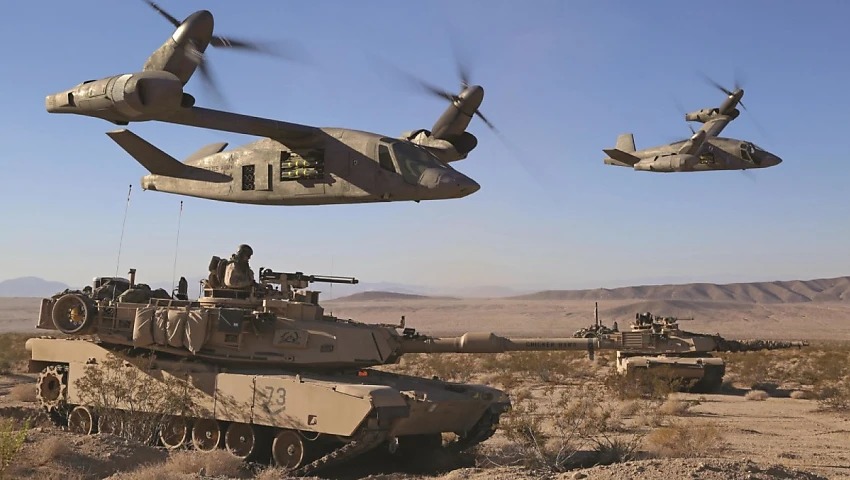
Lockheed Martin, US Army Joint Fires Concept - Image courtesy of Defence Connect
Lockheed Martin and the Architecture of American Defense Leadership
In the modern global economy, few companies operate at the intersection of technology, geopolitics, and national security as directly as Lockheed Martin. Often working far from consumer visibility, the American defense and aerospace giant has quietly shaped the military balance of power for decades—through aircraft, satellites, missile systems, and advanced defense platforms used by the United States and its allies.
More than a weapons manufacturer, Lockheed Martin represents a strategic industrial institution, one that reflects how the U.S. converts innovation into long-term national advantage. Its success is not built on hype or short product cycles, but on deep engineering expertise, government trust, and long-duration contracts that span generations.
Lockheed Martin was formed in 1995, following the merger of Lockheed Corporation and Martin Marietta, two companies with deep Cold War roots. Yet its lineage stretches much further back—into the early days of aviation, space exploration, and missile development.
This merger was part of a broader post–Cold War consolidation, when the U.S. defense industry streamlined to maintain efficiency amid reduced military spending. What emerged was not a smaller company, but a more integrated aerospace and defense leader, capable of delivering systems across air, land, sea, space, and cyber domains.
Today, Lockheed Martin stands as the largest defense contractor in the world, with the U.S. government as its primary customer and dozens of allied nations relying on its platforms.
Lockheed Martin’s leadership is best understood through its flagship programs, each representing decades of research, political coordination, and industrial execution.
The most well-known is the F-35 Lightning II, the world’s most advanced multirole stealth fighter. Designed not just as an aircraft but as a networked combat system, the F-35 integrates data, sensors, and allied forces into a single operational ecosystem. With more than a dozen countries participating in the program, it has become both a military tool and a diplomatic asset.
Beyond fighter jets, Lockheed Martin dominates in:
These programs are not short-term products. They are multi-decade platforms, locking in recurring revenue through upgrades, maintenance, and lifecycle support.

Defense as a Business Model
Unlike consumer technology firms, Lockheed Martin operates under a unique business model defined by stability rather than speed.
Its core characteristics include: Long-term government contracts. High regulatory and technical barriers to entry. Predictable cash flow. Heavy upfront R&D investment. Limited direct competition.
This model creates resilience. While consumer markets fluctuate, defense spending tends to remain stable—or increase—during periods of geopolitical uncertainty. As global tensions rise, Lockheed Martin’s relevance grows, not through marketing campaigns, but through strategic necessity.
For investors, this translates into a company known for consistent dividends, steady margins, and long-term value, rather than explosive growth.
Innovation Without Consumer Visibility
Lockheed Martin is often overlooked in discussions of innovation because it does not produce consumer-facing technology. Yet its research labs and engineering teams are among the most advanced in the world.
The company invests heavily in: Artificial intelligence for defense systems. Autonomous platforms. Cybersecurity and electronic warfare. Space resilience and orbital defense. Next-generation propulsion and materials.
Unlike Silicon Valley startups, Lockheed Martin’s innovation cycle prioritizes reliability, security, and survivability, not rapid iteration. Failure is not an option when systems operate in combat or orbit thousands of miles above Earth.
Although headquartered in the United States, Lockheed Martin is deeply global. Its systems are used by NATO members, U.S. allies in Asia-Pacific, and defense partners across the Middle East.
This international footprint serves two purposes: Revenue diversification beyond U.S. defense budgets and strategic alignment, embedding American technology standards into allied defense infrastructures. In many cases, choosing Lockheed Martin systems also means aligning politically and militarily with the United States—making the company a soft-power extension of American foreign policy.
Lockheed Martin’s Global Footprint How Nations Around the World Invest in American Defense Technology
Lockheed Martin isn’t just a pillar of U.S. defense—it’s one of the most globally integrated defense and aerospace companies in the world. Its systems are trusted by governments from Europe to the Middle East, Asia-Pacific to the Americas. The company’s export portfolio spans fighter aircraft, missile defense systems, helicopters, space vehicles, radar systems, and advanced sensors, making it central to allied military modernization programs and strategic deterrence planning.
International sales contribute a significant portion of Lockheed Martin’s revenue, with overseas customers accounting for about one-quarter to one-third of certain defense program sales, particularly in air and missile defense and combat systems.
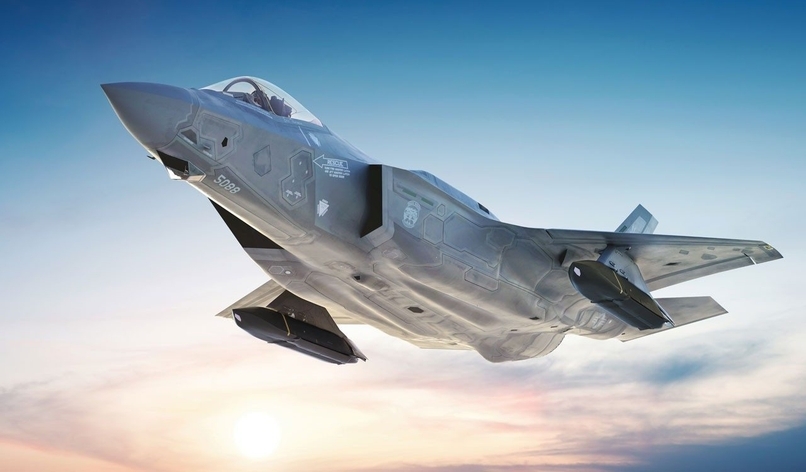
Fighter Jets — F-35 Lightning II and Beyond
The F-35 Lightning II is Lockheed Martin’s most visible export success. Operating as the backbone of many modern air forces, it is a fifth-generation stealth multirole fighter sold under the U.S. Foreign Military Sales (FMS) program. The jet’s advanced sensors, networked combat capabilities, and stealth design make it highly desirable for allied nations seeking cutting-edge airpower.
Key international F-35 operators include: United Kingdom. Japan (largest international F-35 customer and host of a final assembly facility). Australia. Canada. South Korea. Italy. Norway. Netherlands. Denmark. Poland. Finland. Bahrain. Beyond the F-35, earlier generation Lockheed jets like the F-16 continue to fly in the air forces of other nations such as Slovakia, Greece, Thailand, and others, demonstrating the brand’s long legacy in military aviation.
Missile Defense Systems: Patriot, THAAD & PAC-3
Lockheed Martin’s reputation in missile defense has made it a partner of choice for nations seeking protection against ballistic missile threats. Its systems include: PAC-3 (Patriot Advanced Capability-3): An advanced interceptor designed to deal with high-speed aerial threats. THAAD (Terminal High Altitude Area Defense): A high-altitude layered defense system capable of intercepting ballistic missiles outside the atmosphere.
Major international customers for these systems include: Qatar. Japan. South Korea. Poland. Taiwan. United Arab Emirates (UAE) – the first foreign THAAD operator. Saudi Arabia. The UAE’s introduction of THAAD a decade ago marked one of Lockheed Martin’s most significant long-term defense partnerships abroad, cementing its role in protecting strategic infrastructure and national populations alongside allied systems.
Helicopters & Rotary Craft
Lockheed Martin’s Sikorsky division supplies military and utility helicopters used by militaries worldwide: UH-60 Black Hawk: In service with countries across the Middle East, Europe, Asia, and the Americas. MH-60 Seahawk: Specialized maritime variants used by navies and multilateral units. CH-53K King Stallion: A heavy-lift helicopter which recently secured large U.S. Navy orders and is available to international customers.
Active foreign military support and sustainment programs exist in: Chile. Denmark. Taiwan. Colombia. Kingdom of Saudi Arabia. Australia. These helicopters serve roles ranging from battlefield mobility to search and rescue, underscoring Lockheed’s versatility beyond fixed-wing combat jets.
Space Systems & Satellites
Lockheed Martin also plays a pivotal role in space technology, supplying satellites and spacecraft for both defense and civil space missions. While many space contracts are with U.S. government agencies such as NASA, the company also partners internationally. Japan has contracts with Lockheed Martin for design and manufacture of LM2100-series geostationary satellites, supporting communications and secure networks. Such space exports help allied nations build orbital capabilities for communication, weather monitoring, and strategic signaling.
Radar & Sensor Networks
Advanced radar and sensor systems are integral to modern air and ballistic missile defense. Lockheed Martin’s radar technologies are deployed or being procured by nations investing in early-warning and high-resolution detection systems. TPY-4 long-range radar deals with NATO partner nations, including known buyers like Norway and Sweden—with additional customers emerging as interest grows in aerial domain awareness. These networks are critical for integrated defense, enabling nations to detect threats at extended ranges and coordinate with allied interceptor systems.
Lockheed Martin’s global client base is not just a commercial success—it reflects strategic alignment with U.S. foreign policy goals. Its sales are typically part of broader diplomatic and security relationships that reinforce interoperability among allied forces and contribute to collective defense postures, such as within NATO or Indo-Pacific security frameworks. However, these partnerships can draw scrutiny. Some sales—particularly to Middle Eastern countries such as Saudi Arabia—have raised ethical and geopolitical debates over regional conflict roles and human rights concerns.
From fighter jets that dominate modern airspace to missile defenses protecting cities, helicopters enabling multi-role operations, satellites expanding sovereign capabilities, and radar systems safeguarding borders, Lockheed Martin’s international reach is vast and growing.
This global footprint underscores the company’s role not just as a manufacturer, but as an architect of modern defense infrastructure—helping shape how nations deter threats, safeguard citizens, and collaborate in an increasingly complex security environment.
Operating at this scale brings challenges. Lockheed Martin faces constant scrutiny over: Program cost overruns. Ethical concerns around arms sales. Dependence on government budgets. Political shifts and regulatory pressure. The company must balance shareholder expectations with national interests, public accountability, and international diplomacy. Transparency, compliance, and governance are not optional—they are survival tools. Yet despite these pressures, Lockheed Martin has maintained its position through institutional discipline, conservative financial management, and an ability to navigate Washington as effectively as it navigates engineering complexity.
Lockheed Martin’s strength lies not in trend-chasing, but in structural relevance. It operates in industries where: Demand is long-term. Trust is earned over decades. Capability matters more than branding. Scale is a competitive advantage. In a century defined by rapid disruption, Lockheed Martin represents the opposite philosophy: durability over speed, systems over products, and strategy over spectacle.
As global defense priorities expand into space, cyber, and advanced deterrence, Lockheed Martin remains positioned not just as a contractor, but as a cornerstone of modern defense architecture. While consumer brands shape daily life, companies like Lockheed Martin shape the world behind the headlines. Its leadership in defense and aerospace is not loud—but it is lasting.