Explore Indonesia’s crypto business landscape, from licensed exchanges like Indodax and Pintu to market trends and investment opportunities. Learn how the regulated environment supports growth and what global investors need to know.
Explore Indonesia’s crypto business landscape, from licensed exchanges like Indodax and Pintu to market trends and investment opportunities. Learn how the regulated environment supports growth and what global investors need to know.
Image courtesy of Rctech Online
Indonesia is one of the world’s fastest‑growing cryptocurrency markets, combining a large retail user base with an increasingly structured regulatory environment. For global investors, the country represents a high‑volume, regulation‑driven digital asset market rather than a speculative frontier.
Crypto trading is legal, tightly supervised, and treated as a financial asset class. While cryptocurrencies cannot be used as payment instruments, Indonesia’s approach prioritizes consumer protection, taxation, and institutional oversight — a model that closely aligns with emerging global standards.
Growing Crypto Market. User Base & Transactions. Indonesia has seen rapid growth in crypto adoption, with tens of millions of users and transactions in the hundreds of trillions of rupiah annually. Data from 2024 showed roughly 22+ million crypto traders, with transaction volumes growing strongly year-over-year.
A Maturing Market
Indonesia’s regulatory stance toward crypto has evolved significantly. Oversight of crypto assets now sits under the Financial Services Authority (OJK), signaling a shift from commodity‑style supervision toward a financial‑market framework.
As of January 10, 2025, oversight of cryptocurrencies and other digital financial assets was transferred from Bappebti to Indonesia’s Financial Services Authority (OJK) under Government Regulation No. 49/2024 and Law No. 4/2023. This signals a shift toward treating crypto more like financial assets. Bank Indonesia (BI) retains authority over foreign exchange and derivatives tied to crypto.
OJK has issued POJK No. 27 of 2024 and related guidelines (e.g., SEOJK No. 20/2024) governing digital financial asset trading, including licensing, reporting, and risk management. Crypto firms must comply with AML (Anti-Money Laundering) and KYC (Know Your Customer) standards, and regularly report to the Financial Transaction Reports and Analysis Center (PPATK).
Crypto is legal to trade but not legalized as a payment instrument (i.e., you can invest/trade but cannot use crypto as currency in daily transactions). Tokens must be listed or approved under OJK’s trading rules; exchanges must hold proper licenses.
Exchange & Licensing Requirements. Strict Exchange Licensing. Crypto exchanges must register with Indonesia’s national bourse system and obtain approval (previously under Bappebti and now integrated with OJK processes). Without approved registration, operations risk shutdown. Registration processes include capital requirements, operational checks, and compliance assessments.
Major local platforms (e.g., Tokocrypto, Indodax, Pintu) operate under official licenses and adhere to these standards. Local social discussions highlight concerns like security breaches and encourage care in platform selection.
For global investors, this transition is critical. It reflects Indonesia’s intent to: Treat crypto as a regulated investment product. Enforce strong governance, transparency, and reporting. Reduce systemic risk and unlicensed activity
Key regulatory characteristics include: Mandatory licensing for exchanges and brokers. Strict AML and KYC compliance standards. Approved token listings. Transaction monitoring and reporting. While compliance requirements are demanding, they provide regulatory certainty, which is often more valuable than rapid but unstable growth.
Indonesia consistently ranks among the top global markets for crypto adoption by user count. Participation is driven by a young population, high smartphone usage, and growing familiarity with digital financial products.
Unlike Western markets where institutional investors dominate volume, Indonesia remains retail‑led, making it attractive for platforms focused on accessibility, education, and user experience.
From an international perspective, Indonesia offers: Large addressable market size. Strong mobile‑first behavior. Long‑term growth potential as financial literacy improves.
Core Crypto Businesses Operating Legally
Indonesia’s crypto ecosystem is anchored by licensed domestic exchanges that serve as market infrastructure.
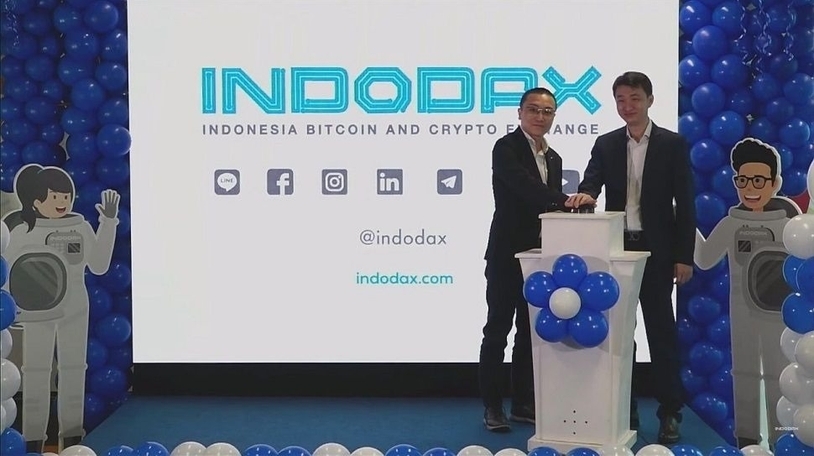
Indodax – One of Southeast Asia’s earliest crypto exchanges, with strong local brand recognition
Oscar Darmawan — Founder & CEO of Indodax
Oscar Darmawan is the founder and current CEO of Indodax, Indonesia’s first and one of the largest licensed crypto exchanges (originally founded as Bitcoin.co.id). He has been instrumental in growing the local crypto trading ecosystem and promoting crypto adoption and literacy in Indonesia.
William Sutanto — Co-Founder & CTO of Indodax
William Sutanto co-founded Indodax with Oscar Darmawan and acts as its Chief Technology Officer. Beyond Indodax, he’s involved in Web3 education and developer community building via BlockDevId.
Tokocrypto – A major platform with international partnerships and regional reach
Yudhono Rawis — CEO of Tokocrypto
Yudhono Rawis leads Tokocrypto, another leading licensed crypto exchange in Indonesia, helping grow its market share and broaden educational outreach. Under his leadership, Tokocrypto has become highly influential in the local trading landscape.
Pintu – A mobile‑first exchange designed for retail onboarding
Jeth (Jeff) Soetoyo — Founder & CEO of Pintu
Jeth (also known as Jeff) Soetoyo is the founder and CEO of Pintu, one of the major licensed crypto exchanges in Indonesia. Pintu is known for its mobile-first app and has raised significant venture funding to scale its platform.
These firms operate within Indonesia’s licensing framework and represent potential partners rather than acquisition targets for most foreign investors, given local ownership and regulatory requirements.
Beyond exchanges, Indonesia has seen the rise of crypto education and community platforms. These businesses respond to strong demand for financial literacy in digital assets and typically operate as content, training, or membership‑based services.
From an investor standpoint, these entities: Are not licensed financial institutions. Do not manage client funds. Generate revenue through courses, subscriptions, and events. Their growth reflects market demand rather than regulatory endorsement. Investors should view this segment as media‑education businesses, not financial service providers.
As cryptocurrency adoption rises in Indonesia, so does the demand for quality education. From beginners eager to understand blockchain basics to active traders seeking advanced strategies, crypto education platforms have become key gateways into the digital asset market. However, with opportunities come risks — making safety and informed learning critical for Indonesian users.
This article explores the most popular crypto education platforms in Indonesia and provides practical safety measures to help learners navigate the crypto ecosystem responsibly.
Indodax Academy
Indodax, Indonesia’s largest cryptocurrency exchange, runs Indodax Academy to educate users about blockchain, Bitcoin, altcoins, and crypto trading fundamentals. Target Audience: Beginners and intermediate users. Features: Free tutorials and articles. Video lessons. Market analysis and blockchain insights. Safety Highlight: Since Indodax is a licensed exchange under Bappebti/OJK regulation, learners can trust the platform for accurate foundational information.
Pintu Academy
Pintu is a mobile-first crypto exchange that provides educational content through its Pintu Academy, covering digital assets, NFTs, DeFi concepts, and safe investment practices. Target Audience: Beginners and mobile-savvy users. Features: Interactive lessons and quizzes. Step-by-step guides on using Pintu app features. Learn-and-earn opportunities (small token rewards for course completion). Safety Highlight: Pintu emphasizes responsible investing and beginner-friendly explanations to reduce exposure to scams and misinformation.
Akademi Crypto
Founded by local crypto influencers, Akademi Crypto focuses on trading strategies, technical analysis, market psychology, and community-driven learning. Target Audience: Intermediate traders and aspiring professional investors. Features: Paid and free courses. Community discussions via Telegram/Discord. Bootcamps and mentorship programs. Safety Highlight: While not a licensed exchange, Akademi Crypto educates learners on risk management, diversification, and recognizing red flags in the crypto market.
Regardless of platform, crypto education carries risks if users are exposed to misinformation or scams. Here are essential safety measures for Indonesian learners:
Verify the Source. Stick to licensed exchanges or reputable education platforms. Check for regulatory approval (Bappebti/OJK registration) if the platform offers trading services.
Avoid High-Risk Promises. Ignore platforms or individuals promising guaranteed profits or secret strategies. Focus on skill-building and knowledge rather than quick financial gain.
Separate Learning from Investing. Practice trading or investment concepts in demo accounts before using real funds. Use sandbox environments when offered.
Limit Personal Information Sharing. Avoid sharing private keys, passwords, or full identity details in online communities. Enable two-factor authentication (2FA) on all accounts.
Cross-Check Information. Verify crypto market advice or news from multiple trusted sources. Stay updated with official announcements from exchanges and regulators.
Start Small. Apply your learning gradually with small investments to minimize losses. Focus on understanding risk management and market behavior.
Indonesia’s crypto education ecosystem offers ample opportunities for learners to enter the digital asset world safely. Platforms like Indodax Academy, Pintu Academy, and Akademi Crypto cater to varying levels of expertise, but safety awareness is paramount. By verifying sources, avoiding high-risk promises, practicing in controlled environments, and applying prudent risk management, Indonesian users can maximize learning while minimizing exposure to crypto-related risks. Education is the first step toward responsible crypto participation — and safety should always come first.
Indonesia actively taxes crypto activity, reinforcing its status as a legitimate asset class. Taxes are applied at the transaction level and on realized gains, with reporting obligations placed on licensed platforms.
A higher tax on crypto trading gains was implemented from August 1, 2025: selling crypto on domestic exchanges now has higher taxes than before, and trading on foreign platforms faces even steeper rates. Meanwhile, value-added tax (VAT) on transactions was removed, but mining VAT rates increased. Crypto businesses must comply with Indonesian tax laws and often must integrate with reporting systems that facilitate transparency for tax collection.
For global investors, this indicates: Strong state interest in sustaining the crypto market. Reduced likelihood of sudden prohibition. Predictable compliance obligations. This tax‑driven approach mirrors trends seen in other major markets, including the United States and parts of the EU.
Indonesia’s crypto sector offers indirect rather than speculative opportunities:
Infrastructure & Technology. Compliance tools, custody solutions, analytics, and risk‑management systems are in demand as regulation tightens.
Strategic Partnerships. Foreign firms may enter through technology licensing, joint ventures, or service partnerships rather than standalone operations.
Blockchain Applications. Opportunities are emerging in tokenization, Web3 services, NFTs, and real‑world asset representation — subject to regulatory approval.
Education & Media. Content, research, and financial literacy platforms continue to scale alongside user growth.
OJK is exploring tokenization of real-world assets such as gold, bonds, and property — opening doors for broader institutional applications. Regulatory sandbox programs are encouraging experimentation with new blockchain financial products. International Interest. Large international fintech players are entering Indonesia’s market. For example, Robinhood Markets announced plans to acquire local brokerage and licensed crypto trading firms — reflecting confidence in Indonesian crypto adoption.
Key Risks and Considerations
Despite its size, Indonesia’s crypto market presents notable challenges: Retail‑driven volatility. Ongoing regulatory evolution. High compliance and localization requirements. Public sensitivity due to past unlicensed schemes. Foreign investors should prioritize compliance alignment, local partnerships, and long‑term positioning rather than short‑term trading exposure.
Challenges and Risks
Consumer Awareness. Despite growth, a relatively small portion of users fully understand crypto fundamentals, highlighting the need for ongoing education and literacy.
Regulatory Complexity. Transitioning regulations and integration between OJK and BI add complexity for businesses trying to launch or scale crypto operations.
Security & Trust. Security breaches and platform risks remain concerns among retail investors, emphasizing the need for robust compliance and risk management.
Indonesia is positioning itself as a regulated, high‑participation crypto market, not a deregulated innovation hub. This makes it particularly relevant for institutional players seeking scale with governance.
As regulations mature, growth is expected to shift toward: Institutional involvement. Tokenized financial products. Integration with broader fintech and digital financial ecosystems.
For global investors, Indonesia’s crypto business environment offers scale, regulatory clarity, and long‑term relevance rather than speculative upside alone. The country’s approach emphasizes control, taxation, and education — aligning it with global financial market trends.
Indonesia is not an experimental crypto market. It is a regulated digital asset economy in formation, and its trajectory will be increasingly important within the Asia‑Pacific and global crypto landscape.
Disclaimer: This article is for informational purposes only and does not constitute financial, investment, or legal advice. Readers should conduct their own research before making any investment decisions.