Discover why Kulai and Pasir Gudang are key industrial zones in Johor, powering manufacturing, logistics, ports, and investment under the Johor-Singapore SEZ.
Discover why Kulai and Pasir Gudang are key industrial zones in Johor, powering manufacturing, logistics, ports, and investment under the Johor-Singapore SEZ.
In a historic move aimed at strengthening economic ties and fostering regional growth, Malaysia and Singapore have come together to establish the Johor-Singapore Special Economic Zone (JSSEZ). Signed in a high-profile ceremony in Putrajaya, the memorandum of understanding (MoU) signifies a new era of economic integration and partnership between the neighbouring nations. This ambitious project is poised to redefine the economic landscape of Southeast Asia, positioning both countries as leaders in innovation, trade, and investment.
The Johor-Singapore Special Economic Zone (JS-SEZ) is one of Southeast Asia’s most significant cross-border economic initiatives. It is a strategic partnership between Malaysia and Singapore designed to combine Singapore’s strengths in finance, technology, and global connectivity with Johor’s larger land area, lower operating costs, and industrial capacity.
The JS-SEZ is a designated economic corridor in the Malaysian state of Johor, directly linked to Singapore. The formal agreement was signed on 6 January 2025 by Anwar Ibrahim and Lawrence Wong. The goal is to create an integrated business ecosystem where companies can: Base headquarters, finance, and R&D in Singapore. Operate factories, warehouses, and large facilities in Johor. Move goods, talent, and services more efficiently between both countries.
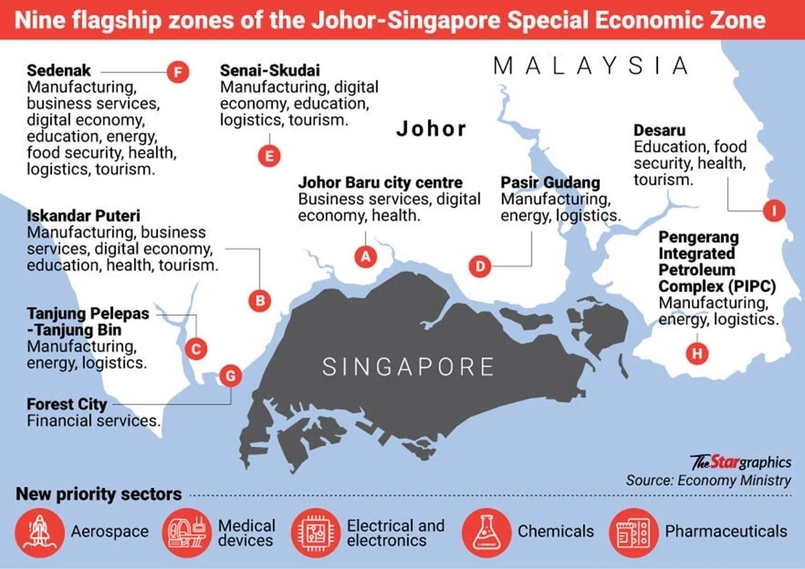
Size and Coverage - The JS-SEZ spans more than 3,500 square kilometers, covering:
Iskandar Malaysia is a major economic development corridor located in Johor, Malaysia. Established in 2006, it is the country’s first and largest regional development initiative, envisioned to transform southern Johor into a vibrant and sustainable metropolis of international standing. Established: 2006. Area: 4,749 km² (expanded in 2019). Administrative body: Iskandar Regional Development Authority (IRDA). Target population: 3 million by 2025. Core sectors: 9 promoted industries, including logistics, education, and healthcare.
Background and Development. Iskandar Malaysia was launched as part of Malaysia’s national agenda to catalyze economic growth and urban transformation in the south. Initially called the South Johor Economic Region, it was renamed in honor of Sultan Iskandar of Johor. Its formation followed a 2005 feasibility study by Khazanah Nasional Berhad and was included in the Ninth Malaysia Plan as a high-impact project
Geography and Governance. The region covers parts of Johor Bahru, Kulai, Pontian, Kluang, and Kota Tinggi districts. Five local authorities oversee the area: Johor Bahru City Council, Iskandar Puteri City Council, Pasir Gudang City Council, Kulai Municipal Council, and Pontian District Council. The IRDA, a federal statutory body co-chaired by the Prime Minister and the Chief Minister of Johor, directs its planning and development
Economic and Strategic Significance. Located along one of the world’s busiest maritime routes and adjacent to Singapore, Iskandar Malaysia leverages its strategic position for trade, logistics, and cross-border collaboration. It promotes nine key sectors—ranging from electronics and petrochemicals to tourism and creative industries—and houses flagship projects such as Medini Iskandar, Puteri Harbour, and Kota Iskandar. By 2025, cumulative investments are projected to reach RM383 billion
Sustainability and Smart City Initiatives. Iskandar Malaysia integrates green growth and smart technologies under its “Circle of Sustainability” and Low Carbon Society Blueprint. Its Smart City framework covers six dimensions—Smart Economy, Governance, Environment, Mobility, People, and Living—and the region has earned multiple CDP A List recognitions for environmental transparency.
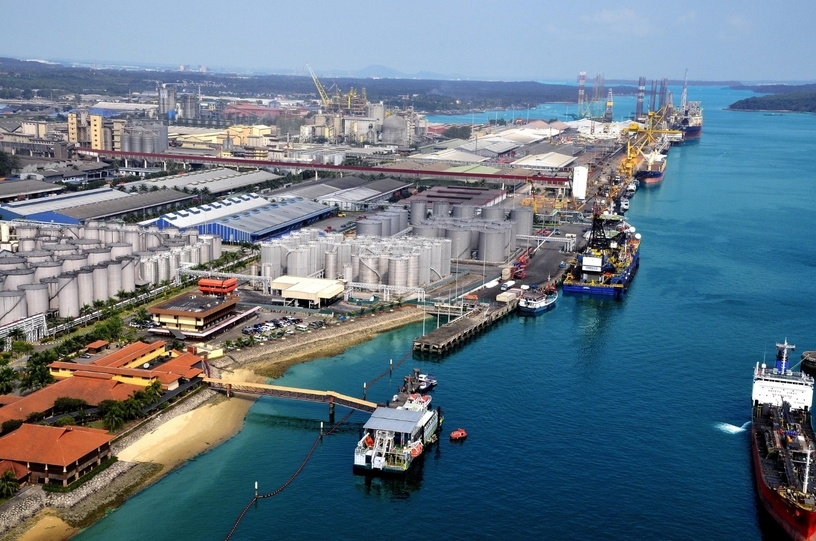
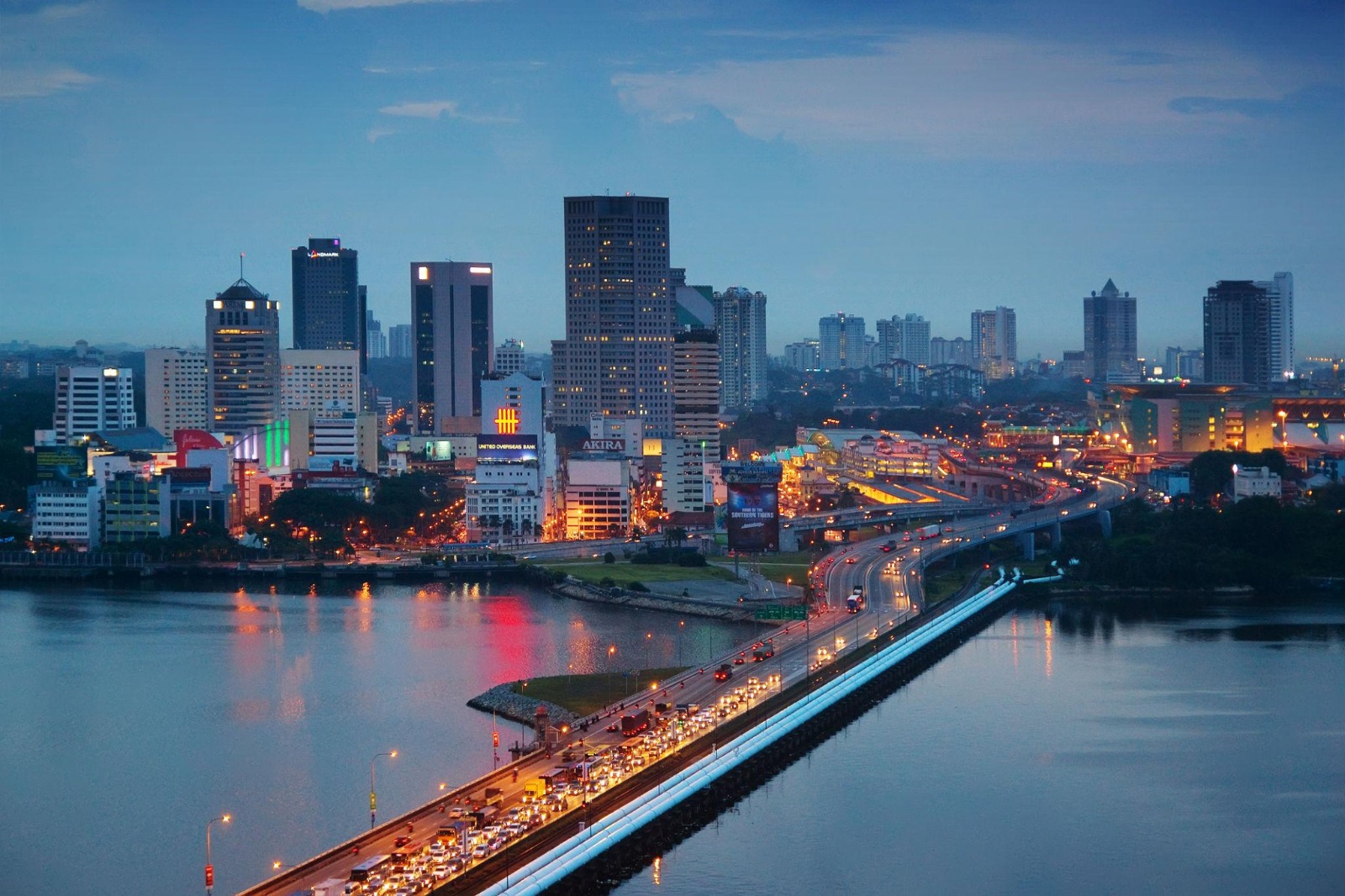
Johor Bahru is the capital city of the Malaysian state of Johor, located at the southern tip of the Malay Peninsula across the causeway from Singapore. Known as the “Southern Gateway to Peninsular Malaysia,” it serves as a major commercial, industrial, and cultural hub with a distinctive blend of heritage and modernity. Founded: 1855 (by Temenggong Daeng Ibrahim). Population: About 2.6 million (metropolitan area, 2024 est.). Airport: Senai International Airport (JHB).
Geography and Climate. Johor Bahru occupies a strategic coastal position facing the Straits of Johor, directly linked to Singapore by the Johor–Singapore Causeway. The terrain is generally flat and low-lying, with a tropical rainforest climate marked by consistent warmth (24–32 °C) and high humidity year-round.
History and Development. Originally a small fishing village called Tanjung Puteri, the settlement was renamed Johor Bahru in 1866 by Sultan Abu Bakar, regarded as the “Father of Modern Johor.” Granted city status in 1994, it has since grown rapidly under initiatives such as the Iskandar Malaysia economic corridor, attracting manufacturing, logistics, and service industries as well as foreign investment.
Economy and Infrastructure. The city’s proximity to Singapore offers competitive advantages for trade and commuting. Key economic sectors include electronics, petrochemicals, education, and tourism. Johor Bahru is served by Senai International Airport, JB Sentral railway station, and Larkin Sentral bus terminal, making it a major transport interchange for southern Malaysia.
Culture and Attractions. Johor Bahru showcases a multicultural identity reflected in its Malay, Chinese, and Indian heritage. Highlights include the Sultan Abu Bakar State Mosque, Arulmigu Sri Rajakaliamman Glass Temple, and Johor Bahru Old Chinese Temple. Modern attractions such as Legoland Malaysia Resort and Johor Bahru City Square draw millions of visitors annually. Local cuisine, including Laksa Johor and Kacang Pool, celebrates the city’s cultural fusion.
Tourism and Lifestyle. Tourists enjoy shopping at Johor Premium Outlets, exploring heritage streets like Jalan Tan Hiok Nee, and relaxing at Danga Bay. Nightlife centers around Mount Austin, while nearby destinations such as Desaru Coast and Kota Tinggi Waterfalls offer easy day trips. The city’s affordable cost of living and rapid urban development continue to strengthen its role as both a leisure and investment destination.
Pengerang is a coastal town and peninsula located in the Kota Tinggi District of Johor, Malaysia, at the southeastern tip of the Malay Peninsula. It faces Singapore across the Johor Strait and serves as a regional gateway and industrial hub. Pengerang has become increasingly significant due to the establishment of the large-scale Pengerang Integrated Petroleum Complex (PIPC). Coordinates: 1.3667° N, 104.1167° E. Postal code: 81600 Johor, Malaysia. District: Kota Tinggi. Population: ~15,000–90,000 (varies by boundary definition). Timezone: UTC+8 (Asia/Kuala_Lumpur).
Geography and access. Pengerang occupies a low-lying coastal area encompassing fishing villages, the town of Sungai Rengit, and the port and immigration post at Tanjung Pengelih. It lies about 120 km southeast of Johor Bahru and 35 km south of Desaru. Access is possible by road via the Senai–Desaru Expressway (E22) or by sea from Singapore’s Changi Point Ferry Terminal or Tanah Merah Ferry Terminal.
Economic importance. The area’s economic transformation began in the 2010s with the Pengerang Integrated Petroleum Complex, a multibillion-dollar downstream oil and gas zone anchored by Petroliam Nasional Berhad. It includes refineries, petrochemical plants, and a deepwater terminal that collectively position Pengerang as a cornerstone of Malaysia’s energy infrastructure.
Historical background. Historically, Pengerang was a quiet fishing community notable for the Pengerang Battery, a British coastal defense installation built in the 1930s as part of the “Singapore Fortress.” Although it never saw battle, the site remains an important World War II relic and tourist attraction in nearby Tanjung Pengelih.
Tourism and lifestyle. Visitors are drawn to Pengerang for its seafood restaurants—especially the lobster dishes of Sungai Rengit—and for nearby beaches such as Batu Layar and Desaru. Limited but growing resort accommodations, like Amerald Resort Hotel and Lotus Seaview Beach Resort, cater to eco-tourists and weekend travelers from Johor Bahru and Singapore.
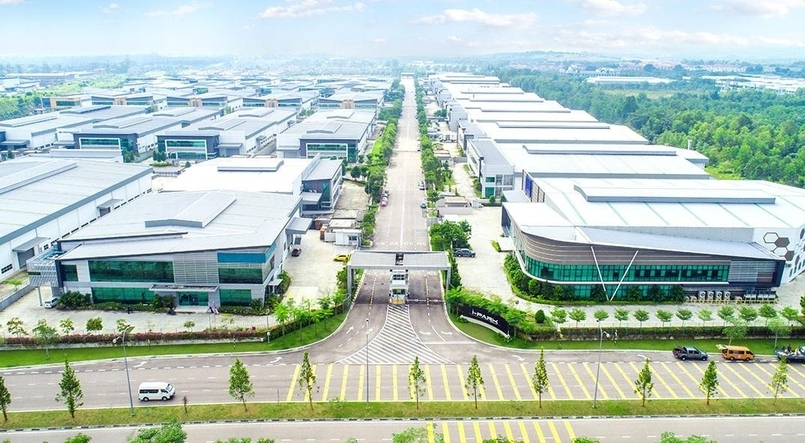
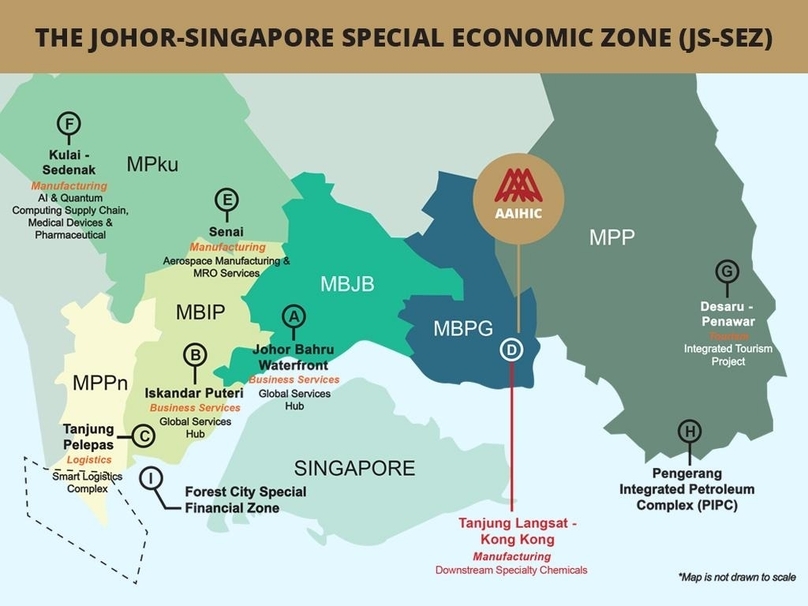
Kulai is located north of Johor Bahru and is closely linked to Senai International Airport and the North–South Expressway. It has become one of Johor’s most attractive areas for light manufacturing, electronics, logistics, and data centers. Near Senai International Airport. Easy truck access to Singapore and Kuala Lumpur. Lower land prices than central Johor Bahru. Strong availability of industrial parks and worker housing
Main Industries: Electronics and electrical components. Warehousing and distribution. E-commerce fulfilment. Medical devices. Data centers. Automotive parts. Notable Industrial Areas: Senai Industrial Park. i-Park @ Indahpura. Kulai Industrial Park. Golden Valley High Tech Park. Export-oriented manufacturing. Regional distribution centers. High-tech assembly. Data center developments.
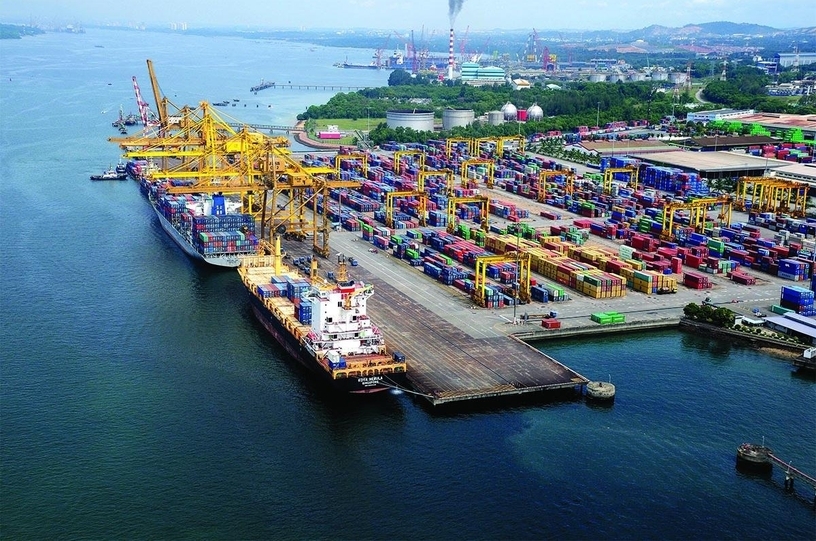
Pasir Gudang, on Johor’s eastern side, is Malaysia’s leading heavy industrial corridor and a major maritime gateway. It is anchored by Johor Port and Port of Tanjung Langsat. Direct port access for import/export. Established industrial ecosystem. Infrastructure designed for large-scale operations. Strong utilities and bulk cargo handling. Main Industries: Petrochemicals. Oleochemicals and palm-based products. Steel and engineering. Shipbuilding and marine services. Bulk storage and logistics. Pasir Gudang is particularly suitable for: Chemical and refinery-related businesses. Large-scale manufacturing. Exporters of bulk commodities. Energy-intensive industries
Sedenak - Known for advanced manufacturing, logistics, and major data center developments. Pengerang - Home to the Pengerang Integrated Petroleum Complex, a major oil, gas, and petrochemical hub. Iskandar Puteri - Focused on business services, technology, education, and urban development. Port of Tanjung Pelepas - One of the region’s busiest container ports and a prime logistics cluster.
As the Johor–Singapore Special Economic Zone develops, these industrial corridors are expected to attract more foreign direct investment, particularly in semiconductors, logistics, advanced manufacturing, and green technology. Kulai is the preferred choice for high-tech manufacturing, logistics, and data centers. Pasir Gudang is the established center for heavy industry, chemicals, and port-driven operations. Together, they form core pillars of Johor’s industrial strategy and are central to the success of the Malaysia–Singapore economic partnership. This makes the zone more than four times the size of Singapore.
The JS-SEZ focuses on 11 priority sectors: Manufacturing – Logistics - Digital Economy - Financial Services - Green Economy – Energy – Healthcare – Education - Food Security - Business Services - Tourism
Why This Partnership Matters to Singapore’s Strengths: Global financial hub. Strong legal and regulatory framework. Access to multinational corporations and investors. Advanced technology and talent. Johor’s Strengths: Lower land and labor costs. Large industrial parks. Abundant electricity and water resources. Room for expansion. Together, they offer a “best of both worlds” operating model.
Malaysia has introduced incentive packages for qualifying businesses, including: Preferential corporate tax rates (as low as 5% for certain approved activities). Fast-track approvals. Potential incentives for high-skilled professionals. These measures are aimed at attracting industries such as semiconductors, AI, medical devices, and advanced manufacturing.
Infrastructure Supporting the JS-SEZ. Johor Bahru–Singapore Rapid Transit System. The RTS Link will significantly reduce commuting time between Johor Bahru and Singapore and is expected to begin operations around the end of 2026. Causeway and Immigration Improvements. Both governments are working on: Faster customs and immigration clearance. Digital processing. Easier movement for workers and business travelers.
Economic Impact
Targets associated with the JS-SEZ include: More than 20,000 high-skilled jobs. Stronger foreign direct investment into Johor. Transformation of Johor into a regional innovation and industrial hub. The JS-SEZ is especially attractive for: Semiconductor and electronics manufacturers. Data center operators. Logistics companies. Agritech and food-processing businesses. Renewable energy developers. Professional service firms. Singapore-based companies can reduce operating costs by locating large-scale operations in Johor while keeping strategic functions in Singapore.
Opportunities for Foreign Investors
Investors from countries such as Indonesia, China, Japan, South Korea, and United States may benefit by: Setting up regional manufacturing in Johor. Managing ASEAN operations from Singapore. Accessing two complementary markets through one strategy
Businesses should still evaluate: Regulatory compliance in two jurisdictions. Cross-border tax structuring. Talent competition. Infrastructure timelines. Working with legal, tax, and investment advisors in both countries is recommended.
The JS-SEZ has the potential to become Southeast Asia’s leading cross-border economic corridor, comparable to globally recognized growth zones where neighboring jurisdictions combine their strengths to attract international investment.
The Johor-Singapore Special Economic Zone is a landmark initiative that deepens economic integration between Malaysia and Singapore. By combining Singapore’s capital, expertise, and global reach with Johor’s industrial scale and cost advantages, the zone is positioned to attract substantial investment and create significant opportunities for businesses across ASEAN and beyond.
The Johor-Singapore Special Economic Zone is modeled after global success stories like China’s Shenzhen Special Economic Zone. By leveraging the unique strengths of both countries, the JSSEZ aims to create a synergistic ecosystem that attracts investments, nurtures innovation, and drives sustainable growth. The zone will focus on key sectors such as artificial intelligence (AI), quantum computing, manufacturing, logistics, and green technologies, aligning with global trends in technology and sustainability.
Prime Minister Anwar Ibrahim of Malaysia described the initiative as a transformative step toward regional prosperity. “This collaboration is not merely about economic gains; it is about building a future that benefits our people, our businesses, and our shared aspirations,” he stated. Singapore’s Prime Minister Lee Hsien Loong echoed this vision, emphasizing the potential for the JSSEZ to enhance economic stability and resilience in an increasingly volatile global environment.
The JSSEZ’s design incorporates innovative strategies and policies to maximize its impact:
Infrastructure Development: The zone will see significant upgrades to transportation networks, including improved rail and road links between Johor and Singapore. This connectivity aims to facilitate seamless movement of goods, services, and people.
Workforce Training and Development: Recognizing the need for a skilled workforce, both governments are investing in training programs to prepare workers for high-tech industries. Partnerships with universities and vocational institutions will play a critical role in this endeavor.
Business Incentives: Attractive tax incentives, streamlined regulations, and grants for research and development will encourage multinational corporations and startups to set up operations in the JSSEZ.
Green Initiatives: The zone will prioritize sustainable practices, with plans for eco-friendly infrastructure, renewable energy projects, and initiatives to reduce carbon emissions.
The JSSEZ is expected to generate significant economic activity, with early projections estimating the creation of over 20,000 jobs within its first five years. These opportunities will span various sectors, from high-tech manufacturing to logistics and research roles in AI and quantum computing.
“This zone is not just about job creation; it’s about creating high-value, future-ready jobs that align with global market demands,” said Malaysia’s Minister of Economy, Rafizi Ramli. For Singapore, the JSSEZ offers a chance to strengthen its position as a hub for innovation while alleviating challenges such as land scarcity.
The Johor-Singapore Special Economic Zone is more than an economic venture; it symbolizes a deep commitment to regional cooperation. Analysts believe the initiative could serve as a blueprint for similar collaborations in Southeast Asia, fostering unity and shared prosperity among ASEAN nations.
“This partnership demonstrates how countries can leverage each other’s strengths to address shared challenges and capitalize on global opportunities,” said economic analyst Tan Chee Wei. By pooling resources and expertise, Malaysia and Singapore are setting an example of how bilateral partnerships can achieve mutually beneficial outcomes.
While the JSSEZ promises substantial benefits, it is not without challenges. Ensuring equitable distribution of resources and benefits, addressing environmental concerns, and maintaining a balance between economic growth and social welfare will require careful planning and execution. Both governments have committed to transparency and stakeholder engagement throughout the project’s development.
Scheduled to commence operations in phases starting in 2026, the Johor-Singapore Special Economic Zone marks a new chapter in the relationship between Malaysia and Singapore. By fostering innovation, creating jobs, and enhancing connectivity, the JSSEZ is set to become a cornerstone of Southeast Asia’s economic future.
As the world watches this ambitious project unfold, it holds the promise of reshaping the economic dynamics of the region and providing a model for successful international collaboration. The Johor-Singapore Special Economic Zone is not just a partnership—it is a vision for a shared and prosperous future.