Oliviero Toscani’s Vision of Truth Through Controversy
Oliviero Toscani transformed fashion advertising with his United Colors of Benetton campaigns. His striking imagery, like a Black woman nursing a white baby, challenged racial boundaries and turned commercial art into a powerful statement on humanity and
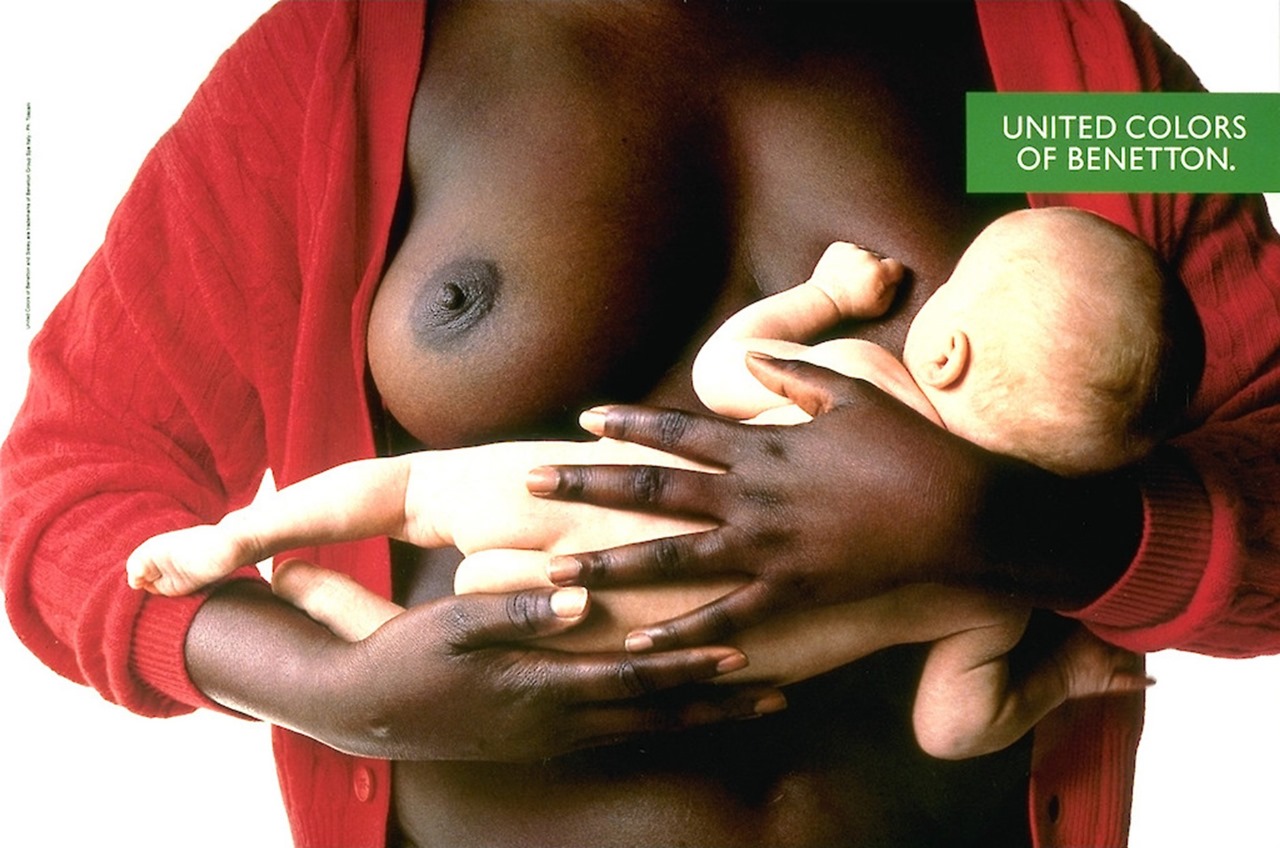
Artwork Title: Black Woman Breastfeeding a White Baby Client: United Colors of Benetton (1989) Medium: Advertising photography / social commentary
The image shows a Black woman breastfeeding a white infant. The woman wears a bright red cardigan — a color often used by Toscani to evoke emotional intensity and visual contrast — while the baby’s pale skin and her dark skin create a striking juxtaposition. The image includes no clothing from Benetton, no product placement, and minimal text — only the brand’s green logo in the corner. Toscani used this simplicity deliberately. The contrast of skin tones becomes a metaphor for racial unity, motherhood, and shared humanity, tying directly to Benetton’s global message of “United Colors.”
At the time, the image challenged Western stereotypes about race, class, and maternal roles. It symbolized:
· Unity beyond race: The nurturing act of breastfeeding transcends color and culture.
· Equality and connection: Life and compassion have no racial boundaries.
· Reversal of racial roles: The visual power comes partly from subverting colonial-era imagery, where Black women were often depicted as servants or caretakers. Toscani reclaims that narrative, presenting the woman as the central, nurturing figure, not subordinate.
When first released in 1989, the ad caused global controversy:
· Some praised it as a beautiful symbol of racial harmony and maternal love.
· Others accused it of exploiting racial imagery for commercial gain or perpetuating stereotypes by showing a Black woman in a servile maternal role.
Nevertheless, the campaign succeeded in its goal — to provoke thought, discussion, and emotion. Toscani believed that discomfort was essential for meaningful communication. This photograph is now considered a landmark in advertising history. It blurred the line between art and commerce, beauty and politics, and shock and empathy. The image has been exhibited in galleries and academic contexts, analyzed for its use of contrast, symbolism, and socio-political commentary.
Toscani himself described it as:
“An image of life, not fashion. I wanted to show the most human, natural relationship that exists — one that has no color.”
Decades later, this artwork still feels relevant in conversations about race, representation, and the ethics of advertising. It marked a turning point in how brands communicate — proving that an ad could be both art and activism.
Oliviero Toscani: The Provocateur Who Redefined Advertising Through Art
Few photographers have blurred the line between art, advertising, and social commentary as boldly as Oliviero Toscani. Known as the creative mind behind United Colors of Benetton’s groundbreaking campaigns, Toscani transformed fashion photography from glossy perfection into a mirror reflecting the raw truths of modern society. His work has challenged norms, provoked outrage, and inspired generations of artists and advertisers to rethink what visual communication can achieve.
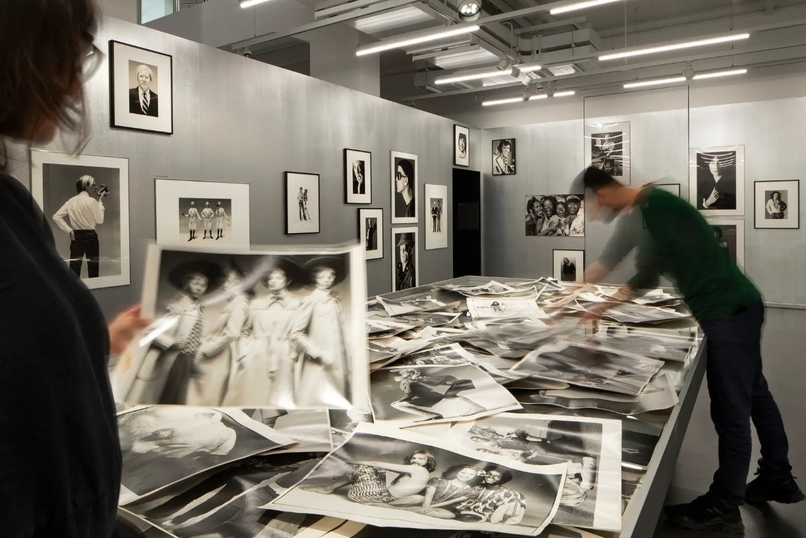
Born in Milan, Italy in 1942, Oliviero Toscani studied photography at the Zurich University of the Arts, where he developed a fascination with how images can stir public conscience. His early career involved collaborations with major fashion magazines such as Elle, Vogue, and Harper’s Bazaar. But Toscani’s true fame came in the 1980s and 1990s when he became the creative director for Benetton, crafting campaigns that were less about selling clothes and more about confronting uncomfortable social realities.
Oliviero Toscani’s artworks for United Colors of Benetton are some of the most controversial and culturally significant advertisements ever created. They weren’t just about fashion — they were visual commentaries on global issues, blending photojournalism, activism, and art in a way the industry had never seen before.
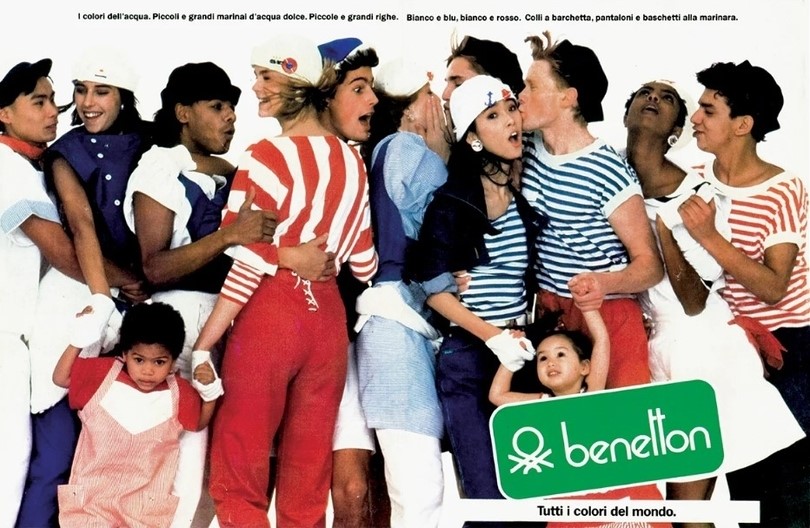
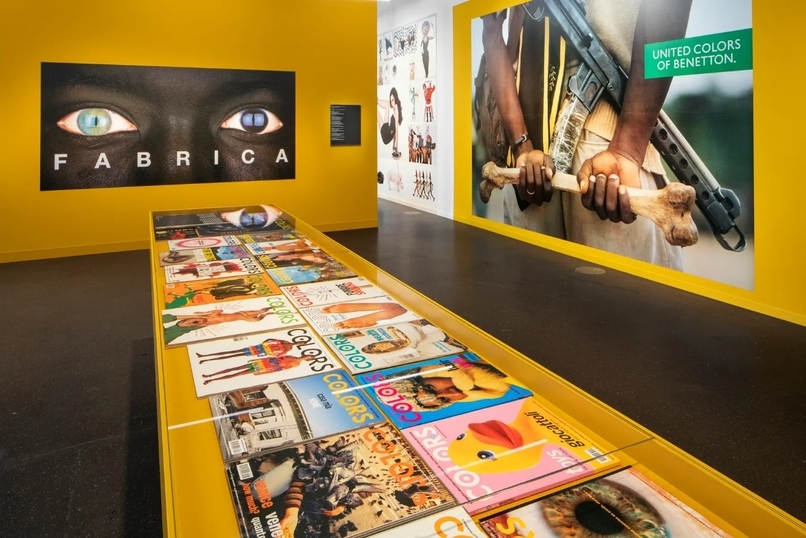
Theme: Racial harmony and cultural diversity Visuals: Groups of children or models of different races wearing Benetton clothes, often shown hugging, laughing, or posing together. Message: Promoted unity and equality across ethnic boundaries, reflecting Benetton’s slogan — “United Colors of Benetton.” Impact: These images were bright, joyful, and optimistic — but also radical at the time for featuring diverse skin tones equally in mainstream advertising.
The HIV/AIDS Campaign — David Kirby on His Deathbed (1992)
Theme: Humanizing the AIDS crisis Visuals: A powerful photo of David Kirby, an HIV/AIDS activist, dying in his family’s arms — reminiscent of Michelangelo’s Pietà. Message: Toscani used this as a Benetton ad to raise awareness about AIDS and compassion, not to sell clothes. Impact: It shocked the public, winning awards and condemnation alike. Critics called it exploitative; supporters called it brave. Today, it’s studied in ethics and art classes worldwide.
A haunting portrait of activist David Kirby dying of AIDS, surrounded by his family. Published as a Benetton advertisement, it blurred the boundaries between compassion, exploitation, and shock art—forcing global audiences to confront the human cost of the AIDS crisis.
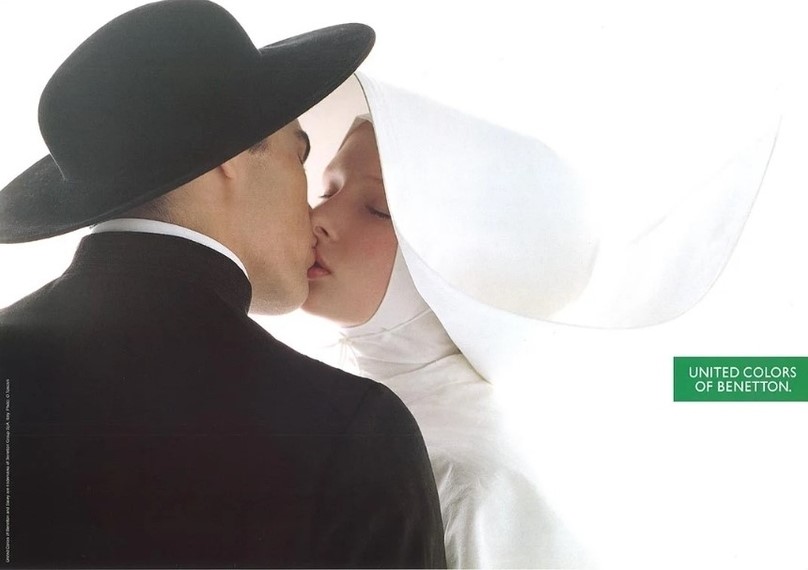
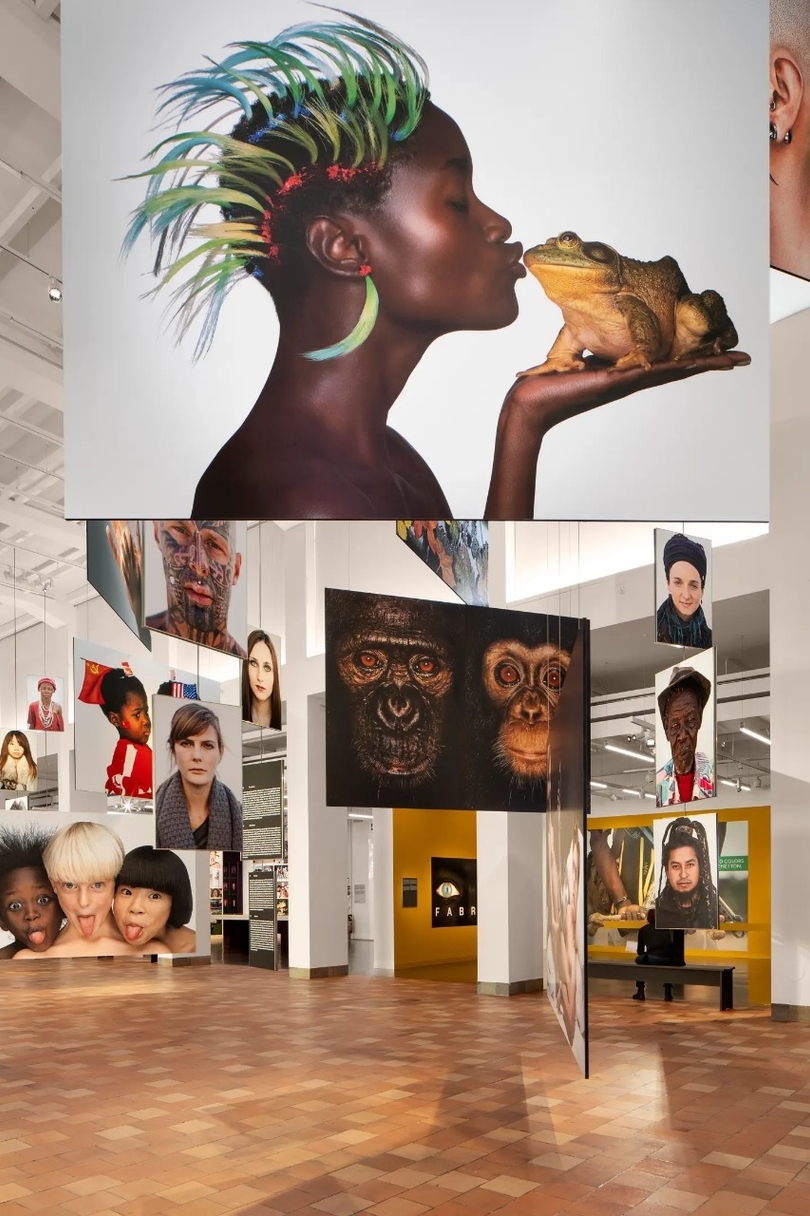
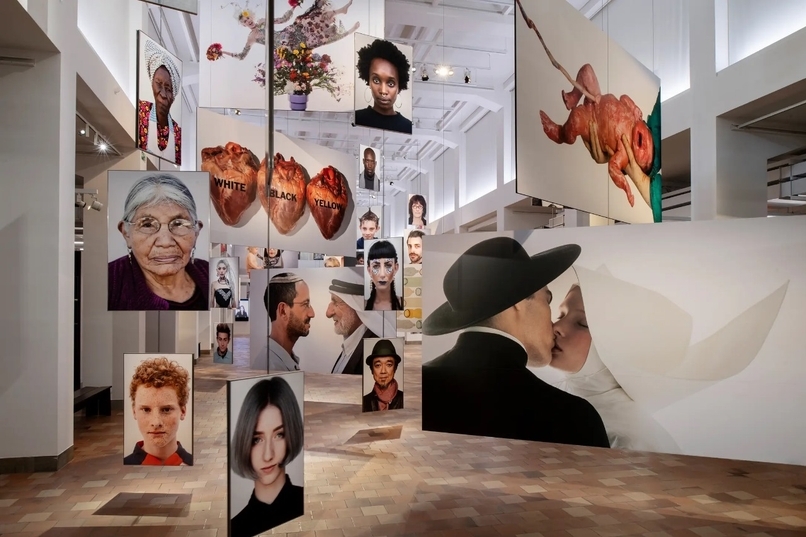
Theme: Religious taboo and repression Visuals: A Catholic priest kissing a nun on the lips. Message: Questioned the boundaries of faith, celibacy, and human emotion. Impact: Outrage from religious authorities, bans in several countries — but an unforgettable statement about human desire versus dogma. A taboo-breaking image that questioned institutional hypocrisy and the repression of human emotion within religion. It sparked outrage from the Vatican but also started a necessary conversation about faith and desire.
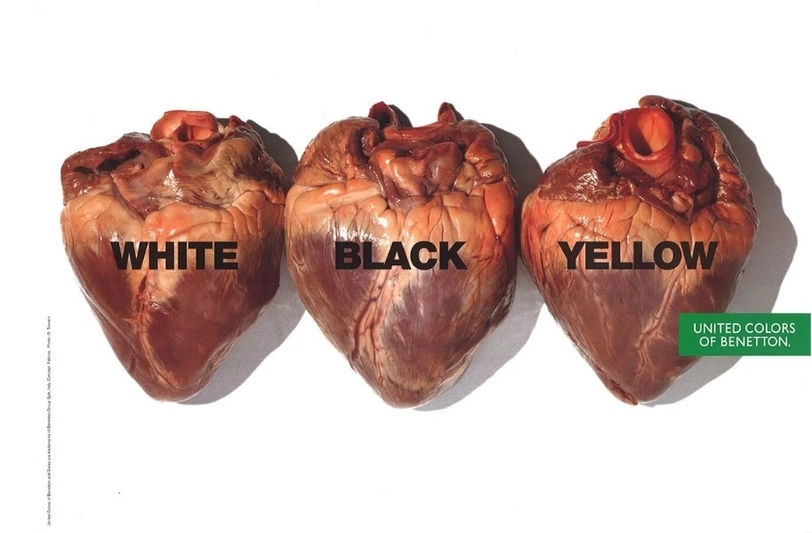
Theme: Anti-racism and biological equality Visuals: Three identical human hearts labeled “white,” “black,” and “yellow.” Message: Despite racial differences, humanity is the same inside. Impact: One of the most visually minimal yet intellectually powerful campaigns Toscani ever produced. Featuring three human hearts labeled “white,” “black,” and “yellow,” this image boldly denounced racism. Simple yet striking, it remains one of the most discussed anti-discrimination visuals in advertising history.
Theme: Birth and humanity Visuals: A freshly born baby, still with the umbilical cord attached, lying on a white background. Message: A shocking image of life’s raw beginning — purity without cultural filters. Impact: Some found it graphic; Toscani saw it as the ultimate image of equality — we all begin the same way.
Theme: Anti-racism and solidarity Visuals: A white hand and a black hand handcuffed together. Message: Unity, but also the shared struggle against oppression. Impact: Both praised and criticized for its ambiguity — was it about equality or entrapment? Toscani left that for viewers to interpret.
Theme: The morality of capital punishment Visuals: Portraits of American death row inmates wearing Benetton shirts. Message: Challenged the justice system and humanized those condemned to die. Impact: Caused such backlash that Benetton ended its contract with Toscani. However, it remains one of the boldest intersections of advertising and activism ever made. Toscani photographed American death row inmates, aiming to expose the moral complexities of capital punishment. Though controversial, the series reaffirmed his commitment to using imagery for social justice.
Theme: War and human cruelty Visuals: A blood-soaked military uniform — no faces, no soldiers, just the remnants of violence. Message: Condemned war without pointing fingers at any nation. Impact: Banned in many countries, but acclaimed in museums as anti-war art.
Theme: Natural diversity and coexistence Visuals: Horses of different colors standing together peacefully. Message: A poetic take on the “United Colors” theme — extending harmony to the animal kingdom. Impact: Softer than his later work but deeply symbolic.
Toscani’s Benetton campaigns were so provocative they were often displayed in art museums rather than traditional ad spaces. They blurred the line between marketing and social commentary — making Toscani both a hero and a heretic in the advertising world.
He once said:
“I don’t make ads. I make communication. I make images that make you think.”
And that’s exactly what his Benetton era achieved — forcing global audiences to confront racism, religion, war, and mortality through the lens of fashion imagery.
Toscani’s genius lies not only in photography but in his refusal to conform. Where most brands sought beauty, he sought truth. He once said, “Advertising is the richest and most powerful form of communication in the world — it must use its power to talk about life, death, and society.”
His visual language—bold, minimal, unapologetic—continues to influence today’s culture of purpose-driven branding. Modern campaigns by brands like Dove, Nike, and Patagonia echo Toscani’s philosophy: that authenticity and social relevance matter more than perfection.
In an era dominated by social media and image saturation, Toscani’s work remains strikingly relevant. His insistence on honesty over glamour paved the way for visual activism in contemporary culture. Movements such as #MeToo, Black Lives Matter, and environmental awareness campaigns borrow from his playbook—using stark, emotional imagery to mobilize empathy and action.
His aesthetic—provocative, political, and poetic—has inspired a generation of photographers, art directors, and cultural critics. Today, Toscani’s legacy is not just in the archives of Benetton, but in every campaign that dares to ask uncomfortable questions instead of offering easy answers.
Oliviero Toscani’s art is not about beauty—it’s about truth. In challenging what advertising could say and show, he transformed it into a global stage for human expression. Whether loved or loathed, Toscani proved that art, when fused with courage, has the power to change minds, ignite debate, and redefine culture itself.