Why do golf course homes command premium prices? Explore America's luxury golf real estate market, from Florida and Arizona to Pebble Beach, Pinehurst and Hilton Head.
Why do golf course homes command premium prices? Explore America's luxury golf real estate market, from Florida and Arizona to Pebble Beach, Pinehurst and Hilton Head.
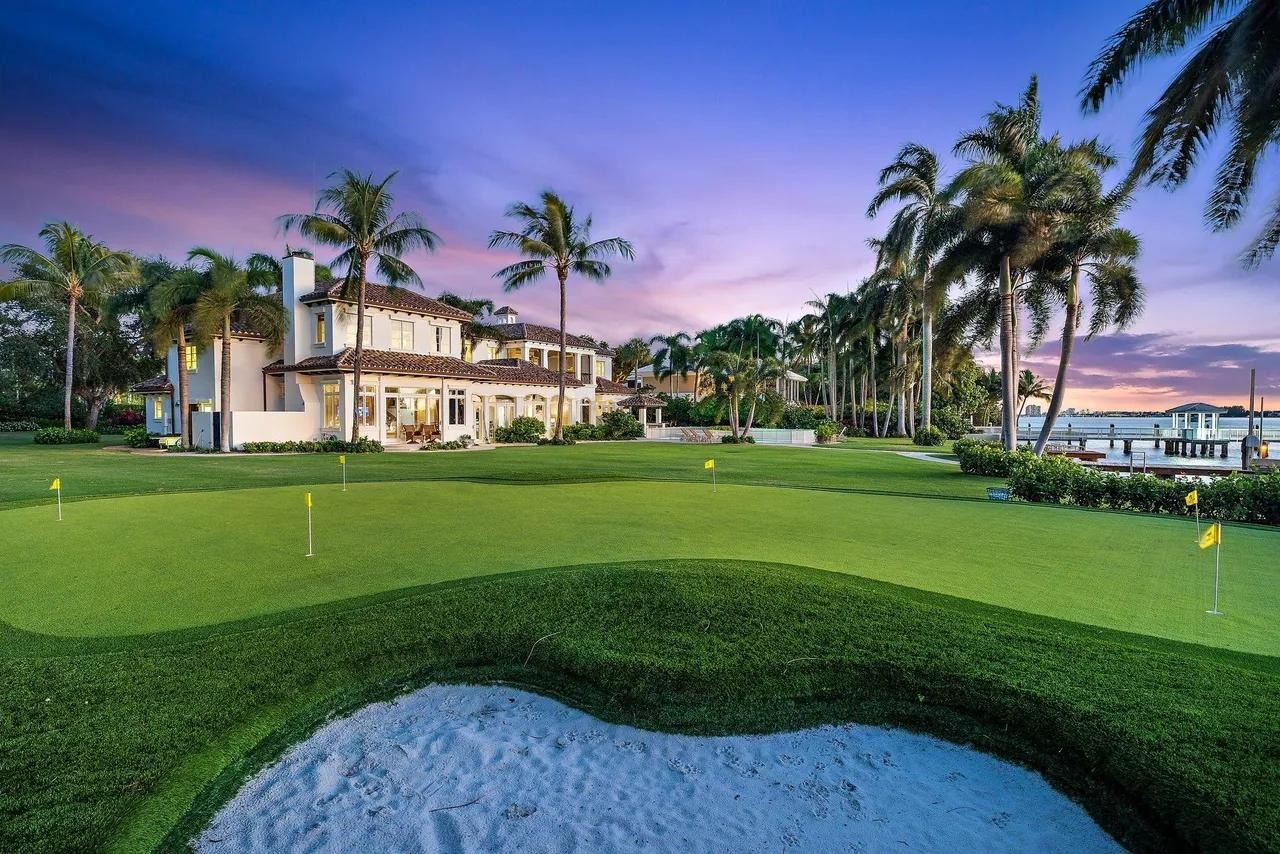
Image courtesy of realtor | 10993 Jack Nicklaus Dr, North Palm Beach, FL 33408
For affluent buyers, a home beside a championship fairway is about far more than the view. It can represent lifestyle, exclusivity, social capital and, in the right market, a scarce real-estate asset.
There is something fundamentally different about waking up beside a golf course. Instead of looking across the street at another row of houses, a homeowner may look across a manicured fairway, mature trees, water features and rolling green landscapes stretching toward the horizon. The setting feels less like a conventional residential neighborhood and more like a private resort.
That experience comes at a price. Across the United States, homes positioned along prestigious golf courses can command substantial premiums over comparable properties without golf access or views. The premium is not simply about having a beautiful backyard. It reflects a combination of scarcity, lifestyle, location, privacy, amenities and social prestige.
For wealthy buyers, the most desirable golf properties can become something even more significant: a form of lifestyle real estate where the home itself is only one part of the asset. From Naples and Scottsdale to Pebble Beach, Pinehurst and Hilton Head Island, golf communities have developed into sophisticated residential ecosystems serving retirees, executives, entrepreneurs, investors and high-net-worth families.
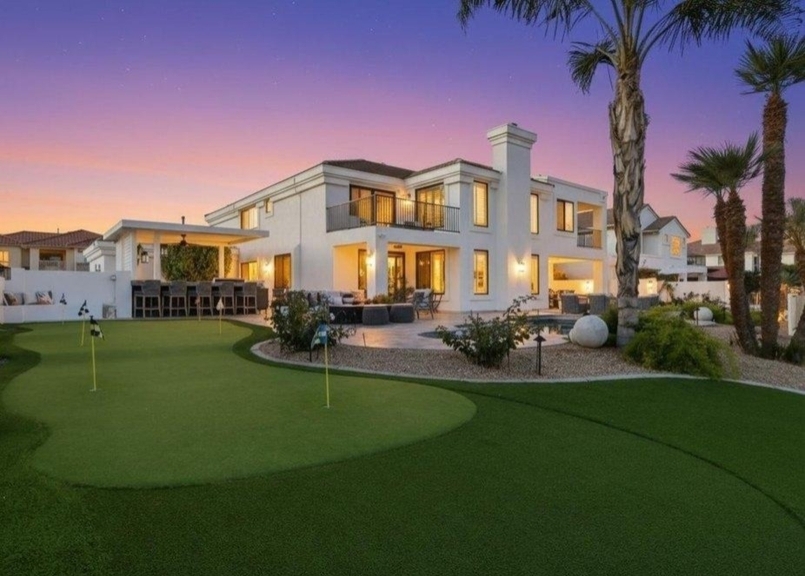
The relationship between golf courses and residential property values has been studied for decades.
A landmark study published in the Journal of Real Estate Finance and Economics examined 717 residential transactions and found that properties adjacent to a golf course carried an average price premium of approximately 7.6%, after controlling for other factors affecting value.
Another study of a golf-course subdivision in Texas found an even larger effect. Lots adjacent to the course carried premiums representing approximately 25.8% of the average sales price in that particular development.
These figures should not be interpreted as a universal rule. A house next to an ordinary public golf course will not automatically appreciate by 7%, 10% or 25%.
The premium depends heavily on the quality of the course, location, views, neighborhood, amenities, membership structure and overall desirability of the community.
And in America's luxury markets, the premium can become much larger when golf is combined with other forms of scarcity.
The View Is More Valuable Than the Golf. One of the first things buyers pay for is not necessarily golf access. It is the view. A house overlooking a wide fairway, lake and mature landscape can feel dramatically more spacious than a similarly sized property surrounded by neighboring houses. The golf course effectively becomes an extension of the property's visual environment. This is particularly valuable in densely developed luxury markets where unobstructed views are difficult to obtain.
Consider two homes in the same community. One overlooks another row of houses. The other overlooks the 18th fairway, with mature trees and a lake beyond it. The floor plans may be nearly identical. The construction quality may be identical. But the second property may command a significant premium because the buyer is purchasing something that cannot easily be reproduced: open space. The distinction becomes even more important when the golf course is protected from future residential development. A buyer is not simply purchasing today's view. They are purchasing the possibility that the view will still exist years from now.
Scarcity Creates the Real Luxury. Luxury real estate is often governed by a simple economic principle: The best properties cannot be mass-produced. A developer can build another apartment building. Another suburban subdivision can be created. But it is much harder to recreate a historic championship golf course surrounded by an established luxury community. This is where golf real estate becomes particularly interesting. The most desirable courses occupy enormous amounts of land. Once the course, surrounding roads, clubhouse, conservation areas and existing homes are established, there may be very few opportunities to create additional direct-frontage properties.
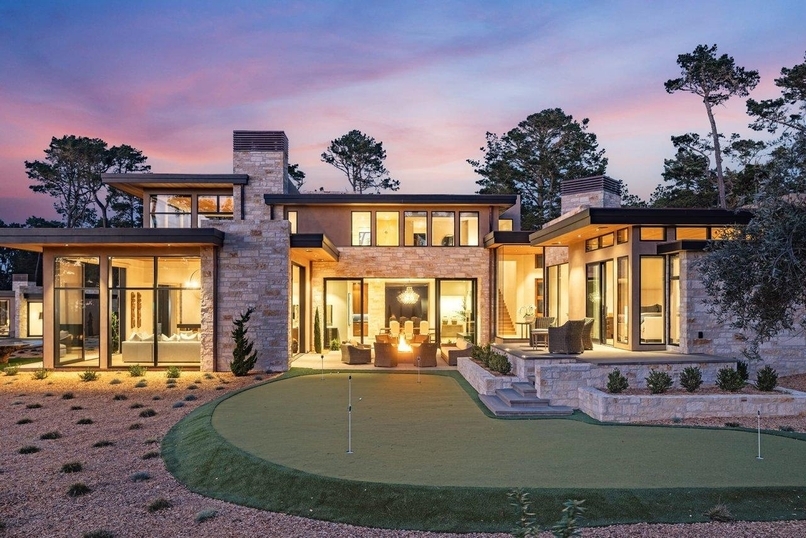
Pebble Beach illustrates the extreme version of this principle. A recently completed six-bedroom home overlooking the 14th hole of Pebble Beach Golf Links was listed for $45 million. The approximately 8,600-square-foot property sits along 17-Mile Drive, and only about 45 homes reportedly sit along the course. At that level, the buyer is not simply paying for square footage. They are paying for: A globally recognized golf course. A prestigious address. Ocean and golf views. Privacy. Limited supply. Historical significance. Access to one of the world's most recognizable golf destinations. This is the same scarcity principle found in other luxury assets. A rare watch, a piece of fine art or a waterfront estate can command a premium because there are very few comparable examples. The same can happen with trophy golf real estate.
Golf Courses Can Function Like Private Parks. One of the less obvious reasons golf homes command premiums is the amount of open land they often overlook. A traditional residential neighborhood can eventually become denser. Empty lots can be developed. Trees can be removed. Commercial buildings can appear. Traffic can increase. A golf course provides a large landscaped buffer that is often protected by the economics and regulations of the course itself.
For homeowners, this can create a park-like environment without actually owning hundreds of acres. The homeowner may own a 3,000-square-foot house on a relatively small lot, yet the visual experience can feel significantly larger because the property opens toward an expansive landscape. This is particularly attractive to affluent buyers who value: privacy without isolation.
The Property Is Often Part of a Larger Lifestyle. Modern golf communities have evolved far beyond the traditional country club. Many luxury developments now function as complete lifestyle destinations. Depending on the community, residents may have access to: Championship golf. Private clubhouses. Fine dining. Fitness centers. Spas. Tennis. Pickleball. Swimming pools. Walking and cycling trails. Concierge services. Social clubs. Children's facilities. Business and networking events. This matters because many golf-property buyers are not purchasing solely for golf.
A spouse may value the spa. Children may use the tennis facilities. A homeowner may enjoy the restaurant. An executive may value the social network. A retiree may value the wellness facilities. Golf becomes the centerpiece of a broader lifestyle ecosystem. That ecosystem can make the property attractive even to people who rarely play 18 holes.
Golf Communities Create Social Capital. There is another form of value that is much harder to quantify: social capital. Private golf clubs have historically served as meeting places for executives, entrepreneurs, investors, professionals and community leaders. That tradition remains relevant. A golf community can provide repeated opportunities for people to meet through: Club tournaments. Business events. Charity tournaments. Member dinners. Social gatherings. Networking events. Couples' activities. Professional introductions. This does not mean buying a golf home automatically produces business opportunities.
But proximity to a community of affluent and professionally successful residents can be part of the lifestyle value that attracts high-net-worth buyers. For an executive, therefore, the property may represent more than: House + Golf Course. It can become: Residence + Club + Community + Network. That combination is difficult to reproduce elsewhere.
Private Membership Can Add Another Layer of Value. Not every golf property comes with golf membership. This distinction is extremely important. Some communities offer bundled golf, where a golf membership is attached to the property. Others require homeowners to purchase a separate club membership.
Some clubs have equity memberships, initiation fees and annual dues. In Naples, Florida, for example, golf communities can operate under significantly different membership structures. Current 2026 market guidance distinguishes between bundled golf communities, where membership is associated with the home, and private or equity clubs where buyers may face substantial separate membership costs.
Research has also found that properties with golf memberships attached to the real estate can receive a positive price premium even after accounting for golf-course views and other property characteristics. This creates an interesting dynamic. A $1.5 million home with a transferable golf membership may actually represent a different economic proposition from a $1.5 million home where the buyer must separately pay a six-figure initiation fee.
For sophisticated buyers, the question is therefore not: "What is the price of the house?" It is: "What is the total cost of owning the lifestyle?"
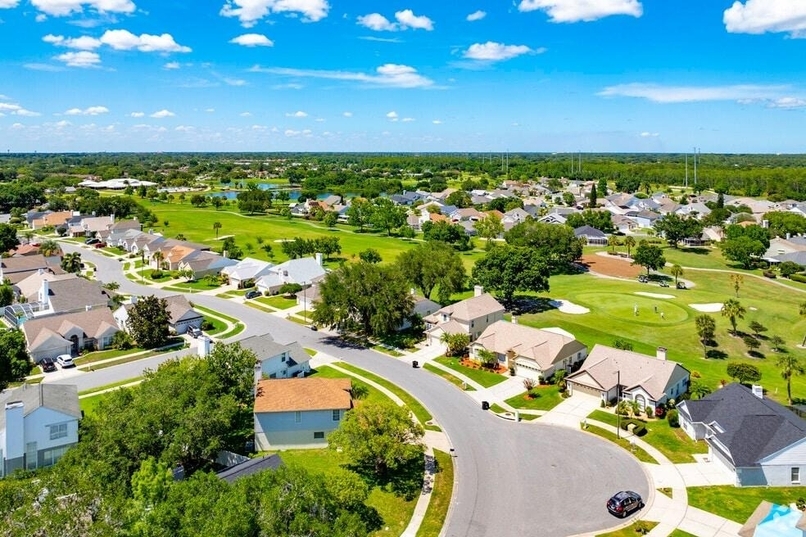
Florida: Where Golf and Retirement Meet Luxury. Florida is arguably America's most developed golf-lifestyle real-estate market. Its appeal is straightforward: Warm weather + golf + beaches + retirement + luxury communities. Cities such as Naples, Sarasota, Palm Beach, Boca Raton, Jupiter and Orlando have attracted generations of affluent residents and second-home buyers.
Naples is particularly important. The city has increasingly positioned itself as a center of "quiet luxury," attracting affluent retirees as well as a younger generation of executives. Realtor.com reported that the median price for an entry-level luxury home in the Naples market reached approximately $3.7 million in May 2026, making it one of the most expensive luxury markets in the United States.
Golf is an important part of that lifestyle ecosystem. In Southwest Florida, golf communities frequently combine courses with gated neighborhoods, resort amenities, waterfront living, restaurants and social clubs. The economics can be particularly attractive to buyers relocating from higher-tax states because Florida has no individual state income tax. However, Florida also demonstrates why golf real estate is not risk-free. Insurance costs, hurricanes, flood exposure, maintenance expenses and club finances can materially affect the economics of ownership. A beautiful golf property is not necessarily a good investment if its annual carrying costs are excessive.
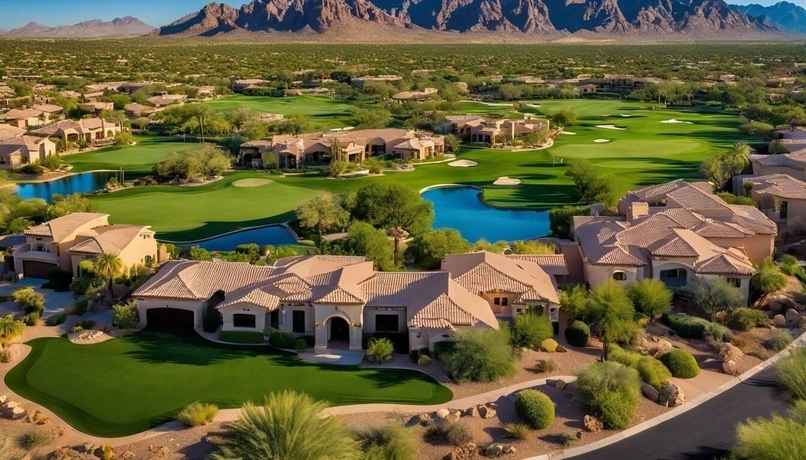
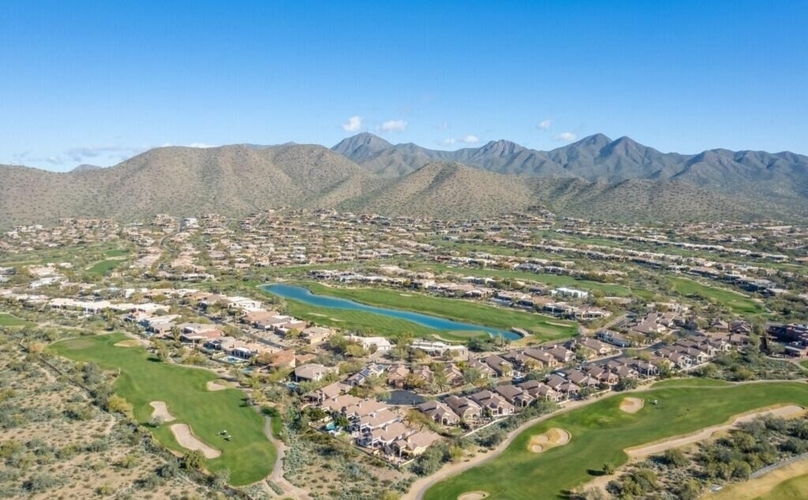
Arizona: Golf in the Desert. Arizona offers an entirely different proposition. In Scottsdale and surrounding areas, golf is integrated into a dramatic desert landscape. The combination of: Golf + Mountains + Desert + Sunshine + Luxury. has created one of America's most recognizable golf-property markets. Scottsdale attracts retirees and second-home owners, but also entrepreneurs, executives, professional athletes and younger affluent buyers.
The market's overall median sale price was approximately $954,000 in May 2026, according to Redfin, representing a 9.1% year-over-year increase. But citywide statistics only tell part of the story. Premium golf communities in North Scottsdale and areas surrounding major private clubs can command considerably higher prices.
Here, buyers often pay for more than the fairway. They are paying for the complete visual composition: home + golf course + desert + mountain backdrop. Arizona also introduces a different long-term consideration: water. Golf courses require substantial irrigation, making water management, sustainability and future development policies important factors for sophisticated investors.
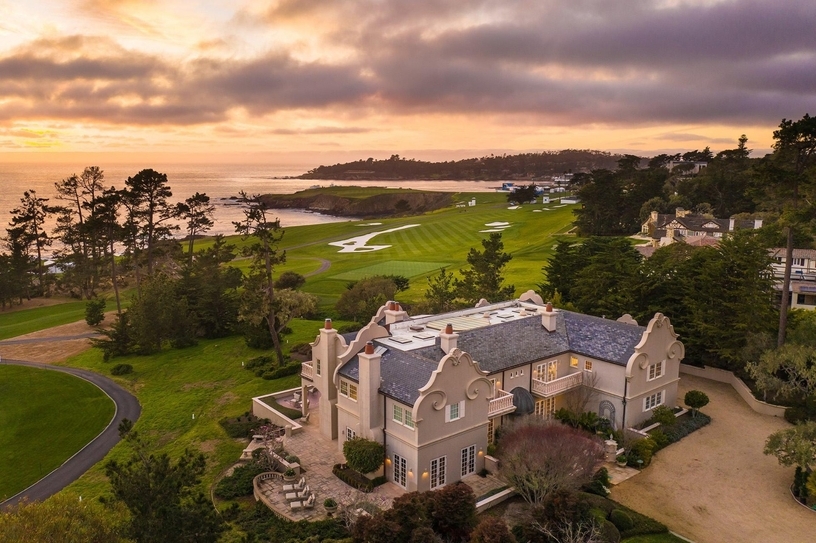
California: When Golf Real Estate Becomes a Trophy Asset. California occupies the highest end of the spectrum. Markets such as Palm Springs and the Coachella Valley offer resort-oriented golf communities, while Pebble Beach represents something much rarer. At Pebble Beach, the golf course itself is a global luxury brand. The combination of: Pebble Beach Golf Links. Pacific Ocean. 17-Mile Drive. Limited inventory. Historic reputation. Ultra-high-net-worth ownership, creates an extraordinary scarcity premium.
The $45 million Pebble Beach property illustrates this perfectly. The house is valuable not because 8,600 square feet of construction intrinsically costs $45 million. It is valuable because the combination of land, location, view, brand and scarcity cannot easily be replicated. This is where golf real estate begins to resemble other trophy assets. The investment thesis is less about affordability and more about: preservation of wealth through rare property.
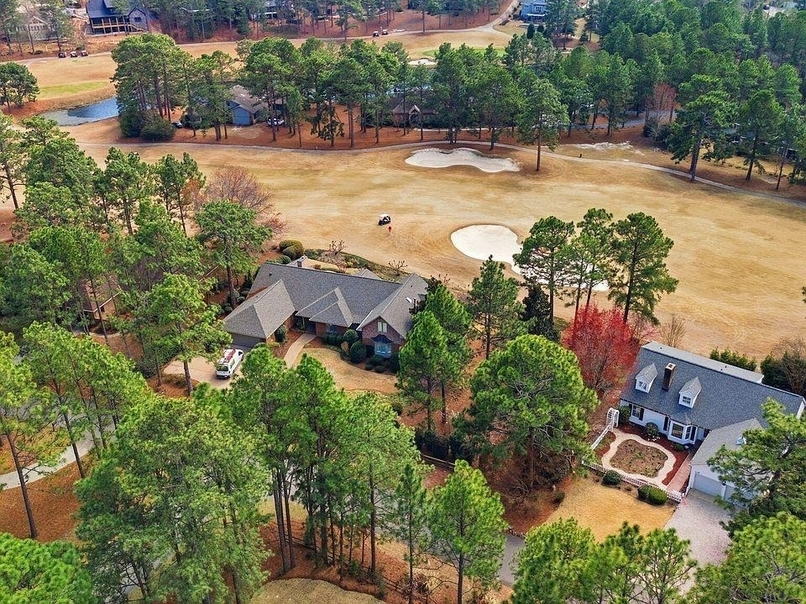
North Carolina: Golf Heritage at a More Accessible Price. North Carolina offers a very different proposition. The state is home to Pinehurst, one of the most important golf destinations in the United States. Unlike Pebble Beach, Pinehurst does not require ultra-high-net-worth wealth to participate in its golf lifestyle. Pinehurst's median home sale price was approximately $575,000 in the three months ending May 2026, according to Redfin. That makes it particularly interesting for buyers seeking golf prestige without the entry price of America's most exclusive coastal communities.
The Pinehurst region combines: Championship golf. Golf tourism. Retirement appeal. Historic architecture. Smaller-town lifestyle. Relatively accessible housing. For buyers who care more about golf than celebrity addresses, this can be an attractive proposition. The value proposition is essentially: Golf pedigree without trophy-market pricing.
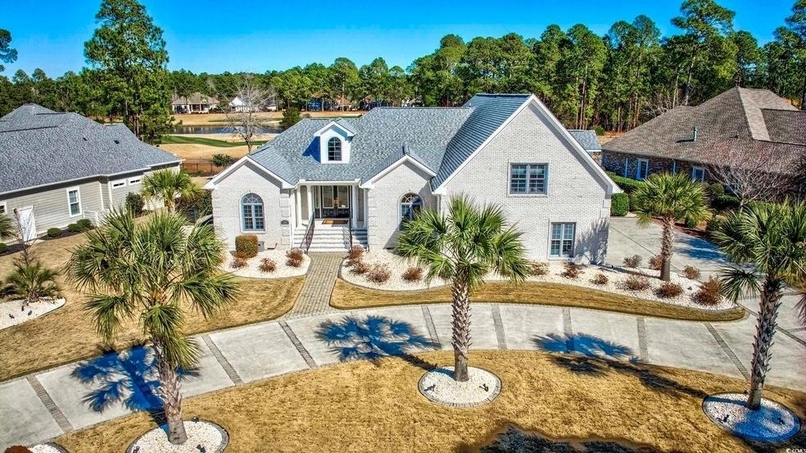
South Carolina: Coastal Golf and Resort Living. South Carolina occupies a middle ground between Florida's retirement market and California's trophy market. Hilton Head Island is one of the most recognizable examples. The island combines: Golf + beaches + resort living + private communities. Its overall median sale price was approximately $815,000 in May 2026, according to Redfin. But again, averages can be misleading. Within specific golf communities, values can be dramatically higher. Redfin data for Wexford Plantation, for example, showed a median sale price around $2.49 million in May 2026. That difference illustrates one of the most important principles in golf real estate:
The community matters more than the city average. Myrtle Beach provides a different model. Its overall median home price was around $266,000 in May 2026, making it considerably more accessible than Hilton Head. Its enormous concentration of golf courses and tourism infrastructure creates a different opportunity centered around golf vacations and second homes.
Meanwhile, Kiawah Island represents the luxury end of South Carolina's golf market, combining coastal living with championship golf and a highly controlled residential environment.
Not every golf-course home is equal. A buyer should distinguish between:
Golf-adjacent - The property is near a course but may not have a direct view.
Golf-view - The property has a visible course or fairway view.
Fairway-frontage - The property directly borders the course.
Premium frontage - The property overlooks a particularly desirable hole, lake, green or signature landscape.
Trophy frontage - The property occupies an exceptionally rare position on a globally recognized course.
The difference can be enormous. A house overlooking a practice range is not equivalent to one overlooking the 18th green of a championship course. The location within the golf course matters almost as much as the course itself.
The 18th Hole Can Be More Valuable Than the First - Golf architecture creates its own real-estate hierarchy. Some of the most desirable properties overlook: The 18th green. Signature par-3 holes. Lakes. Waterfalls. Elevated tees. Mountain vistas, and Coastal views. An 18th-hole property may offer dramatic views of golfers finishing their rounds and the clubhouse beyond. A property beside a less scenic portion of the course may not receive the same premium. The buyer therefore needs to understand the specific hole, not simply the name of the course.
This is where buyers need to be careful. Golf courses can close. Courses can change ownership. Membership models can change. HOA fees can increase. Special assessments can be imposed. A course can potentially be redeveloped, subject to local zoning, legal restrictions and community agreements.
In fact, the future of golf land itself has become a real-estate issue. In some U.S. markets, underused golf courses are being considered for redevelopment into housing because of land shortages and housing demand. That creates an interesting paradox. The golf course is valuable because it provides open space. But if the course becomes financially unsustainable, the land may eventually become valuable for something else. For investors, therefore, the financial health of the club and course matters.
Before purchasing a premium golf property, sophisticated buyers should investigate more than the house.
The course - Who owns it? Is it private, semi-private or public? Is the course financially healthy? How much capital is being invested? Are major renovations planned?
The membership - Is membership included? Is it transferable? Is there an initiation fee? Is there a waiting list? What are annual dues? Are capital assessments possible?
The property - How desirable is the view? Which hole does it overlook? Is the lot directly on the fairway? Could landscaping or construction obstruct the view?
The community - What are the HOA fees? What amenities are included? How financially healthy is the HOA? Are there development restrictions?
The location - How far is the nearest airport? How close are restaurants and shopping? Is there year-round demand? Is the market primarily seasonal?
The risks – Flooding. Hurricanes. Wildfire. Water availability. Insurance costs. Property taxes. Climate exposure
The most expensive mistake a buyer can make is assuming that the golf course automatically protects the property's value.
Golf Real Estate and Wealth Preservation
For high-net-worth buyers, the attraction can go beyond financial return. Real estate can provide something that many financial assets cannot: personal utility.
A stock portfolio cannot provide a weekend home. A bond cannot provide a place to entertain friends. A private equity investment cannot give a family access to a golf club.
A golf property can potentially combine: Capital + Lifestyle + Social Access + Personal Enjoyment.
That is one reason golf real estate continues to attract wealthy buyers. The owner can enjoy the asset while potentially benefiting from long-term appreciation. This is particularly compelling when the property occupies a genuinely scarce location.
The New Definition of Luxury Golf Real Estate
Luxury golf real estate is changing. The traditional country-club model was built around golf. The modern model is increasingly built around wellness and lifestyle. Today's affluent buyer may want: Golf. Fitness. Wellness. Spa services. Pickleball. Fine dining. Walking trails. Private offices. Concierge services. Smart-home technology. Outdoor entertaining. Resort-style pools
Golf is increasingly becoming one component of a broader luxury ecosystem. This shift could be particularly important as younger generations of affluent buyers enter the market. They may not identify themselves primarily as "country club members." They may instead see themselves as consumers of a premium lifestyle platform.
Five U.S. Markets, Five Different Investment Stories
The United States does not have one golf real-estate market. It has many.
Florida - Golf + retirement + coastal luxury ßBest suited to affluent retirees, snowbirds and second-home owners.
Arizona - Golf + desert + mountains + sunshine ßParticularly attractive to executives and lifestyle-oriented second-home buyers.
California - Golf + scarcity + prestige ßThe strongest trophy-property proposition, particularly around Pebble Beach.
North Carolina - Golf heritage + value ßAn attractive proposition for buyers who want serious golf without the extreme prices of the trophy markets.
South Carolina - Golf + coast + resort living ßA compelling combination of vacation demand, retirement appeal and luxury communities.
A house may be expensive because it is large. But a truly premium golf property is expensive because it combines characteristics that are difficult to reproduce. Perhaps it sits beside a famous championship course. Perhaps it has an unobstructed view of the 18th green. Perhaps only a few dozen homes have direct frontage. Perhaps it includes a transferable private-club membership. Perhaps it combines golf with ocean access. Perhaps it sits in a community where wealthy residents have lived for decades. The strongest properties combine several of these characteristics simultaneously.
The future of golf real estate will likely be shaped by a tension between scarcity and sustainability. Affluent buyers continue to value open space, privacy, wellness and outdoor living. At the same time, golf courses require significant land, water, maintenance and capital. That means the strongest communities may be those that can successfully balance: Luxury + Golf + Sustainability + Financial Stability.
Water management will be particularly important in desert markets such as Arizona. Insurance and climate resilience will remain major considerations in Florida and coastal South Carolina.
California will continue to face land, water and regulatory constraints. And established golf destinations such as Pinehurst may benefit from their combination of golf heritage and relatively accessible real estate. In other words, the next generation of golf communities will need to offer more than beautiful fairways. They will need to be economically and environmentally resilient.
A golf course home is ultimately about much more than golf. It is about the landscape outside the window. It is about having access to a private community. It is about wellness, recreation and entertainment. It can be about relationships and social networks. And, at the highest level, it can be about owning a scarce piece of real estate in a location that cannot easily be recreated. The strongest golf properties are therefore not simply homes with attractive views. They are lifestyle assets.
Florida offers the combination of golf, retirement and coastal luxury. Arizona offers desert landscapes and year-round outdoor living. California offers scarcity and trophy-property potential. North Carolina offers golf heritage with a more accessible entry point. South Carolina combines golf with coastal and resort living. For buyers focused purely on investment return, golf real estate requires careful analysis. For buyers who want something more complicated—and potentially more rewarding—the equation is different.
A great golf property can provide a place to live, a place to entertain, a place to build relationships and, potentially, an asset that holds its appeal because the most important thing it offers cannot be manufactured: a rare location in a desirable community, beside a landscape that may remain beautiful for generations. And that is why, in the world of luxury real estate, the fairway can be worth considerably more than the square footage behind the front door.