A practical 30-minute golf practice routine focused on better practice, scoring shots, target practice, pressure drills and realistic course simulation.
A practical 30-minute golf practice routine focused on better practice, scoring shots, target practice, pressure drills and realistic course simulation.
Image courtesy of kretsgolf
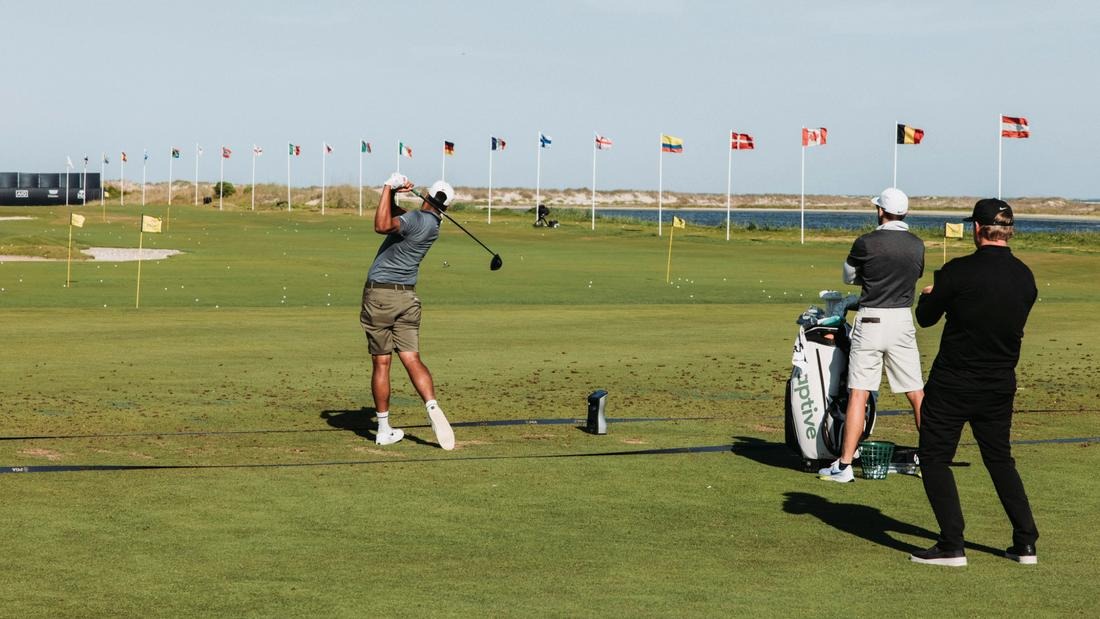
The biggest mistake many golfers make at the practice range is confusing activity with improvement. Hitting 70 or 100 balls doesn't necessarily make you better. If every shot is hit with the same club, toward the same target, with no feedback or consequence, you're mostly practicing how to hit balls on a driving range. A better 30-minute session has a different objective: prepare the body, sharpen scoring skills, practice the full swing with a purpose, and finish by creating pressure similar to the golf course.
0–5 Minutes — Warm Up and Find Your Contact
Objective: Get your body moving and establish solid contact before attempting full-speed swings. Don't immediately pull out the driver. Start with a wedge and make approximately 10–15 controlled shots.
Minute 0–2: Small swings
Begin with short chip-like swings. Focus on: Balanced setup. Soft grip pressure. Centered contact. Smooth rhythm. Finishing in balance. The goal isn't distance. You're simply getting the clubface and body working together.
Minute 2–4: Half swings
Move into waist-to-waist or half swings. Gradually increase speed while maintaining balance. Try to produce a consistent trajectory rather than maximum distance. For example: 50% swing → 60% → 70% Don't jump immediately to 100%.
Minute 4–5: Longer wedge shots
Hit several slightly longer shots. Now pay attention to: Ball-first contact. Starting direction. Distance control. Consistent tempo. The rule. Don't start trying to fix your swing during the warm-up. The warm-up is for preparing your body and finding your normal rhythm—not rebuilding your golf swing.
5–11 Minutes — Putting
Objective: Improve the shots that directly determine your score. Putting is ideal for a short practice session because you can get a large number of repetitions without spending much time retrieving balls. Divide the six minutes into two exercises.
5–8 Minutes — Short Putts
Set up several balls around the hole from approximately 3–6 feet. The objective is not simply to make putts. Focus on: Starting the ball on your intended line. Consistent setup. Square putter face. Speed control. A confident stroke. Try a simple challenge: Make 5 consecutive putts from 3–4 feet. If you miss, start again. This introduces a small amount of pressure.
8–11 Minutes — Distance Control
Move farther away—roughly 20–40 feet, depending on the practice green. Hit several putts toward a target area rather than always trying to hole them. For example, imagine a 3-foot circle around the hole. Your objective is to finish as many balls as possible inside that circle. This teaches an important scoring skill: Good putting isn't only about making putts. It's also about controlling distance so that missed putts remain easy second putts. Putting principle - A golfer can practice making 20 short putts and feel successful, but distance control is what becomes particularly important when facing long first putts on the course.
11–17 Minutes — Short Game
Objective: Develop shots that can rescue a round when the golfer misses the green. This section should involve different shots, rather than repeatedly hitting identical chips. Use a wedge and, if possible, vary the target.
11–13 Minutes — Basic Chips
Start with a straightforward chip. Choose a landing point on the green. Instead of thinking: “I need to get the ball close to the hole.” Think: “Where do I want the ball to land?” That distinction is important. The golfer chooses the landing spot first, then selects the appropriate club and swing.
13–15 inutes — Different Landing Spots
Change the landing point. For example: Short landing spot. Medium landing spot. Longer landing spot. Use different clubs if available. A 7-iron, pitching wedge and sand wedge can all produce different trajectories and amounts of rollout. This develops shot selection, rather than simply swing repetition.
15–17 inutes — Up-and-Down Challenge
Create a simple scoring game. Imagine your ball is just off the green. Give yourself five attempts. For each attempt: Chip toward the hole. Mark where the ball finishes. Attempt the putt. Record whether you successfully get up and down. Now you're no longer just practicing technique. You're practicing scoring. That distinction makes the session much more relevant to actual golf.
17–25 Minutes — Full Swing
This is the largest section because the full swing still deserves practice—but it should be structured, not simply a bucket of balls. Use a 7-iron or 8-iron first.
17–20 Minutes — Mid-Iron Practice
Hit approximately 8–10 balls. But don't simply aim at the same target. Change the target every few shots. For example:
Shot 1: Flag on the left
Shot 2: Flag on the right
Shot 3: Center target
Shot 4: Longer target
Shot 5: Shorter target
Then repeat. This forces you to reset your routine before each shot. Think like you're playing golf Instead of: Hit → hit → hit → hit → hit. Use: Target → routine → shot → evaluate → new target. That is much closer to what happens on the course.
20–23 Minutes — Random Practice
Now change clubs. For example: 7-iron → wedge → hybrid → 7-iron → driver → wedge. The objective is to make every shot different. Imagine you're playing a hole. Example ß Tee shot: Driver
Approach: 7-iron. Second hole: Hybrid. Approach: Wedge. Third hole: Driver. You're effectively creating a miniature course on the range. This type of random practice can help bridge the gap between range performance and course performance because you're repeatedly changing the decision and shot you're trying to execute.
23–25 inutes — Driver
Now bring out the driver. But don't spend the final two minutes trying to hit the ball as far as possible. Hit approximately 4–6 drives. Give every shot a target. For example: Fairway left. Fairway center. Fairway right. Narrow fairway. Dogleg. The goal is usable accuracy, not maximum distance. A useful driver question. After every shot ask: “Would I be happy with this shot on the course?” If the answer is yes, the shot has achieved its purpose.
25–30 Minutes — Pressure Practice
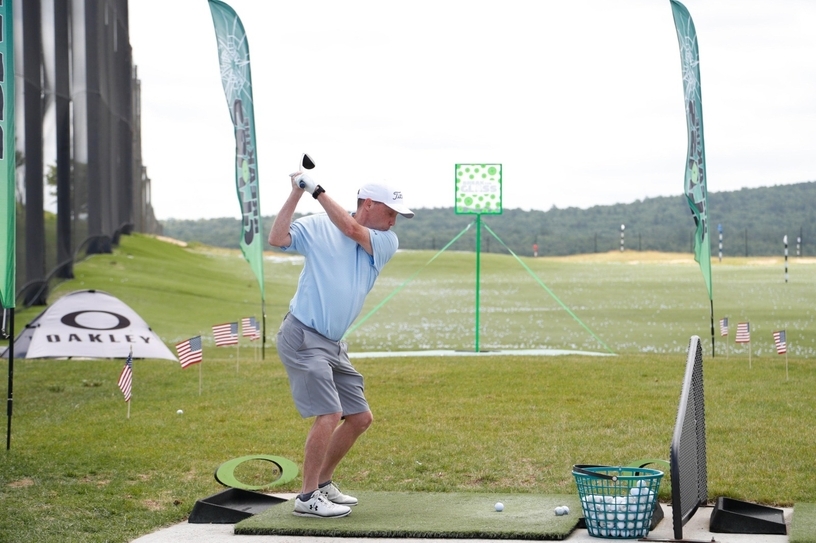
This is the section that turns a normal practice session into golf practice. Many golfers practice without consequences. There is no score. No target. No pressure. No reason to care whether the ball finishes 10 feet or 40 feet away. The final five minutes should change that.
Challenge 1 — Fairway Challenge. Imagine a fairway between two targets. Give yourself five tee shots. Score them: Fairway = 1 point. Rough = 0. Major miss = -1. Try to beat your previous score next session.
Challenge 2 — Approach Challenge. Choose a target approximately 100–150 yards away. Hit five approach shots. Score based on proximity: Inside 10 yards = 2 points. Inside 20 yards = 1 point
Outside 20 yards = 0. The exact distances can be adjusted for your skill level.
Challenge 3 — Three-Hole Simulation. If you have enough time, simulate three holes. Hole 1 - Driver → 7-iron → wedge. Hole 2 - Hybrid → 8-iron. Hole 3 - Driver → wedge. Don't hit another ball simply because you don't like the previous result. The shot counts. That is what makes it pressure practice.
The Most Important Rule — Every Shot Needs a Purpose
The biggest difference between an ordinary range session and this 30-minute routine is intent. Instead of: “I'm going to hit 50 balls.” Your objective becomes: “I'm going to practice three specific parts of my game and measure how well I execute them.” A useful practice cycle is: Choose → Visualize → Execute → Evaluate → Reset
1. Choose - What shot are you trying to hit?
2. Visualize - Where should the ball start? Where should it finish? What trajectory do you want?
3. Execute - Go through your normal pre-shot routine.
4. Evaluate - Don't immediately judge the swing. Evaluate the result: Was the contact good? Did it start where intended? Was the distance appropriate? Would that shot work on the course?
5. Reset - Step away. Start again. This prevents practice from becoming mindless repetition.
How Many Balls Should You Hit?
This is another important point for the article. More balls do not automatically mean more improvement. For a 30-minute session, something like this is reasonable:
Warm-up: 10-15 shots. Putting: 15-30 putts. Short game: 10-15 shots. Full swing: 15-20 shots. Pressure practice 5-10 shots. Total ~40-60 shots/putts. The exact number isn't important. Quality and feedback are. If you find yourself rapidly hitting balls simply because they're available, slow down. A 30-minute session with 40 highly deliberate shots can be more useful than 70 rushed swings.
Adjust the Routine According to Your Handicap
High-Handicap Golfer. Prioritize: Putting → Chipping → Wedges → Iron contact → Driver. The objective is reducing major mistakes and improving consistency.
Mid-Handicap Golfer. Prioritize: Putting → Short game → Approach shots → Driver → Pressure. The objective is improving scoring opportunities and reducing wasted shots.
Low-Handicap Golfer. Prioritize: Distance control → Approach dispersion → Driving accuracy → Short-game precision → Pressure
The objective becomes increasingly about proximity, dispersion and decision-making, rather than simply making cleaner contact.
The same 30-minute routine doesn't have to be repeated identically every time.
Session 1 — Scoring. Focus on: Putting. Chipping. Wedges. Approach shots
Session 2 — Ball Striking. Focus on: Irons. Hybrid. Driver. Direction. Distance control
Session 3 — Course Simulation. Focus on: Changing clubs. Different targets. Unequal distances. Pressure games. Playing imaginary holes
This gives the golfer three different training purposes while keeping every session within 30 minutes. A golfer who has only 30 minutes has a reason to eliminate wasted practice. Instead of spending the entire session chasing perfect swings, the golfer works through: Warm up → Putts → Short game → Full swing → Pressure. And most importantly: Practice the way you want to play. That means changing targets, changing clubs, making decisions, accepting bad shots, and keeping score. The ultimate goal isn't to become better at hitting balls on the range. It's to become better at playing golf.
A golfer can spend 90 minutes hitting balls and still reproduce the same mistakes. Another golfer can spend 30 focused minutes practicing different situations, receiving feedback, making decisions, and adding pressure—and potentially get more useful training from the session.
Golf practice is often measured in buckets of balls. Better practice should reproduce some of those demands.
Don't Start With the Driver. For many recreational golfers, the driver is the first club out of the bag. They arrive at the range, grab the biggest club and immediately start trying to hit the ball as far as possible. That's usually not the best way to begin. A better practice session starts with smaller, slower movements and progressively builds toward full-speed swings.
Start With a Wedge - Begin with a pitching wedge or sand wedge. Make small swings first. Think about: Balance. Grip pressure. Posture. Rhythm. Centered contact. A stable finish
The objective isn't distance. You're establishing feel and contact. Then gradually increase the swing. For example: Small chip → half swing → three-quarter swing → full wedge. This gives the golfer an opportunity to progressively increase movement and speed. The driver can come later.
Why Not Start With the Driver? A driver demands considerable clubhead speed and produces more severe consequences when contact or face angle is poor. Starting with it can encourage golfers to: Swing too hard. Lose balance. Become overly focused on distance. Develop poor rhythm. Chase a perfect shot immediately. And once a golfer starts hitting bad drives, frustration can quickly take over the practice session. Starting with wedges provides a much more controlled environment. The golfer can establish tempo and contact before adding speed.
A useful rule. Build speed; don't begin with speed. The objective of the warm-up isn't to hit your best shot of the day. It's to prepare your body and establish the movement pattern you want to carry into the rest of the session.
Practice Scoring Shots. Another common mistake is spending too much practice time on the driver. Driving is important, but golf is not won exclusively from the tee. A golfer can hit a beautiful drive and still make a double bogey because of: A poor approach. A weak chip. A three-putt. Poor wedge distance control. That's why a good practice routine should give substantial attention to scoring shots. These include:
Putting. Practice: 3–6 foot putts. Long-distance putting. Speed control. Start line
Chipping. Practice: Short chips. Longer chips. Different landing spots. Different trajectories
Pitching. Practice shots that require the ball to travel through the air before releasing toward the hole.
Wedge Distance Control. This is particularly important.
Instead of simply hitting a wedge as far as possible, learn to produce predictable distances. For example: 50 yards → 70 yards → 90 yards → 100 yards. The objective is to know what kind of swing produces each distance.
The Wedge-Distance Exercise. Here's a simple exercise that fits perfectly into a 30-minute session. Pick three targets: 50 yards. 75 yards. 100 yards. Hit three balls toward each target. Don't worry about hitting every ball perfectly. Instead, observe: How far does the ball actually travel? How consistent is the contact? Does the ball finish short or long? Is your distance predictable? This develops something that a driving-range session often neglects: distance control. Knowing that you can reliably hit a 75-yard shot can be much more valuable on the course than occasionally hitting a wedge 100 yards.
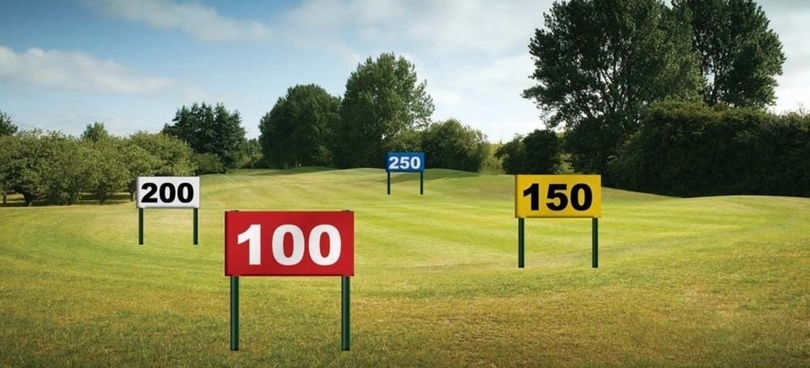
Give Every Shot a Target. This may be one of the most important changes a golfer can make to practice. Don't simply hit balls. Hit shots. There's a difference. If you stand on the range and repeatedly hit toward the same flag, you can become comfortable with the movement without developing the decision-making required on the course. Instead, give every shot a purpose. Before hitting the ball, decide: Where do I want it to start? Where do I want it to finish? What trajectory do I want? What is my miss? Then make your normal pre-shot routine and hit the shot. Randomize the Targets. Imagine you have 15 balls. Instead of: 15 × 7-iron → same flag. Try:
Shot 1: 7-iron → left target
Shot 2: 7-iron → right target
Shot 3: 8-iron → center target
Shot 4: 6-iron → distant target
Shot 5: wedge → short target
Then repeat. Now you're forced to reset your brain for every shot. That is much closer to playing golf.
Change Distance, Not Just Direction. Target variation doesn't only mean left and right. Change the distance too. For example: 100 yards → 150 yards → 120 yards → 170 yards → 90 yards. This forces the golfer to make a new decision every time. On the course, you're constantly answering: What club do I need? Where should I aim? How hard should I swing? Where is the safest miss? Practice should include those decisions.
Add Pressure. This is where practice becomes significantly more realistic. A golfer can hit 20 excellent shots on the range without feeling any pressure. Then they arrive on the first tee and suddenly the swing feels completely different. Why? Because the practice environment had no consequences. Pressure changes how golfers think and behave. That's why the final portion of practice should include games, scores or consequences.
Five-Ball Challenge - Choose a target. Give yourself five balls. Your goal: Hit at least 3 of 5 shots into your chosen target area. For example, if you're practicing approach shots: 5 balls. Target = green. 3 greens = success. 2 or fewer = repeat next session. The exact target can be adjusted according to handicap. For a beginner, the target might be a relatively large area. For a better player, the target becomes smaller.
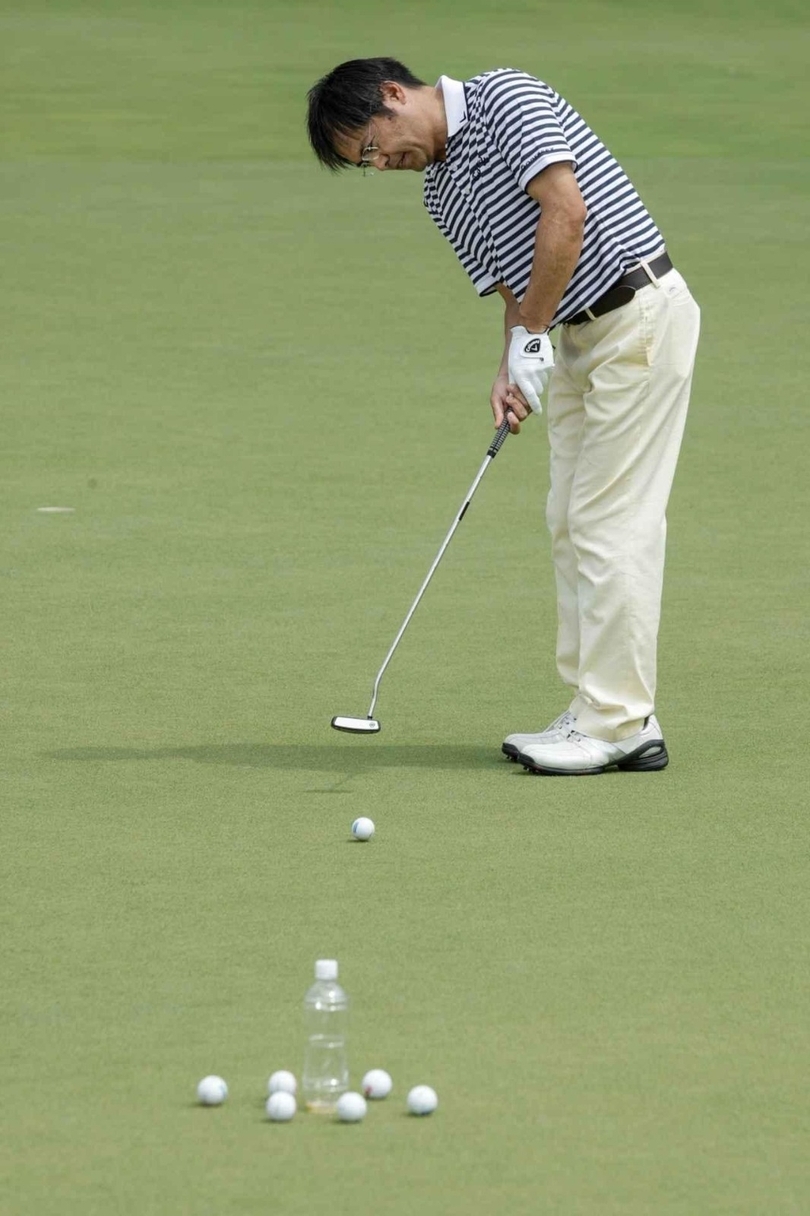
Putting Pressure Test - Take five balls and place them approximately 4–6 feet from the hole. Your challenge: Make five consecutive putts. If you miss the fourth putt, start again. The objective isn't necessarily to make yourself frustrated. It's to introduce a small consequence to the shot. Suddenly, the fifth putt matters. That changes your mental state. Pressure practice teaches golfers to: Commit to a target. Develop a consistent pre-shot routine. Control nerves. Accept consequences. Focus on the shot rather than mechanics. It's also an opportunity to practice performance, rather than just technique. A range session asks: “Can you hit this shot?” A pressure exercise asks: “Can you hit this shot when it matters?” That's a much more useful question.
Finish With Course Simulation. The final step is to make the range feel less like the range. This is where alternating clubs becomes extremely useful. Imagine you're playing a golf course. You don't hit: 7-iron → 7-iron → 7-iron → 7-iron → 7-iron. Instead, you might hit: Driver → 7-iron → wedge → driver → hybrid → 8-iron → wedge. Your practice should sometimes look like that.
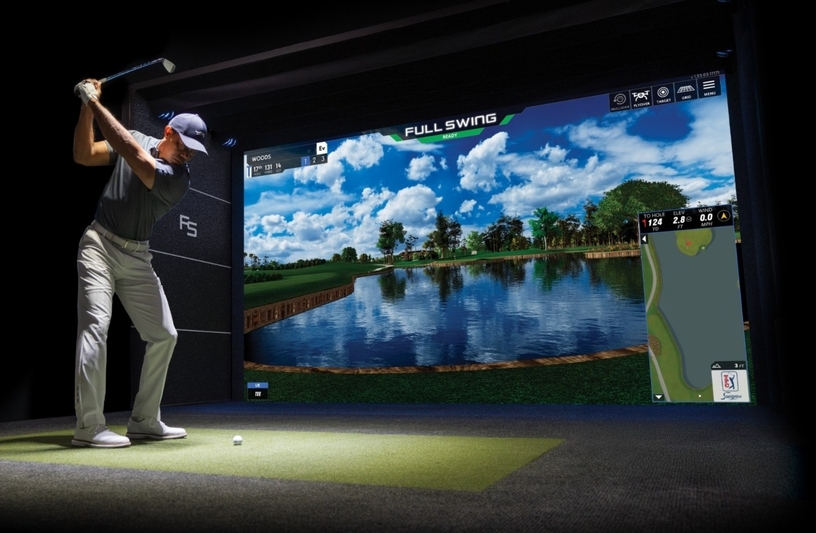
Create Your Own Three-Hole Simulation. You don't need a simulator. You can do it at the driving range.
Hole 1 — Par 4. Imagine: Driver → 7-iron → wedge. Hit the driver. Then stop. Don't immediately hit another driver. Imagine where your tee shot finished. Now select the appropriate approach club. Hit the approach. Then hit your wedge. Keep score.
Hole 2 — Par 5. Imagine: Driver → 3-wood/hybrid → wedge. Again, change clubs. You're forcing yourself to reset between shots.
Hole 3 — Par 3. Choose a target representing a green. For example: 7-iron → target. Give yourself only one shot. If you miss, the shot counts. Don't hit another ball because you didn't like the result. That's exactly what happens on the course.
This is an extremely important distinction. On the range, golfers often think: “That was bad. I'll hit another one.” On the course: You don't get another one. So occasionally practice with the same limitation. Hit one ball. Evaluate it. Accept the result. Then move on. This develops a more realistic relationship with mistakes. Golf isn't about eliminating every bad shot. It's about managing the bad shots that inevitably happen.
Practice Should Move From Technique to Performance. A well-designed 30-minute session can follow a progression:
Stage 1 — Prepare. Warm-up Establish movement, rhythm and contact.
↓
Stage 2 — Build Skills. Putting + short game. Develop scoring skills.
↓
Stage 3 — Develop the Swing. Full swing. Work on ball striking and consistency.
↓
Stage 4 — Make Decisions. Targets + changing clubs. Introduce variability.
↓
Stage 5 — Perform. Pressure + course simulation. Test whether the skills hold up. That's a much more complete practice cycle than simply hitting a bucket of balls.
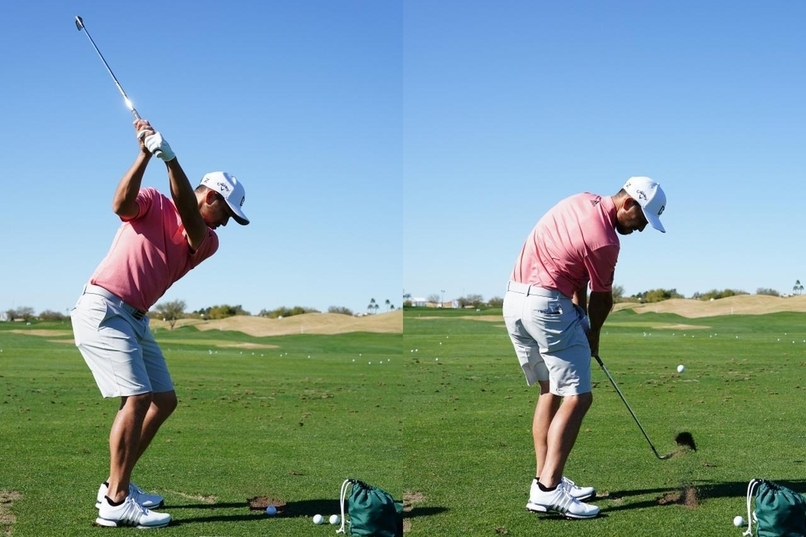
Practice can mean repeating a particular skill. For example: Hit 20 seven-irons. Training means deliberately developing skills that transfer to performance. For example: Hit five different approach shots to different targets, change clubs between shots, record the results, then repeat the challenge under pressure. Both have value. But they serve different purposes.
Use Feedback, But Don't Obsess Over Mechanics. Another important principle is feedback. After each shot, ask: What happened? Rather than immediately asking: What did my swing do wrong? For example: “The ball started left and finished short.” That's useful information. You can then determine whether the issue was: Club selection. Contact. Face angle. Swing speed. Target selection. Distance control. For golfers using launch monitors, additional information such as carry distance, clubhead speed, launch, dispersion and face/path data can provide more detailed feedback. But technology isn't essential. A golfer can learn a great deal simply by watching where the ball starts and where it finishes.
The philosophy behind the routine can therefore be summarized in five principles: Start controlled - Don't immediately chase maximum speed. Practice what affects scoring - Putting, chipping, pitching, wedges and approach shots deserve serious attention. Make every shot different enough to require thought - Change targets, distances and clubs. Introduce consequences - Keep score and create challenges. Finish by playing golf - Simulate holes rather than ending with another bucket of identical swings.
The purpose of a 30-minute practice session isn't to fit as many swings as possible into 30 minutes. It's to make those 30 minutes count. A golfer who spends 30 minutes deliberately practicing putting, short game, approach shots, target selection and pressure situations is training several components of actual golf. A golfer who spends 30 minutes mindlessly hitting the same club toward the same target may simply become very good at hitting that particular shot in that particular environment.
The range is not the course. The closer your practice gets to the decisions, variability and pressure of the course, the more likely your practice is to transfer to your actual game. And that's ultimately what “You don't need more practice time. You need better practice.” means: Don't measure practice by how many balls you hit. Measure it by what you learned, what you improved, and whether you can reproduce it when the score counts.