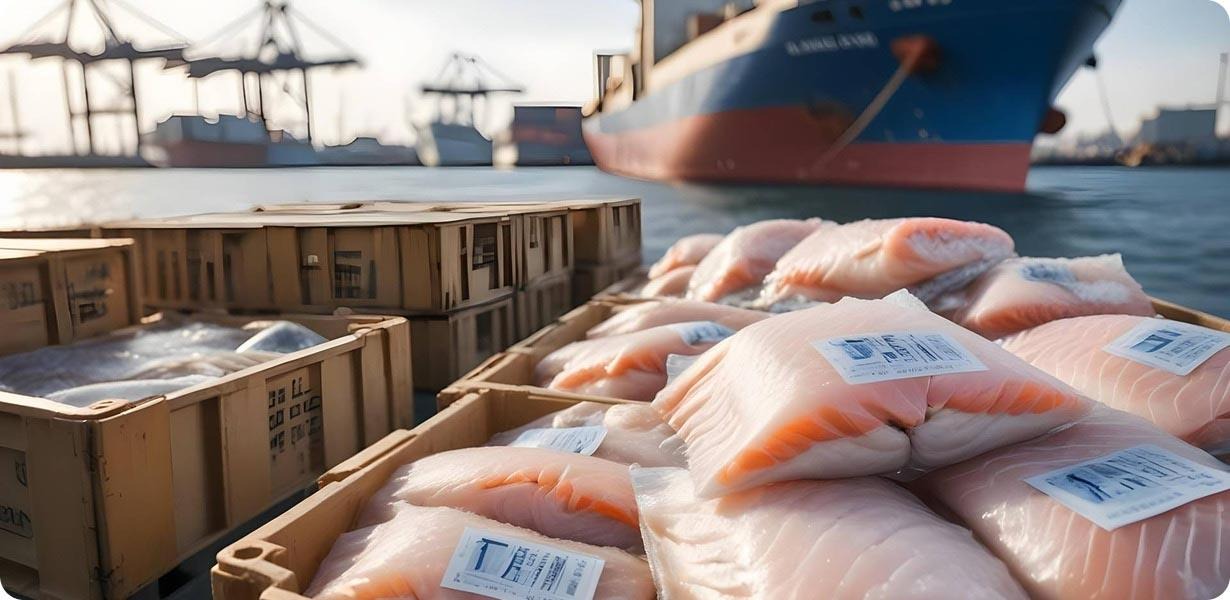
Explore America's seafood supply chain, from Alaska fishing and processing to exports, cold storage, global trade, sustainability and the future of U.S. seafood.
Explore America's seafood supply chain, from Alaska fishing and processing to exports, cold storage, global trade, sustainability and the future of U.S. seafood.
Image courtesy of portservice
The United States is one of the world's most important seafood economies, yet its position in the global seafood market is more complicated than it first appears. America has enormous ocean resources, major commercial fisheries, sophisticated seafood processors, powerful fishing communities, and some of the world's most valuable seafood products. At the same time, the United States imports far more edible seafood than it exports.
That creates a fascinating business paradox: America is both a major seafood producer and one of the world's largest seafood import markets. In 2023, the U.S. commercial fishing and seafood industry generated approximately $173.4 billion in sales throughout its supply chain, supported about 1 million full- and part-time jobs, generated $43.9 billion in income, and contributed $69.2 billion in value-added economic activity, according to NOAA Fisheries.
But the value of the industry is not created only when fishermen bring seafood ashore. It is created through a much larger network involving fishing vessels, ports, processors, cold storage, distributors, exporters, importers, restaurants and retailers.
Understanding that supply chain helps explain why American seafood is not simply a natural-resource story. It is also a story about manufacturing, logistics, international trade, technology and global competition.
The U.S. seafood industry is a large, sophisticated natural-resource and international-trade business, and it has a particularly interesting structure: the United States is a major seafood producer and exporter, but it is also the world's largest seafood importer.
U.S. commercial fisheries and the seafood industry generated approximately: $173.4 billion in total sales impacts. $43.9 billion in income. $69.2 billion in value-added economic impact. About 1 million full- and part-time jobs. These numbers include the broader seafood supply chain, not simply fishermen. The actual domestic commercial catch in 2023 was approximately 8.4 million pounds with a dockside value of $5.1 billion.
So there's an important distinction: $5.1 billion = value of domestic commercial landings and $173.4 billion = broader economic impact of commercial fishing and seafood.
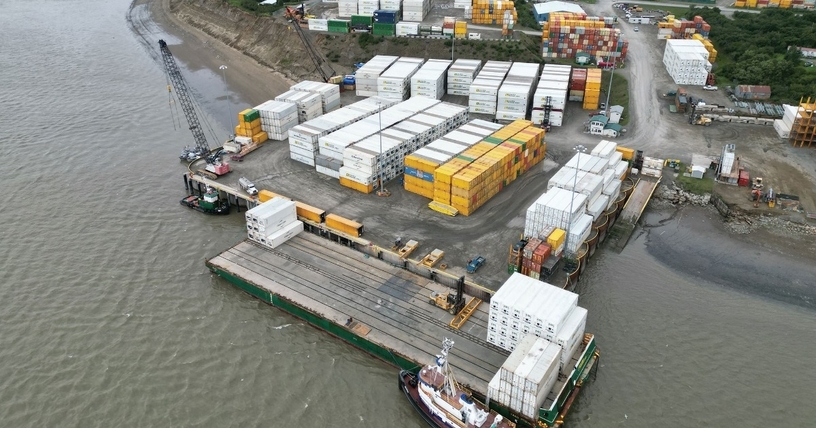
In 2023, the North Pacific accounted for 62.5% of U.S. commercial seafood landings, followed by the Gulf of America at 15% and the Pacific region at 10.2%. That makes Alaska extraordinarily important to the American seafood industry.
Major seafood-producing regions
Alaska: Pollock, Salmon, Crab, Pacific cod, Halibut and Sablefish. Alaska Pollock is one of America's most important seafood commodities. Pollock is used extensively for: Frozen fillets. Fish sticks. Surimi. Fast-food products. Breaded seafood. Fish sandwiches.
Pacific Northwest: Salmon. Dungeness crab. Groundfish and Shellfish. Salmon is also a major export commodity. The Northeast, especially Maine, is a major lobster-producing region.
New England: Lobster. Scallops and Groundfish. Scallops from New Bedford, Massachusetts, has been the nation's highest-value fishing port for more than two decades, largely because of the sea scallop industry.
Gulf of America: Shrimp, Oysters, Menhaden, Red snapper and Other finfish
Atlantic Coast: Lobster, Scallops, Blue crab and Various finfish
Some of the most commercially important species include: Especially: Sockeye, Chinook, Coho, Pink and Chum. Sockeye is particularly important. In 2024, U.S. commercial sockeye landings reached approximately 196 million pounds, worth about $259 million, with almost all U.S. sockeye coming from Alaska.
Alaska Pollock: The Industrial Engine of American Seafood
Among America's seafood products, Alaska pollock deserves special attention. The Bering Sea pollock fishery is the largest U.S. fishery by volume. Pollock is processed into a wide range of products, including frozen fillets, breaded fish products and surimi.
It is an important ingredient in mass-market seafood because it offers a relatively mild flavor, versatile processing characteristics and large-scale supply. Pollock is therefore a good example of how a natural resource becomes an industrial commodity.
The process can involve: Fishing → onboard processing → freezing → transportation → secondary processing → packaging → international distribution. Some pollock products are consumed in the United States, while others enter international markets.
The 2023 NOAA data identify Pacific pollock, sockeye salmon, tuna, cod and Atlantic salmon as the highest-value processed fishery species or species groups.
That processing stage is critical because raw fish generally has less commercial value and a shorter shelf life than a properly processed, frozen and packaged seafood product.
The Challenge Facing Alaska Seafood
Despite its natural advantages, the American seafood industry faces serious competitive pressures. Alaska's seafood sector experienced a major downturn between 2022 and 2023.
NOAA estimated that the Alaska seafood industry suffered approximately $1.8 billion in losses, while fishing-industry profitability fell by about 50% between 2021 and 2023. The downturn was associated with higher wages, higher energy prices, higher interest rates and declining prices for major species.
NOAA estimated more than 38,000 job losses nationwide and approximately $4.3 billion in lost total U.S. output associated with the Alaska seafood downturn. This illustrates an important economic reality. A seafood downturn in Alaska can affect: Fishing communities → processors → transportation → West Coast businesses → exporters → international buyers
Fishing is only the first step. The commercial seafood supply chain looks more like: Ocean à Fishing vessel à Landing port à Processor à Cleaning / filleting / grading à Freezing / canning / smoking à Packaging à Distributor / exporter à International buyer à Retail / restaurant. This means seafood processing can be a substantial business independent of actually owning fishing vessels. NOAA identifies Pacific pollock, sockeye salmon, tuna, cod and Atlantic salmon among the highest-value processed fishery products.
Seafood is highly perishable. That makes cold-chain infrastructure extremely important. A seafood company may therefore make money from: Processing. Freezing. Cold storage. Packaging. Logistics. Distribution. Export documentation. Quality control. Traceability. This creates an interesting connection to industrial real estate. A strategically located cold-storage facility near a major fishing port can become an important piece of infrastructure.
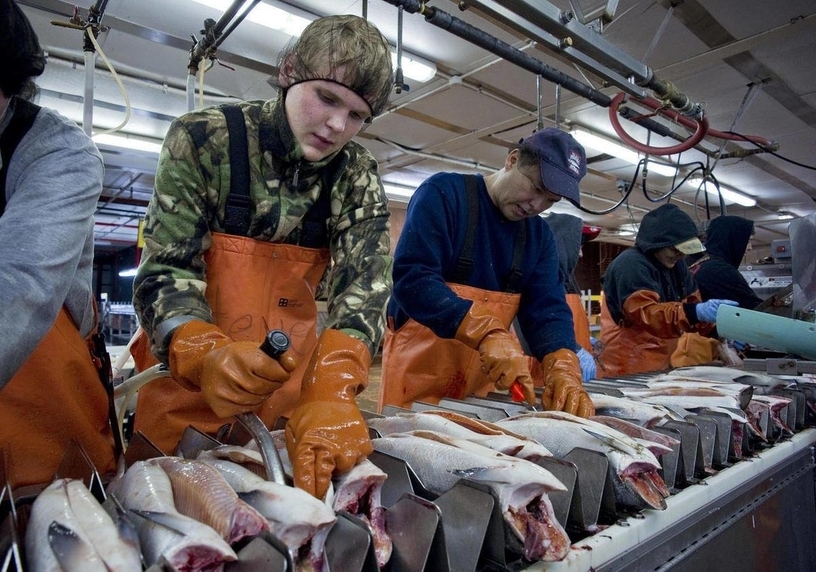
Processing is where the seafood industry begins to resemble a manufacturing industry. A modern seafood processor may handle: Sorting and grading. Heading and gutting. Filleting. Skinning. Portioning. Freezing. Canning. Smoking. Packaging. Quality control. Cold storage. For high-volume species such as pollock and salmon, processing can involve sophisticated industrial equipment capable of handling enormous quantities of seafood.
For premium products such as lobster, crab and scallops, processing may emphasize quality, freshness, grading and careful handling.
This creates two very different seafood businesses. One is the large-scale commodity model, where efficiency, volume and processing costs determine competitiveness. The other is the premium seafood model, where product quality, traceability, freshness, brand reputation and access to affluent consumers can generate higher margins.
The distinction is important for investors and businesses because the economics of a frozen pollock processor are very different from those of a premium lobster exporter.
This is probably the most surprising part. In 2023, the U.S. imported approximately: 6.3 billion pounds of edible seafood, while exporting approximately: 2.5 billion pounds. And approximately 80% of seafood consumed by Americans came from foreign imports. So the United States has a strange but economically interesting position: America is simultaneously a major seafood producer, processor, exporter and importer.
In 2023, the major destinations for U.S. seafood exports included: Canada. China. Japan. South Korea and Netherlands. This is particularly relevant to your existing knowledge of the Korea and Taiwan seafood/timber markets, because Asian markets are extremely important for American seafood.
Japan, China and South Korea are major destinations for products such as: Alaska pollock. Salmon. Crab. Cod. Halibut. Other high-value seafood
China plays an unusual role in the U.S. seafood supply chain. American seafood can be: Caught in Alaska → exported to China → processed → re-exported to another market, because China has enormous seafood-processing capacity. That creates an interesting global supply chain: U.S. natural resources → Chinese processing → global consumers. This is one reason seafood isn't simply an "American fishing" story. It's an international manufacturing and logistics business.
Where American Seafood Goes
American seafood exports are highly international. In 2023, the leading markets for U.S. seafood exports were: Canada. China. Japan. South Korea and The Netherlands. Asia is particularly important. Japan, China and South Korea have long-standing seafood consumption cultures and sophisticated seafood-processing and distribution industries. This creates an important connection between American natural resources and Asian food markets.
A fish caught in Alaska may be frozen, transported through an international logistics network, processed or distributed abroad, and eventually sold to consumers thousands of miles away. The seafood business therefore illustrates how natural resources increasingly operate within global supply chains.
There is also a very relevant 2026 business story here. The EU introduced a new digital seafood traceability system called CATCH, designed to combat illegal, unreported and unregulated fishing.
The system has caused problems for some U.S. seafood shipments, including Alaska pollock. A shipment was reportedly stranded near the Netherlands because of documentation and traceability issues. The EU subsequently extended a temporary exemption for U.S. seafood imports until November 30, 2026.
The United States exported more than $1 billion of wild seafood to the EU in 2025, including pollock, salmon and lobster. That's actually a very good current business-news angle.
Think about the seafood economy as six layers:
Natural resource - Fish and shellfish in U.S. waters.
Harvesting - Fishing vessels, crews, fuel, equipment and fishing rights.
Processing - Filleting, freezing, canning, smoking, grading and packaging.
Infrastructure - Ports, cold storage, warehouses and transportation.
International trade - Exporters, importers, brokers and distributors.
Consumer market - Supermarkets, restaurants, foodservice and direct-to-consumer companies.
This is why seafood can be classified as both: Natural Resources + Food Industry + Manufacturing + International Trade + Logistics
That makes seafood an excellent example of how a natural resource becomes a global business ecosystem. And because the U.S. imports so much of its seafood, there is another interesting theme: The U.S. has enormous seafood resources, but its seafood supply chain is deeply integrated with foreign processing and international markets.
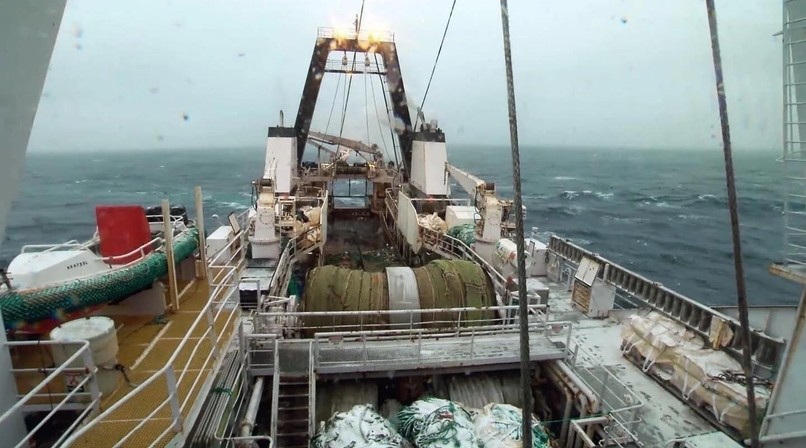
The foundation of the U.S. seafood industry is its enormous marine territory. The United States has jurisdiction over an Exclusive Economic Zone covering more than 4 million square miles of ocean, giving American fisheries access to some of the world's richest marine resources.
Commercial fishing takes place along the Atlantic, Pacific and Gulf coasts, as well as in Alaska and U.S. island territories. But the geographic center of American commercial fishing is Alaska. The North Pacific accounted for 62.5% of U.S. commercial seafood landings in 2023, while the Gulf of America accounted for approximately 15% and the Pacific region about 10.2%. This makes Alaska far more than a remote fishing region. It is one of the most important natural-resource centers in the American food economy.
The state's fisheries produce salmon, pollock, Pacific cod, crab, halibut and other valuable species. Seafood is also deeply connected to the economies of many coastal Alaskan communities.
The importance of Alaska can be seen in the scale of its fisheries. The Bering Sea and Aleutian Islands groundfish fisheries, which include the enormous pollock fishery, have an economic value exceeding $2.64 billion, based on the latest NOAA assessment cited in 2026.
A common misconception is that the seafood industry begins and ends with the fishing boat. In reality, the commercial seafood supply chain looks more like this:
Ocean resources → Fishing vessel → Port → Processor → Cold storage → Distributor → Exporter → International buyer → Retailer or restaurant
Each stage creates economic value. Fishing vessels require fuel, engines, nets, electronics, maintenance and crews. Ports require docks, unloading facilities, fuel services and transportation. Processing plants require labor, refrigeration, packaging and machinery. Exporters require documentation, logistics and international distribution networks.
NOAA's definition of the U.S. seafood industry therefore includes commercial fishermen, seafood processors and dealers, wholesalers and distributors, importers, retail grocers and restaurants.
This is why a change in seafood prices can affect businesses far beyond the fishing fleet. If the price of pollock falls, for example, the impact can move through fishermen, processors, transportation companies, cold-storage operators, exporters and international buyers.
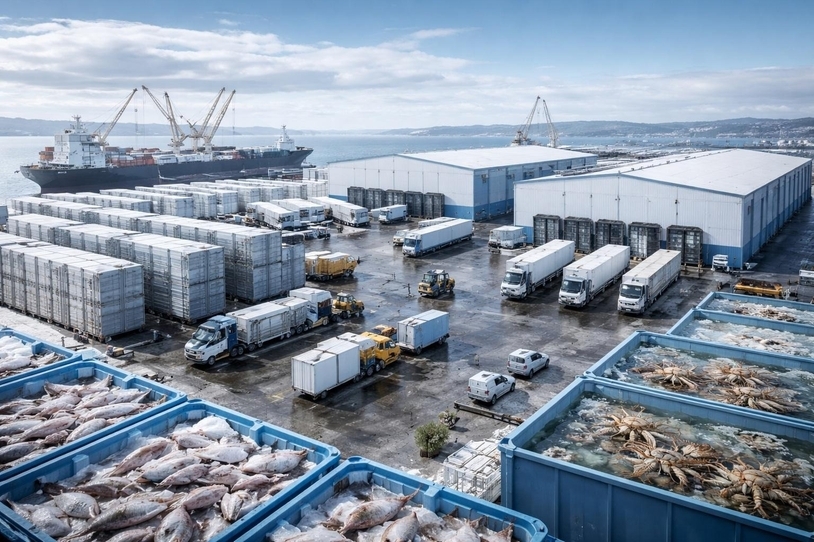
Seafood is highly perishable, making temperature-controlled logistics one of the most important parts of the industry. After landing, seafood may need to be rapidly chilled or frozen before being transported. That creates demand for: Refrigerated warehouses. Freezer facilities. Refrigerated trucks. Reefer containers. Port infrastructure. Temperature monitoring. Cold-chain management. The cold chain is particularly important for seafood exports because American products can travel thousands of miles before reaching their final consumers.
A seafood company may therefore compete not only on the quality of the fish but also on its ability to preserve that quality throughout the logistics process. In this sense, seafood connects directly to the broader investment themes of industrial real estate, logistics and infrastructure. A strategically located cold-storage facility near a major fishing port can become an essential piece of the regional seafood economy.
America Is a Major Seafood Exporter — But an Even Bigger Importer. This is where the U.S. seafood story becomes particularly interesting. In 2023, the United States imported approximately 6.3 billion pounds of edible seafood products, while exporting about 2.5 billion pounds. Approximately 80% of the seafood consumed by Americans in 2023 came from foreign imports. U.S. per-capita seafood consumption was about 19.1 pounds that year. This means America has a structural seafood trade deficit in volume terms.
Americans consume huge quantities of seafood that are not produced domestically at sufficient scale. Shrimp is a major example. Farmed seafood also represents a significant part of the U.S. supply. The United States has historically had less aquaculture production than several major Asian producers, meaning American consumers rely heavily on global seafood supply chains.
The result is a complex system in which American seafood companies can simultaneously be: Domestic producers + processors + exporters + importers. That complexity is one of the defining characteristics of the modern seafood economy.
China and the Global Processing Network
China occupies a particularly interesting position in the global seafood system. It is both a major seafood producer and one of the world's largest seafood-processing centers. This means seafood caught in one country can be exported to China for processing and subsequently shipped to another market. For American seafood businesses, this creates both opportunities and strategic challenges.
Foreign processing can provide lower-cost labor and large-scale manufacturing capacity, but it can also introduce additional transportation costs, trade risks and geopolitical exposure.
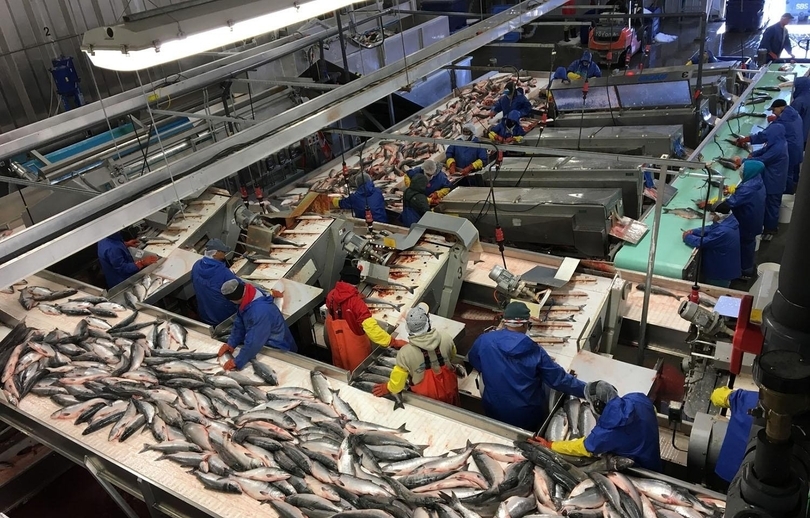
American seafood producers also compete with lower-cost producers around the world. Countries with large aquaculture industries can produce shrimp, salmon and other seafood at enormous scale. Foreign processors may also have lower labor and operating costs. NOAA has specifically identified international competition, trade barriers, a strong U.S. dollar, inflation and declining domestic seafood-processing jobs as challenges for Alaska's competitive position.
American seafood benefits from high-quality natural resources and strong sustainability standards, but those standards can also increase production costs. In a global commodity market, a producer with higher costs can struggle to compete even when the underlying natural resource is exceptionally valuable.
The European Union's new digital seafood traceability system, known as CATCH, provides a current example of how regulation is changing international seafood trade. In 2026, problems with the system caused delays for U.S. seafood shipments, including an Alaska pollock shipment that became stranded near the Netherlands because of documentation issues.
The EU subsequently extended a temporary exemption for U.S. seafood imports until November 30, 2026. The issue matters because the United States exported more than $1 billion worth of wild seafood to the EU in 2025, including pollock, salmon and lobster. For seafood exporters, traceability is no longer simply a compliance issue. It is becoming part of the competitive infrastructure of international trade.
Sustainability is also increasingly important. The long-term value of a fishery depends on maintaining healthy fish populations. If stocks decline dramatically, the consequences are not limited to fishermen. Processing plants can lose raw materials, ports can lose activity, exporters can lose supply and coastal communities can lose jobs.
That makes fisheries management fundamentally connected to economic management. The United States has developed extensive scientific and regulatory systems designed to manage fisheries and prevent overfishing. For businesses, sustainable fisheries can provide something extremely valuable: long-term supply security. In other words, sustainability isn't simply an environmental concept. It can also be an economic strategy.
Aquaculture Could Change America's Seafood Supply
Another major part of the future is aquaculture. Farmed seafood already represents a large portion of global seafood production, and the United States imports substantial quantities of farmed seafood.
NOAA estimates that at least 70% of the seafood Americans eat comes from other countries, with more than half of those imports being farm-raised.
If the United States can expand responsible domestic aquaculture, it could potentially reduce some dependence on imported seafood while creating new domestic jobs and investment. Potential areas include: Shellfish. Oysters. Salmon. Kelp. Other marine species. Land-based aquaculture. Aquaculture could therefore become an important part of America's future food-security strategy.
Technology Is Transforming the Seafood Business
Technology is also changing the economics of seafood. Modern fishing vessels use sophisticated navigation, sonar and communications systems. Processors increasingly use automation, sensors, machine vision and data analytics.
Cold-chain operators use digital temperature monitoring. Exporters use electronic documentation and traceability systems. Artificial intelligence could eventually improve: Fish-stock monitoring. Catch forecasting. Processing efficiency. Quality inspection. Supply-chain planning. Demand forecasting. Fraud detection and Traceability. The seafood industry may not be traditionally associated with technology, but much of its future competitiveness will depend on it.
The future seafood competition will not simply be about who catches the most fish. It will increasingly be about who controls the most valuable parts of the supply chain. Consider two scenarios.
Scenario One: Commodity seafood. Fish → Processing → Freezing → Export. Margins depend heavily on volume and cost efficiency.
Scenario Two: Value-added seafood. Fish → Premium processing → Branding → Traceability → Cold chain → International distribution → High-value consumer
The second model can potentially capture significantly more value from the same natural resource.
The U.S. seafood industry enters the coming years with both significant advantages and major challenges. America has extraordinary marine resources, particularly in Alaska. It has sophisticated fishing fleets, processing facilities, ports and logistics infrastructure. It also has access to some of the world's wealthiest seafood markets. But it faces strong global competition.
Higher domestic costs can make American processing less competitive. International trade rules can complicate exports. Climate and ecosystem changes can affect fish populations. Labor shortages can affect processing plants. And American consumers remain heavily dependent on imported seafood.
The industry's future will therefore depend on more than catching fish. It will depend on capturing value. That could mean investing in domestic processing, improving cold-chain infrastructure, expanding aquaculture, developing better traceability technology, strengthening export relationships and building premium seafood brands.
The American seafood industry begins with a natural resource, but it does not end at the fishing port.
A fish caught in Alaska can become a frozen commodity, travel through a sophisticated cold chain, enter an international processing network, and eventually reach consumers in Asia, Europe or North America.
That journey creates businesses at every stage. Fishing creates the resource. Processing creates additional value. Cold storage protects the product. Logistics moves it around the world. Exports connect American fisheries with global consumers. And increasingly, technology, traceability and sustainability determine who can compete.
The United States therefore occupies a unique position in the global seafood economy. It possesses enormous natural resources while simultaneously relying heavily on foreign supply. That contradiction may define the next chapter of American seafood. The future race will not simply be about who catches the most seafood. It will be about who controls the supply chain from ocean to consumer—and who captures the greatest economic value along the way.