Megaspeed International's rapid rise in AI computing highlights Singapore's role in the global semiconductor trade and growing regulatory challenges.
Megaspeed International's rapid rise in AI computing highlights Singapore's role in the global semiconductor trade and growing regulatory challenges.
Singapore's technology sector has become an increasingly important part of the global artificial intelligence economy. Its established financial system, international connectivity and position as a regional business hub have attracted companies seeking to participate in the rapidly expanding market for advanced computing infrastructure.
Among the companies attracting attention is Megaspeed International Pte. Ltd., a Singapore-based cloud computing provider that has emerged as a significant buyer of advanced artificial intelligence hardware from American semiconductor giant NVIDIA.
Its business sits at the intersection of three powerful economic forces: the worldwide demand for AI computing, the strategic competition between the United States and China, and the growing importance of Southeast Asia as a technology investment destination.
However, Megaspeed's rapid expansion has also brought regulatory scrutiny. Questions surrounding the movement of advanced semiconductor equipment through Singapore and Malaysia have placed the company under investigation by Singaporean authorities and drawn attention from US officials.
The case illustrates how the global AI boom is creating substantial commercial opportunities while introducing new risks for companies operating across international technology supply chains.
Megaspeed's corporate history began in 2015, when it was incorporated in Singapore under the name 7Road International Pte. Ltd. The company was originally associated with the gaming industry before changing its name to Megaspeed International in March 2023. Its subsequent development coincided with a fundamental shift in the global technology market.
The launch of increasingly sophisticated generative AI systems created enormous demand for specialised processors capable of training and operating large language models, processing complex datasets and supporting advanced computing workloads.
NVIDIA became one of the principal beneficiaries of this transformation. Its graphics processing units (GPUs), particularly its high-performance data-centre products, became essential infrastructure for technology companies developing AI applications. Megaspeed positioned itself within this expanding market by offering GPU-based computing services and access to advanced NVIDIA hardware.
Its business model is part of a growing category commonly known as neocloud computing. Rather than operating as a traditional cloud provider with a broad range of general-purpose services, neocloud companies concentrate on providing specialised computing capacity, particularly GPU resources, to customers that need substantial processing power. This model allows businesses to access expensive AI infrastructure without necessarily purchasing and maintaining their own hardware.
For customers, the attraction is straightforward: computing capacity can be obtained through commercial arrangements, while the infrastructure provider takes responsibility for acquiring, operating and maintaining the underlying equipment.
One of the most striking aspects of Megaspeed's development is the scale of its reported financial expansion. According to figures reported from Singapore corporate filings, the company's revenue increased from zero in 2023 to approximately US$294 million in 2024. Its reported total assets also rose dramatically, from approximately US$33 million to US$3 billion over the same period.
The figures suggest that Megaspeed was participating in a rapidly expanding and capital-intensive technology market. However, its financial performance also raises questions about the economics of its business. Despite generating substantial revenue in 2024, the company reportedly recorded an after-tax loss of approximately US$20 million.
This distinction is important. In the AI infrastructure industry, high revenue does not automatically translate into strong profitability. GPU acquisitions, financing arrangements, data-centre capacity, electricity, networking equipment and hardware depreciation can create considerable operating and capital requirements. The reported US$3 billion asset figure also warrants further examination, particularly regarding the composition, ownership and financing of those assets. For investors, the lesson is that extraordinary asset growth should be evaluated alongside cash flow, debt obligations, operating margins and the actual utilisation of computing infrastructure.
Megaspeed's story also highlights Singapore's increasingly important position in the global technology economy. The city-state has long established itself as an international centre for finance, logistics, trade and corporate administration. Its sophisticated business environment makes it attractive to technology companies seeking a regional base from which to manage customers, suppliers and operations across Asia-Pacific.
For AI infrastructure companies, Singapore offers several commercial advantages: Access to international financial institutions and capital markets. Established telecommunications and international connectivity. A sophisticated legal and corporate environment. Proximity to major Southeast Asian technology markets. Access to a regional network of suppliers, customers and infrastructure partners. However, Singapore's geographical position also places it within an increasingly sensitive semiconductor supply chain.
Advanced AI processors are no longer ordinary commercial products. They have become strategic technology assets, with certain high-performance chips subject to US export restrictions intended to limit China's access to advanced computing capabilities. This creates a complicated operating environment for companies purchasing, leasing, transporting or providing access to AI hardware across different countries.
Singapore has made clear that it does not enforce unilateral export controls imposed by other countries. Nevertheless, companies operating from Singapore are expected to consider applicable international export-control requirements and must comply with Singapore's own laws. The distinction is significant: international business activities cannot use Singapore's corporate and trading environment as a vehicle for fraudulent or dishonest practices.
Megaspeed's expansion has attracted scrutiny because of concerns over the potential movement of advanced NVIDIA processors to destinations subject to US export restrictions. The central issue is whether advanced AI servers purchased through international business arrangements were subsequently routed to other destinations in ways that conflicted with declarations made to authorities. In February 2025, Singapore Police Force and Singapore Customs initiated an independent investigation involving Megaspeed, several related companies and key individuals.
According to Singapore's Ministry of Home Affairs, physical servers had been purchased by companies under investigation and exported through Singapore to Malaysia without entering the Singapore market. Investigators sought to establish whether the servers were subsequently routed elsewhere, contrary to declarations made in Singapore. The investigation required cooperation and information from multiple jurisdictions, including the United States and other countries involved in the supply chain.
The case is particularly complex because the international semiconductor industry involves several layers of commercial relationships. A processor may be manufactured in one country, incorporated into a server in another, purchased by a company registered elsewhere and eventually deployed in a data centre serving customers across multiple markets. Tracing the final destination and use of such equipment can therefore be considerably more complicated than tracking a conventional international shipment.
Importantly, Singapore's authorities have clarified that their investigation is independent and concerns potential offences under Singapore law. They have also stated that their investigation was not initiated at the request of a foreign government. As of November 2026, the investigation into Megaspeed and six other individuals remains ongoing. No conclusion of criminal wrongdoing by Megaspeed has been established through the investigation announcement.
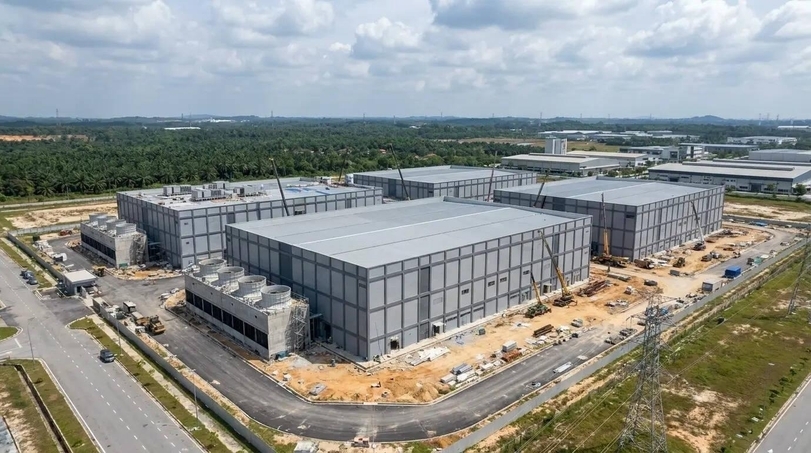
Another important dimension of Megaspeed's business is its international corporate footprint. The company is wholly owned by Singapore-registered Swiftdata, according to reported corporate records. Its wider business network includes subsidiaries in Malaysia, Thailand, Indonesia, Australia and the United States. Malaysia is particularly relevant to the regional AI infrastructure industry. Johor has attracted considerable attention from international technology investors because of its proximity to Singapore, available industrial land and potential for large-scale data-centre development.
The Singapore-Johor economic corridor offers opportunities for companies seeking to combine Singapore's financial and corporate infrastructure with Malaysia's capacity for physical technology investment. However, operating across multiple jurisdictions also creates additional responsibilities.
Companies must manage corporate ownership, financial reporting, customs declarations, equipment movements, contractual obligations and regulatory requirements in every relevant market. For a company dealing with advanced AI hardware, these requirements extend beyond ordinary import-export compliance. The Straits Times reported on November 12, 2026, that Megaspeed's Malaysian subsidiary, Speedmatrix, had pledged specified IT and network equipment, intellectual property and related rights to Alibaba-owned Singapore company Apex Enterprise Solutions under a 2024 security arrangement.
The report also discussed allegations by US short-seller Culper Research concerning possible financing links. These allegations should be distinguished from independently established facts; the reported security arrangement does not itself establish wrongdoing or prove the alleged financing route. The corporate network nevertheless illustrates the importance of understanding how capital, assets and commercial obligations move between related companies in international technology businesses.
On November 12, 2026, Megaspeed announced that it had engaged a US law firm to conduct a comprehensive inventory of its graphics processing units and independently review its export-control compliance practices. The announcement was made by chairman and chief executive Tan Yong Pong, also known as James Tan.
The company said it had cooperated with inspections conducted by the US Department of Commerce's Bureau of Industry and Security and was prepared to cooperate with other relevant US government authorities. The decision to appoint external legal advisers represents an important step in addressing questions about its international business operations.
For companies operating in sensitive technology markets, independent compliance reviews can help establish clearer records of hardware ownership, inventory movements, customer relationships and contractual arrangements. Such reviews are particularly important when products are subject to export restrictions or when equipment is transferred between related entities in different countries.
However, the effectiveness of any review will ultimately depend on its scope, independence, access to relevant records and the willingness of the company to implement corrective measures where necessary. Megaspeed's announcement should therefore be viewed as a corporate response to regulatory scrutiny rather than evidence that the underlying investigation has been resolved.
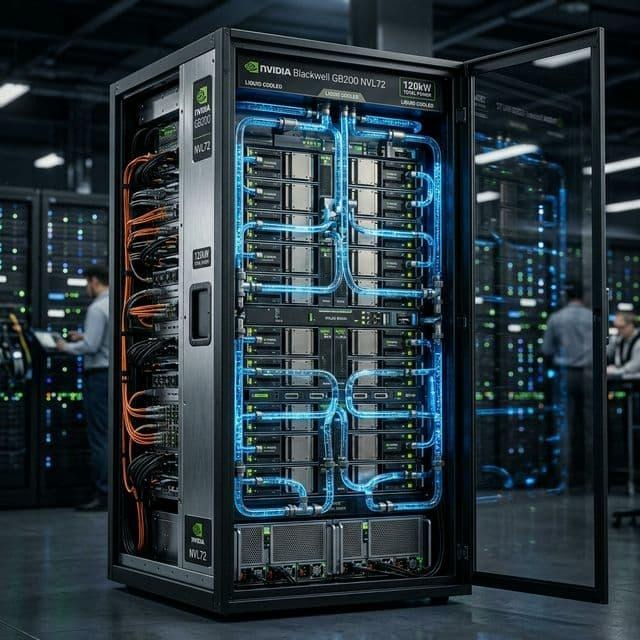
Despite the controversy surrounding Megaspeed, the commercial opportunity in AI infrastructure remains substantial. The rapid adoption of artificial intelligence is increasing demand for computing capacity across industries ranging from financial services and manufacturing to healthcare, telecommunications, logistics and digital commerce. Building and operating AI infrastructure, however, requires considerable investment.
Companies entering this market must secure access to advanced processors, establish reliable data-centre capacity, negotiate electricity and networking arrangements, attract enterprise customers and maintain sufficient capital to support expansion. This creates opportunities for several categories of businesses.
GPU cloud providers - Companies can purchase or lease specialised computing equipment and offer GPU capacity to customers through subscription or usage-based commercial arrangements.
Data-centre operators - Businesses can develop or manage facilities providing power, cooling, security and connectivity for AI computing equipment.
Infrastructure financing - Financial institutions and private investors can support equipment acquisitions, data-centre construction and technology expansion through structured financing.
Regional technology partnerships - Companies in Singapore, Malaysia and Indonesia can participate through infrastructure development, enterprise services, telecommunications and specialised technology partnerships.
The opportunity is not limited to companies developing AI software. A substantial ecosystem of businesses is emerging around the physical infrastructure required to operate AI systems. However, the financial and regulatory barriers to entry are considerable. Investors must evaluate equipment lifecycles, utilisation rates, customer concentration, financing costs, electricity availability and export-control exposure before committing capital.
Megaspeed's experience offers a broader lesson for Southeast Asia's ambition to become a major destination for international technology investment. The region's competitive advantages include its strategic geography, growing digital economy, established trade relationships and expanding infrastructure investment. Singapore and Malaysia are particularly well positioned to attract businesses seeking access to international capital and regional computing markets. But attracting investment is only one part of building a sustainable technology industry.
Long-term success also depends on transparent corporate ownership, reliable financial reporting, responsible management, effective compliance systems and confidence among international suppliers and customers. For Singapore, maintaining its reputation as a trusted international business hub is especially important. Its position as a regional gateway depends not only on the ease of establishing companies but also on the credibility of businesses operating within its jurisdiction. For investors, Megaspeed demonstrates why rapid expansion and impressive financial figures must be assessed alongside corporate governance and regulatory exposure.
The next phase of the AI industry will not be determined solely by who can acquire the most advanced processors. It will also depend on who can finance, deploy and manage that infrastructure responsibly across increasingly complex international markets.
Megaspeed International's story reflects the extraordinary commercial opportunities emerging from the global AI revolution, but also the challenges of operating in an industry shaped by technology competition and international trade restrictions. Its rapid financial expansion, cross-border corporate structure and involvement in the advanced semiconductor supply chain make it an important business case to watch. The ongoing investigations will determine the facts surrounding the company's activities. Until then, allegations must remain distinct from established findings.
One conclusion is already clear for the wider industry: in the global AI economy, access to advanced technology creates opportunity, but trust, transparency and regulatory compliance are becoming equally important business assets. For Southeast Asia, the challenge is to turn its growing role in the AI supply chain into a sustainable competitive advantage without compromising the international confidence on which its business environment depends.